Museums · 2026
Undory Palaeontological Museum
Museums / Undory Palaeontological Museum
About the project
Software and content for five installations in the new building of the Undory Palaeontological Museum: an LED sphere showing continental drift, a projection relief model, an AR tablet and children's games.
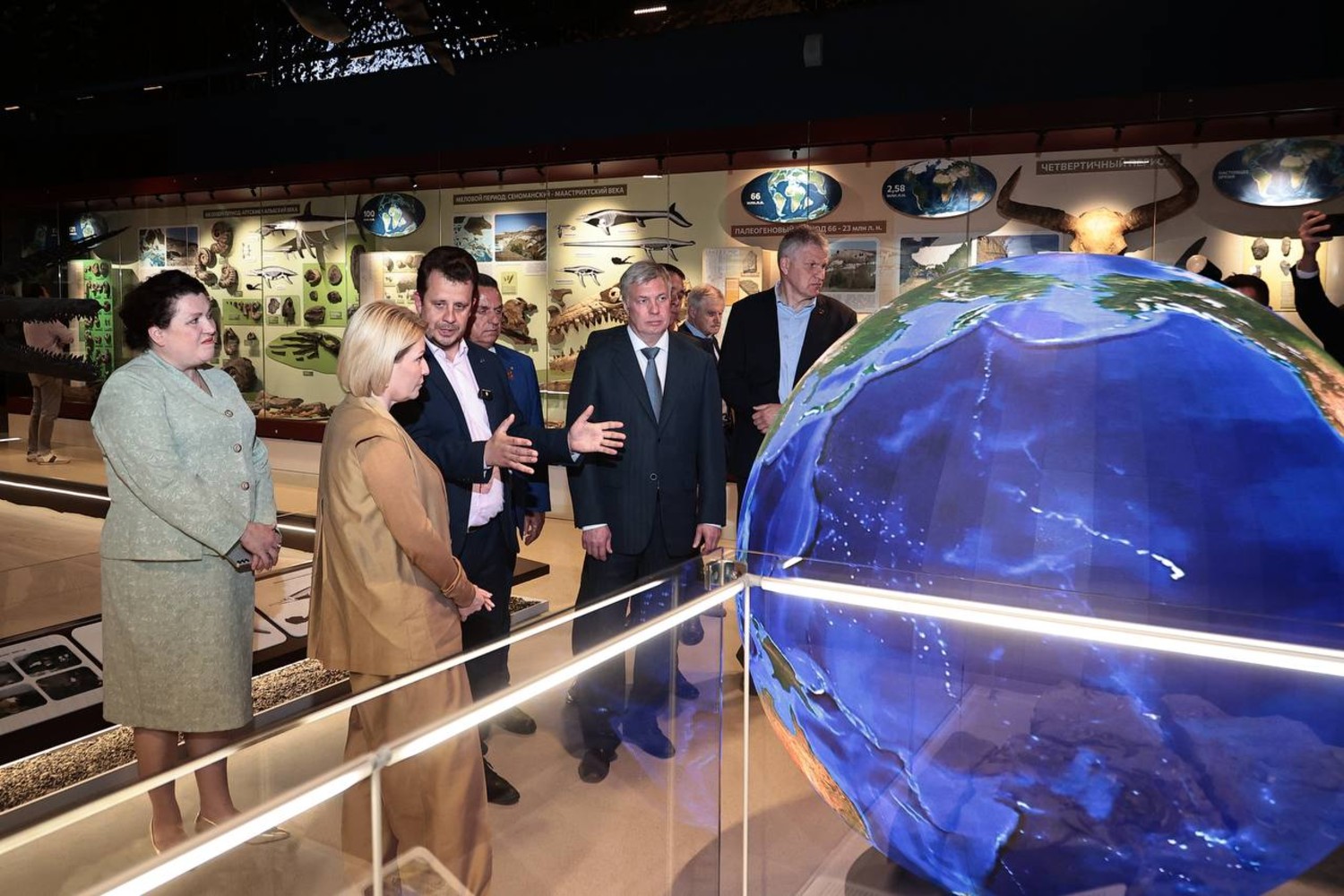
On 15 May 2026, the S.E. Biryukov Undory Palaeontological Museum opened in a new building in the village of Undory near Ulyanovsk. The museum is devoted to the marine fauna of the Jurassic and Cretaceous periods found on the banks of the Volga: skeletons of ichthyosaurs, plesiosaurs and pliosaurs, and ammonites. The opening was attended by Russia's Minister of Culture Olga Lyubimova and the Governor of Ulyanovsk Region Aleksey Russkikh.
The exhibition was created by a general contractor. We worked as its subcontractor and produced the digital part: software and content for five interactive installations — the “World map” LED sphere, a projection relief model, a guide's tablet with augmented reality, the “Living drawings” projection system and an interactive sandbox — as well as the design of one more installation, “Interactive models + screen”.
Year
2026
Industry
Museums
Scope of work
Software for 5 interactive installations and the design of one more
Venue
S.E. Biryukov Undory Palaeontological Museum, Undory village, Ulyanovsk Region
- 5
- interactive installations running our software
- 17
- periods and epochs on the LED sphere
- 15.05.2026
- museum opens in its new building
The task
The museum tells how the Earth has changed and why, millions of years ago, there was a sea where Ulyanovsk now stands. This had to be shown clearly — continental drift over 600 million years, the geology around Undory and the Undoria Geopark, the anatomy of marine reptiles — and children had to be able to play with the material themselves. The first stage ran until 22 December 2025; the second, including on-site setup, until the opening in May 2026.
What we did
The “World map” LED sphere
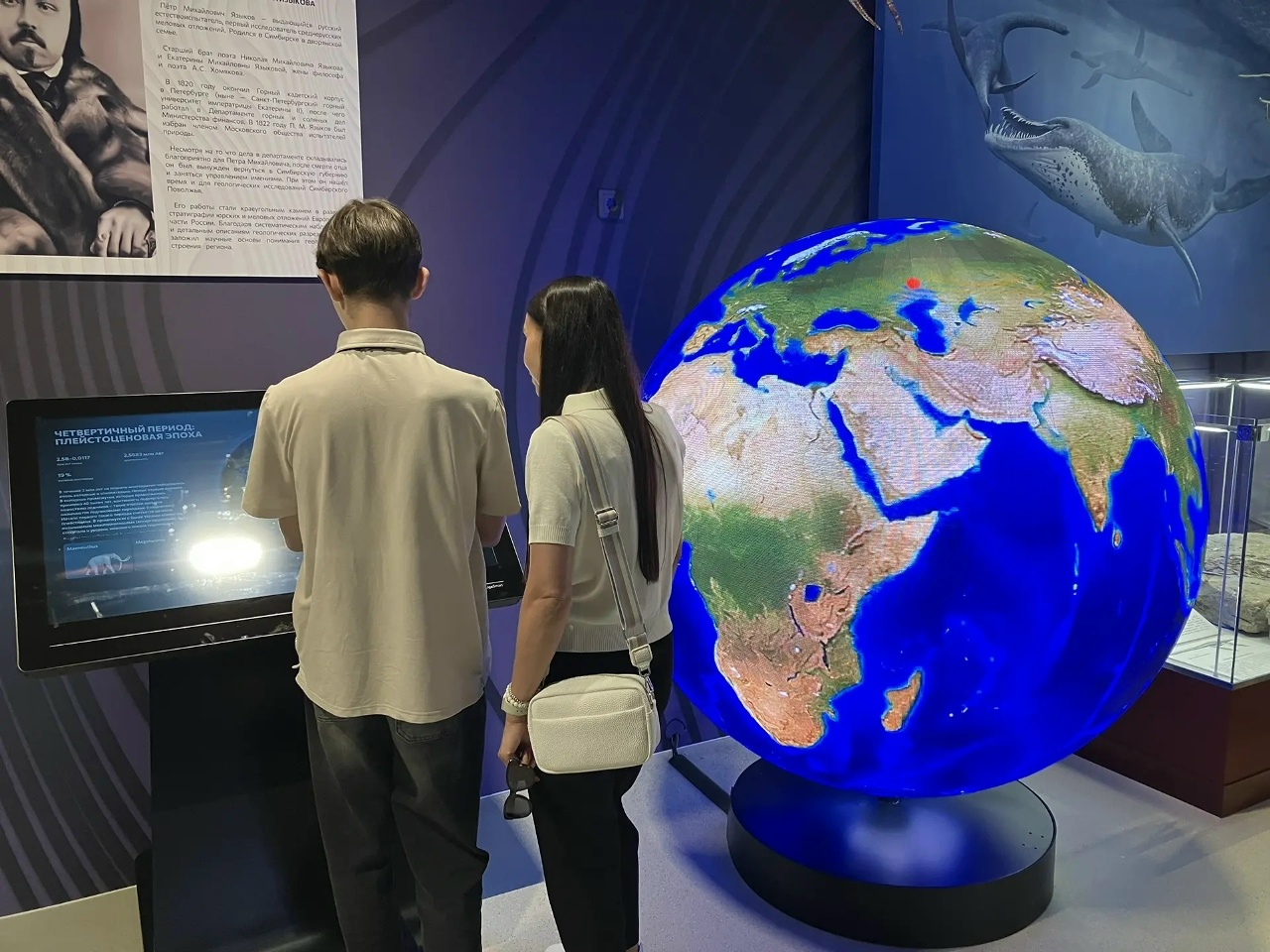
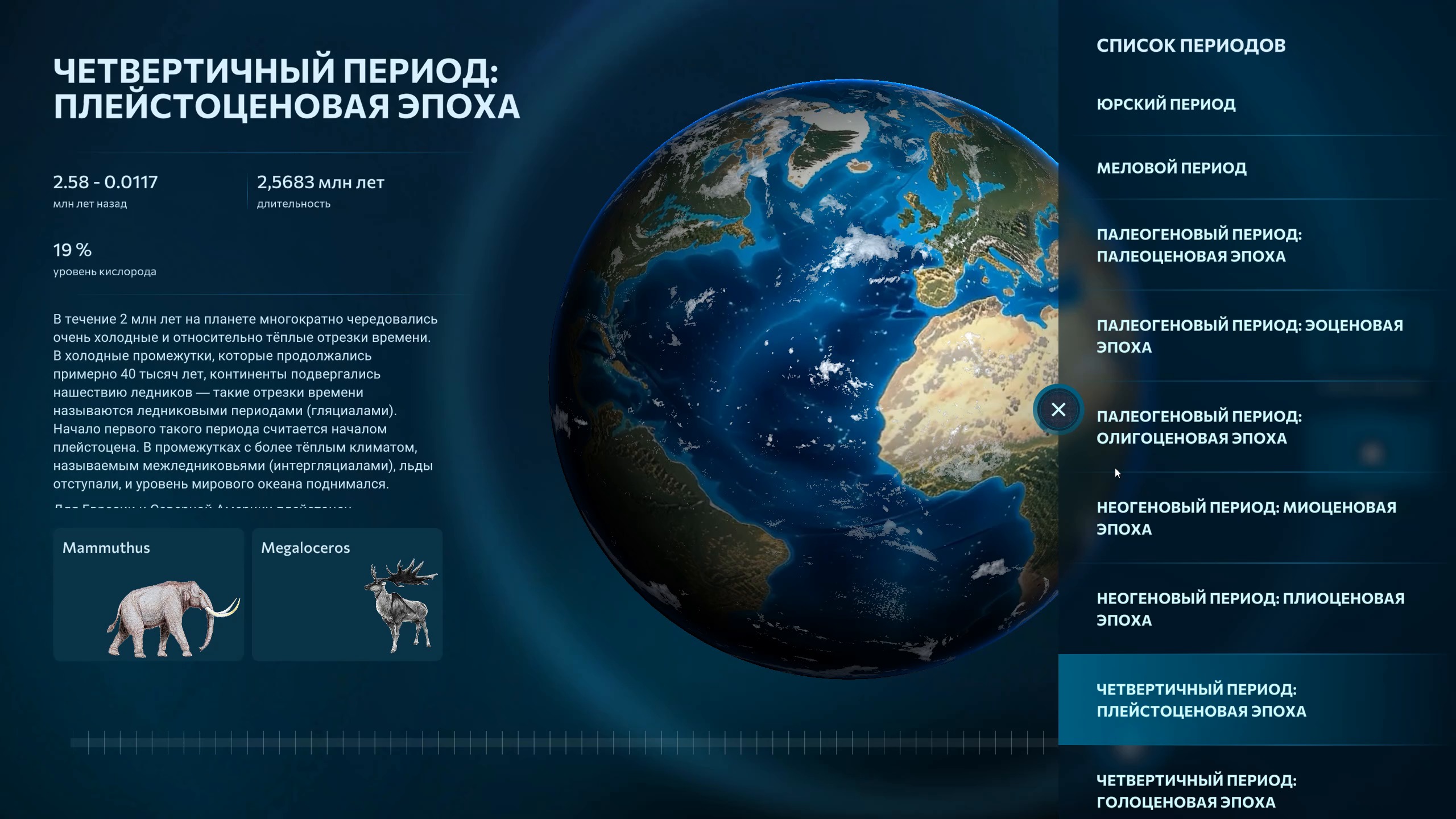
On the sphere, the continents drift apart and come together — from the Ediacaran, 635 million years ago, to the present day. Next to it is a touch stand: the visitor chooses one of 17 periods and epochs, from the Ediacaran period to the Holocene, or moves a slider along the timeline, and the sphere shows what the Earth looked like in the chosen era. For each era the screen gives its age and duration, oxygen and carbon dioxide levels, average temperature, a short story and two creatures of the time: the mammoth and the giant deer for the Pleistocene, the nothosaur and the mixosaur for the Triassic. The “Where am I” button shows where Undory was in that era.
Interactive projection relief
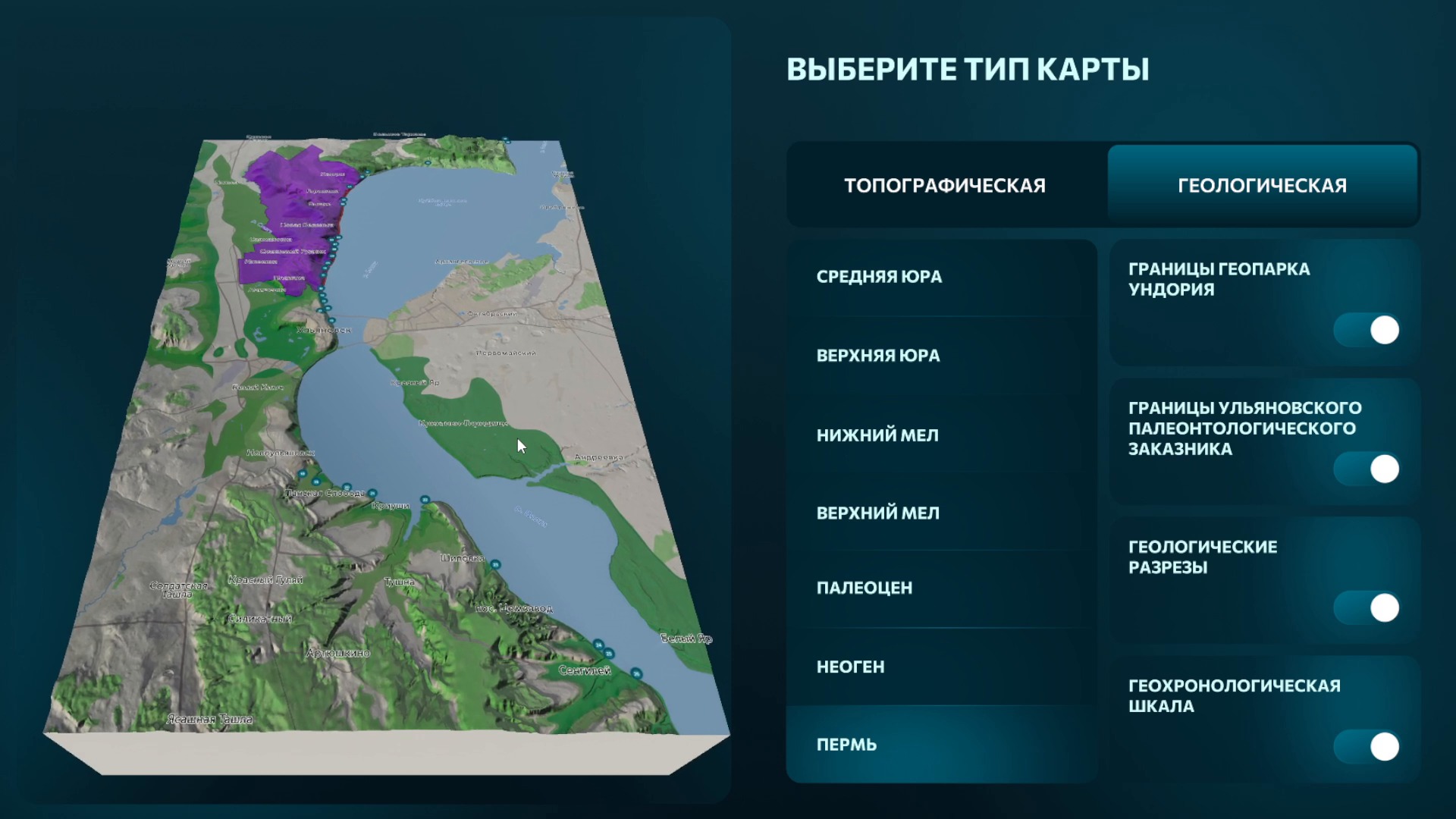
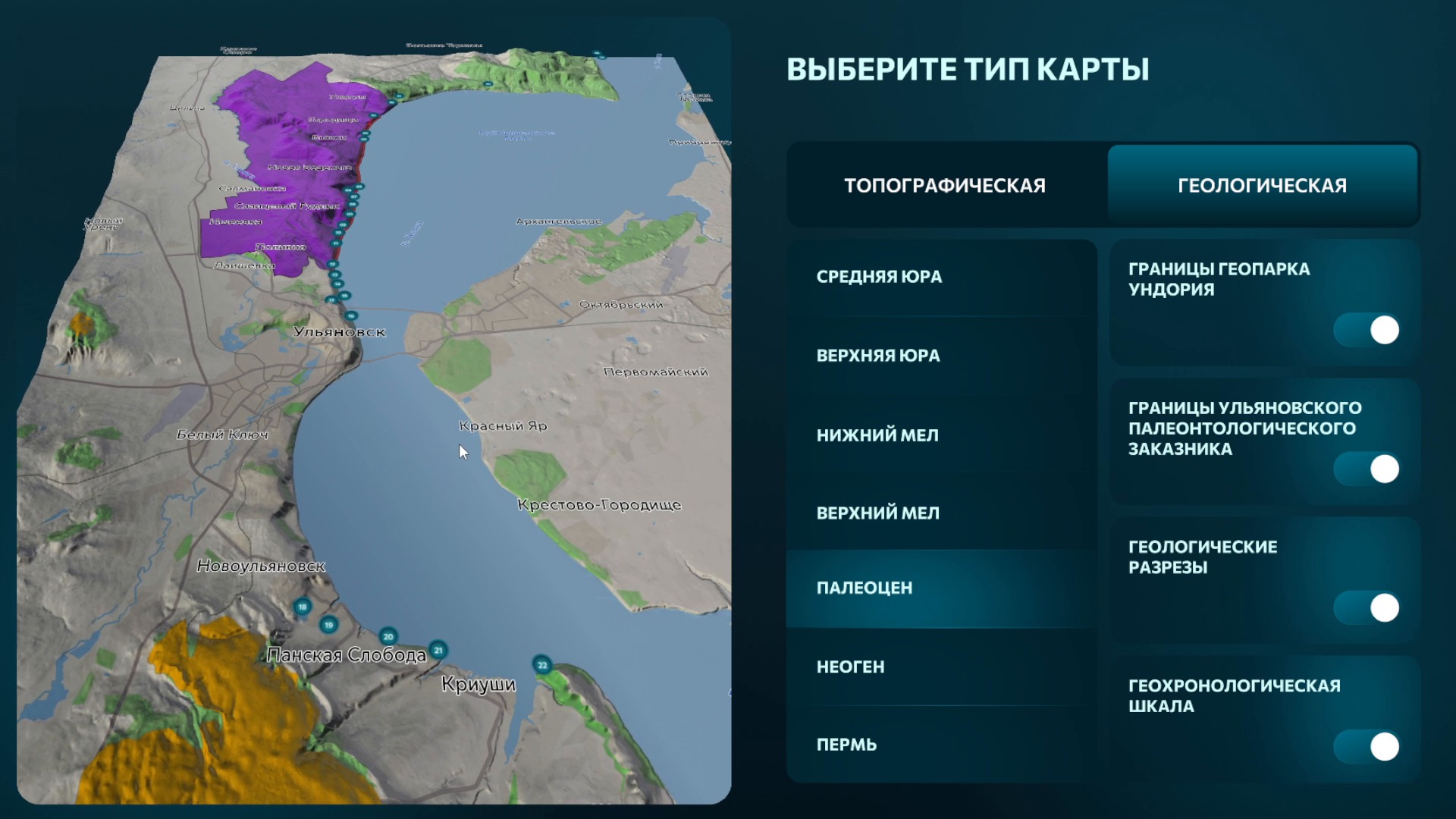
A 2 × 2 metre wall-mounted model of the terrain around Ulyanovsk onto which a map is projected. The visitor switches between topographic and geological maps and turns on layers: the boundaries of the Undoria Geopark, the boundaries of the Ulyanovsk Palaeontological Reserve, labelled geological cross-sections and the geological time scale. The buttons “Middle Jurassic”, “Upper Jurassic”, “Lower Cretaceous”, “Upper Cretaceous”, “Palaeocene”, “Neogene” and “Permian” highlight on the map only the deposits of the selected time, and its segment on the scale. We made the software, the animated graphics and the 3D terrain model used to manufacture the physical model.
Guide's tablet
An augmented reality application: when the tablet is pointed at the pliosaur skeleton, muscles build up over the bones on the screen, then skin, and the reptile starts to move. Facts about pliosaur anatomy appear along the way. We made the application, the 3D model of the pliosaur and its animation.
“Living drawings”
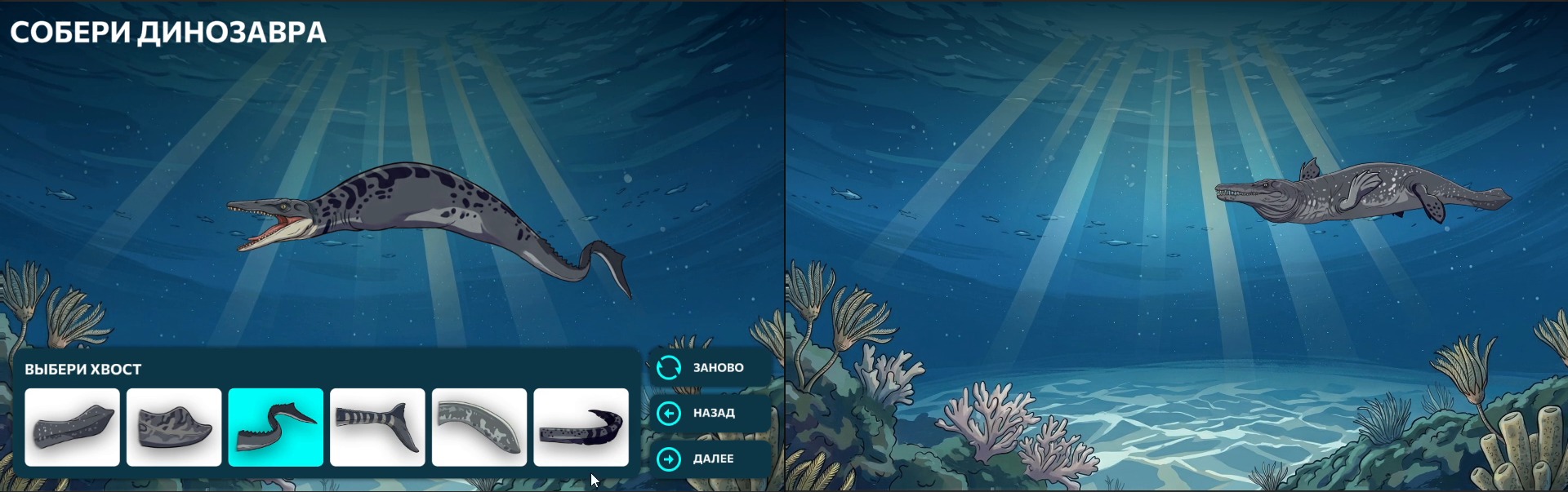
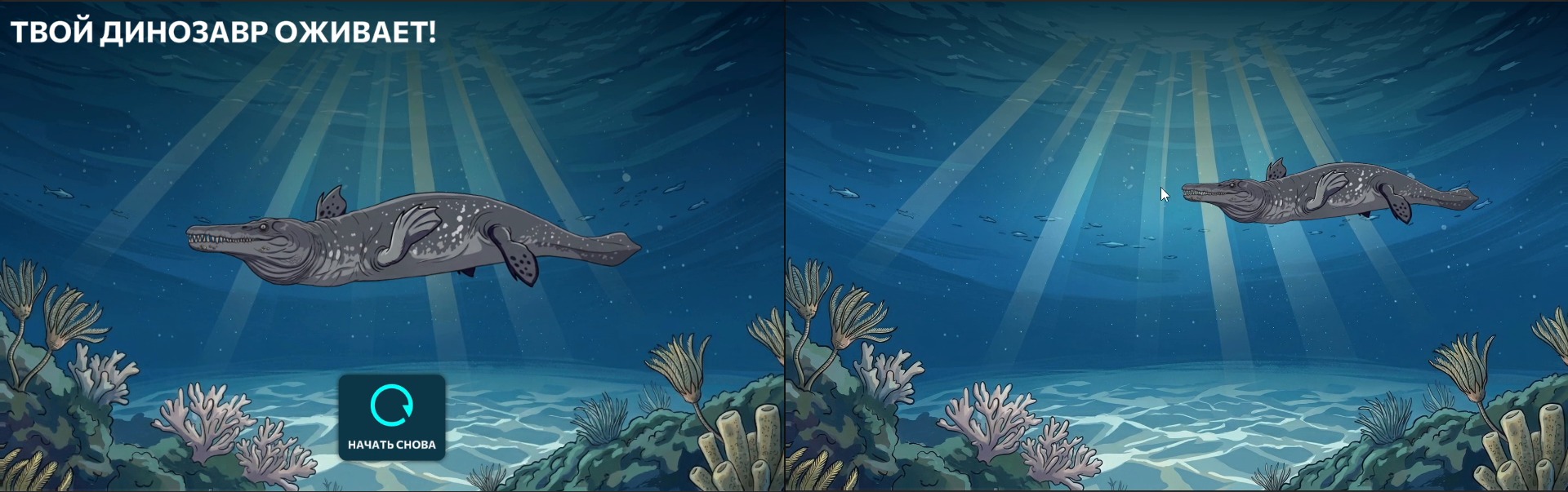
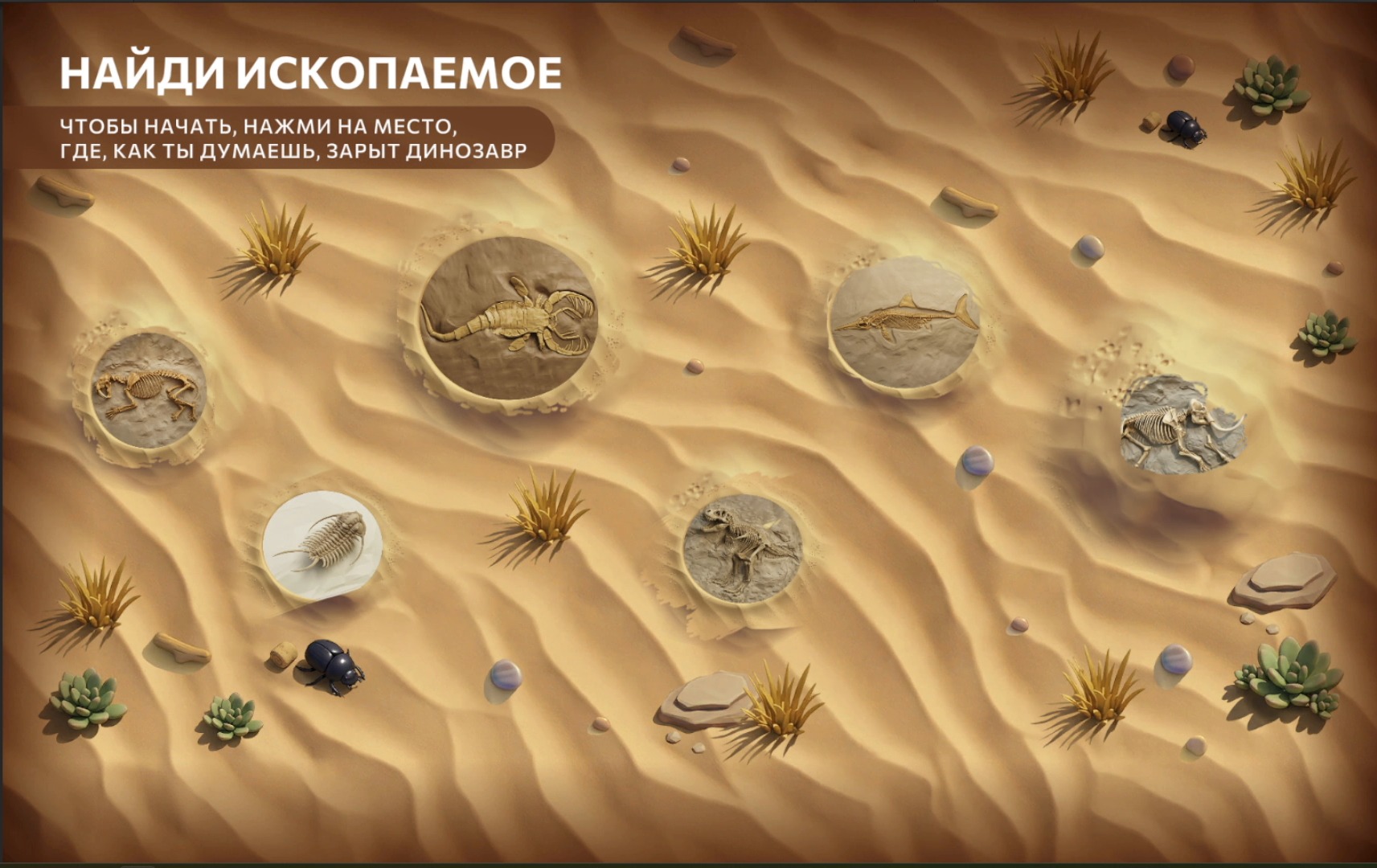
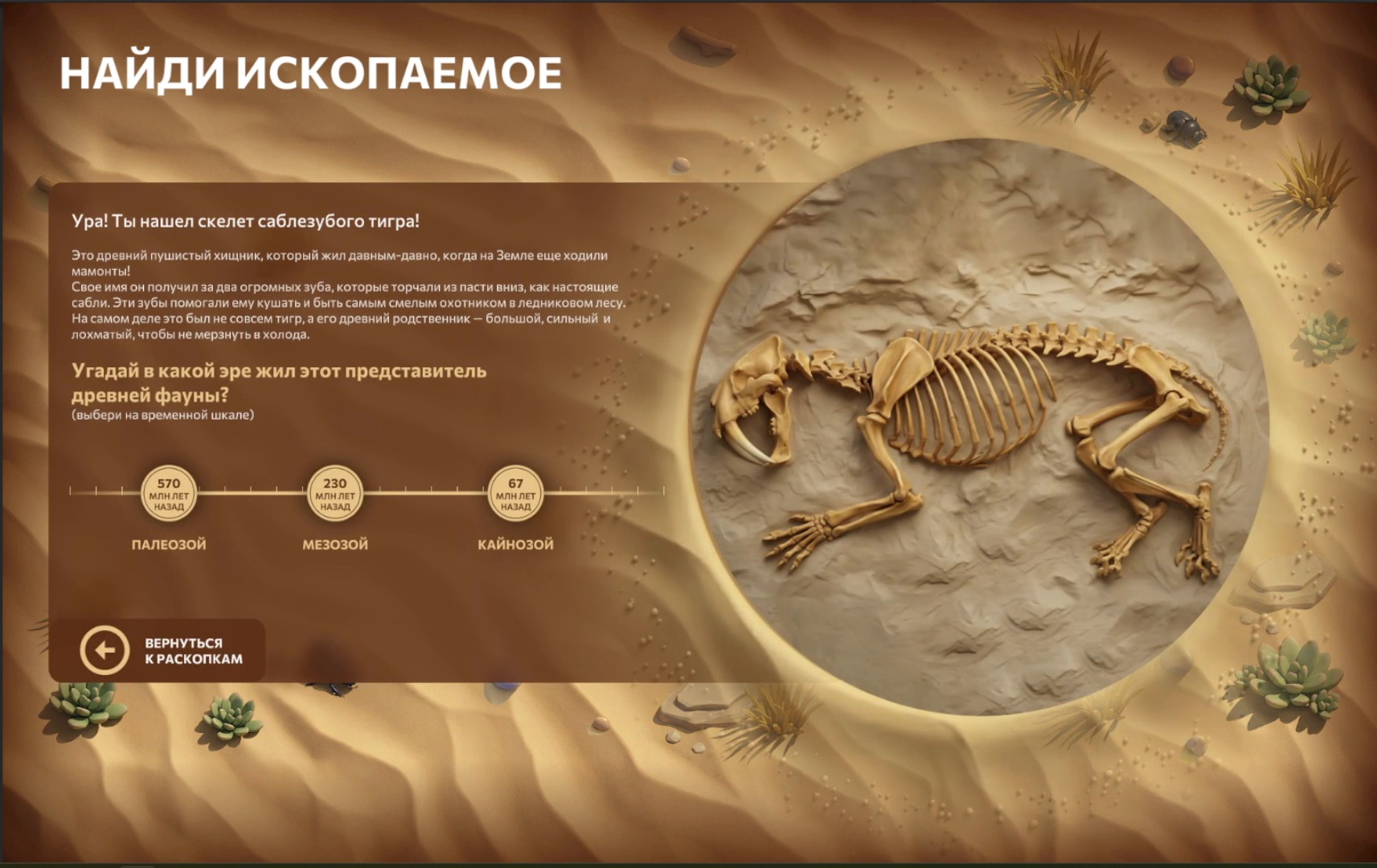
A projection wall with a control tablet. A child colours in the outline of a marine reptile and places the sheet on the scanner — and their drawing swims in the ancient sea on the wall; the animals can be touched. In the “Build a dinosaur” game, the visitor chooses the body, head, front and rear flippers and tail — “Your dinosaur comes to life!” — and the assembled reptile swims off into the shared sea. In the “Find the fossil” game you have to guess where a skeleton is buried, dig it up — a trilobite, an ichthyosaur, a mammoth, a sabre-toothed tiger — and choose on the scale the era in which the animal lived: the Palaeozoic, Mesozoic or Cenozoic.
Interactive sandbox
The visitor digs a hole in the sand, the camera detects the hollow, and the projector shows a fossil found in that spot with a description: what it is, how old it is and why it matters to science.
“Interactive models + screen”
For this installation on Mesozoic fauna we did only the design: the concept, sketches, graphics and 2D animation for the screen, where the selected animal appears as a large model and facts about it are presented.
How it is built
The software was written for this museum; we completed on-site setup by 12 May 2026.
The sphere is controlled from the touch stand; it displays an animated unwrapped map of the Earth's surface at 2048 × 1024 pixels — from today's continents to ancient ones and back.
Relief: the 3D terrain model was prepared both for printing the physical model and for the software scene; the projector image is fitted to the relief by calibration.
“Living drawings”: a projector, touch sensors, a camera and a scanner; the reptiles' body parts are drawn separately and animated, so any combination can be assembled from them.
Sandbox: a camera above the sand tracks the relief, and the projector casts the image directly onto the sand.
Result
The installations were launched on site on 12 May 2026, and the museum opened on 15 May. In its first two weeks it welcomed 6,000 visitors, and by September about 40,000 guests from more than 30 regions.
Similar projects
-
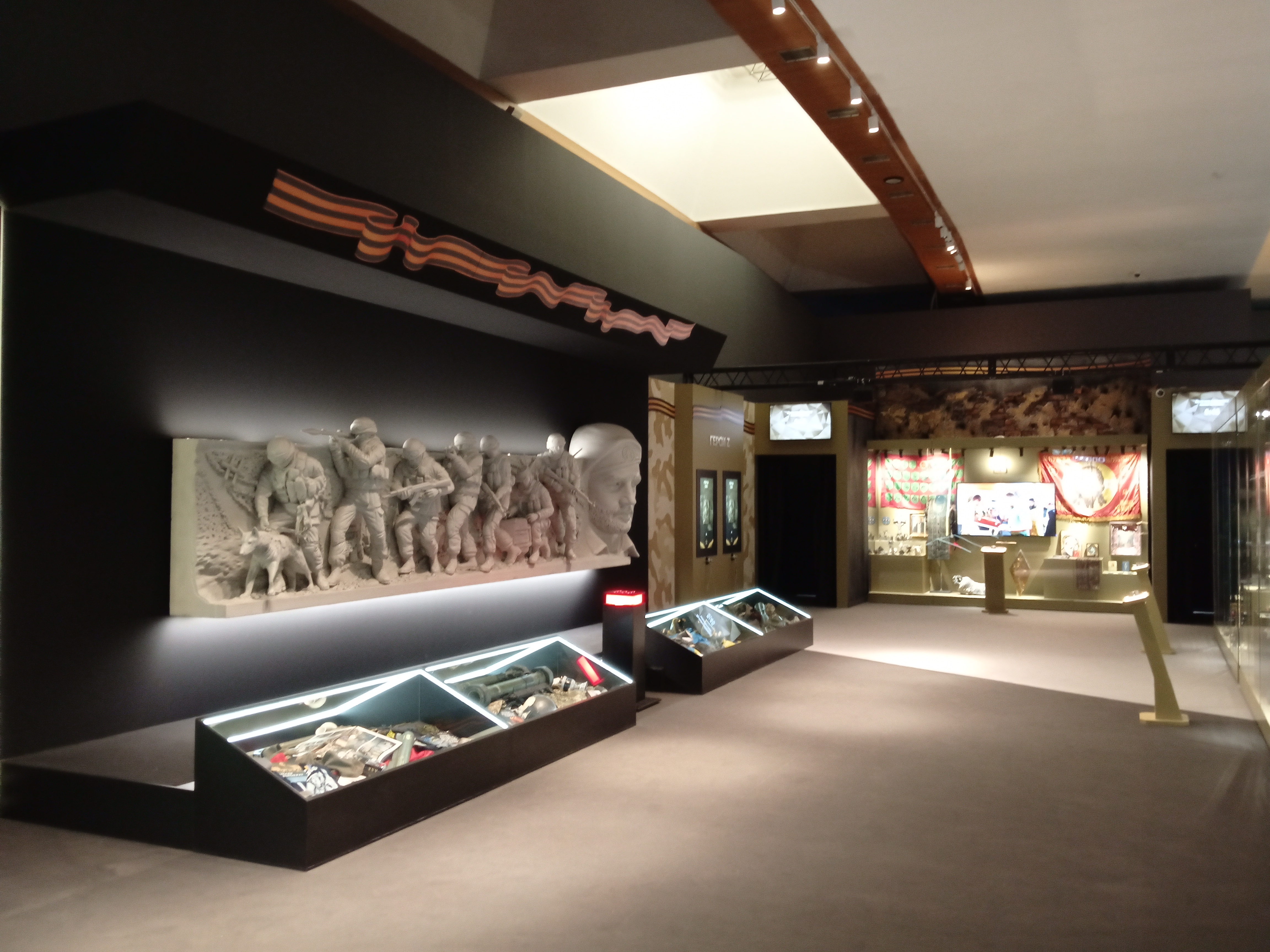 Updating the applications of the “Special military operation. Defenders of the Fatherland” exhibition at the Victory Museum
/2026 — Museums
Updating the applications of the “Special military operation. Defenders of the Fatherland” exhibition at the Victory Museum
/2026 — Museums
-
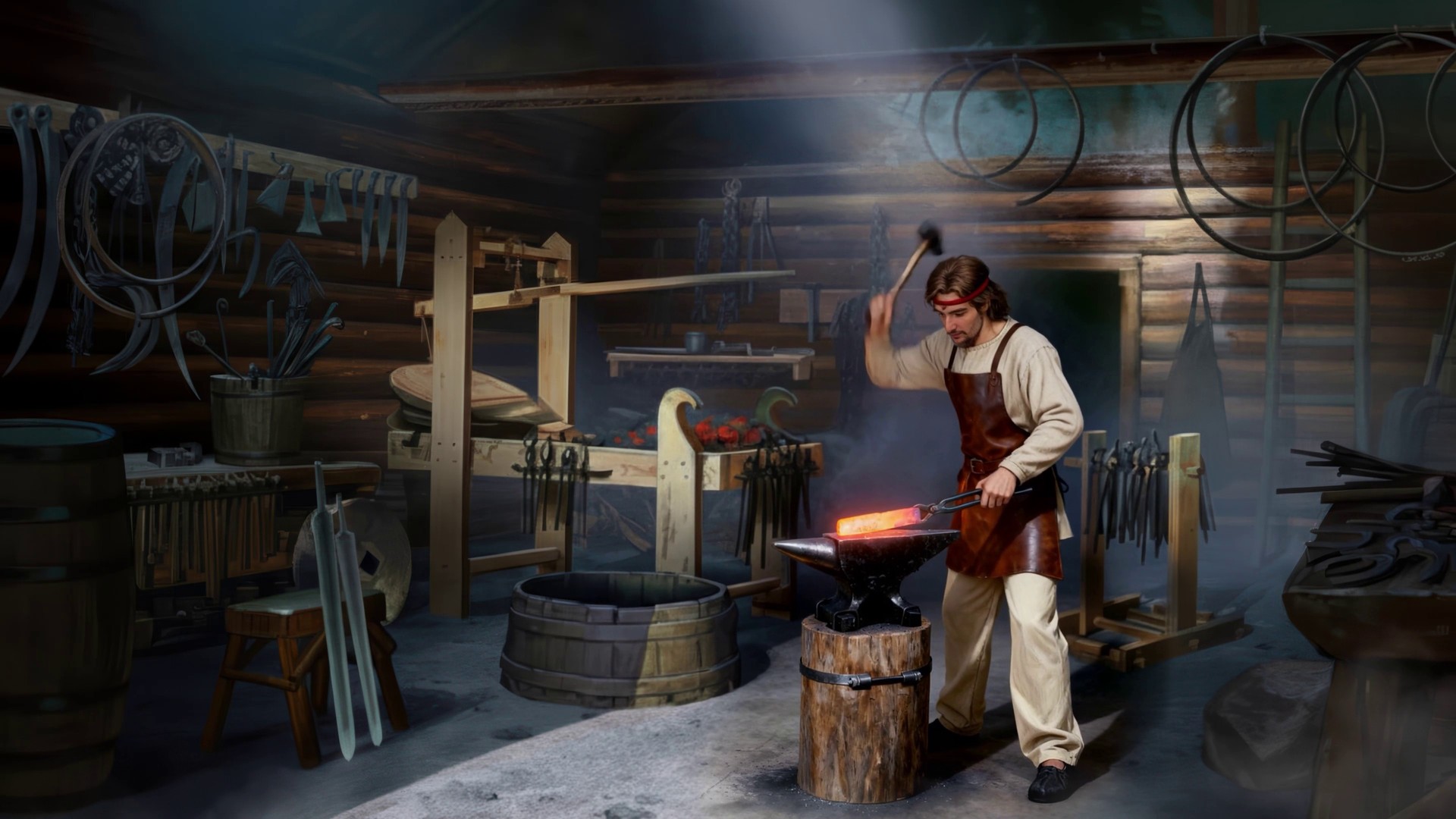 Ryazan History Museum. “Two capitals”, “The book in the Age of Enlightenment”, “Folk costume”
/2026 — Museums
Ryazan History Museum. “Two capitals”, “The book in the Age of Enlightenment”, “Folk costume”
/2026 — Museums
-
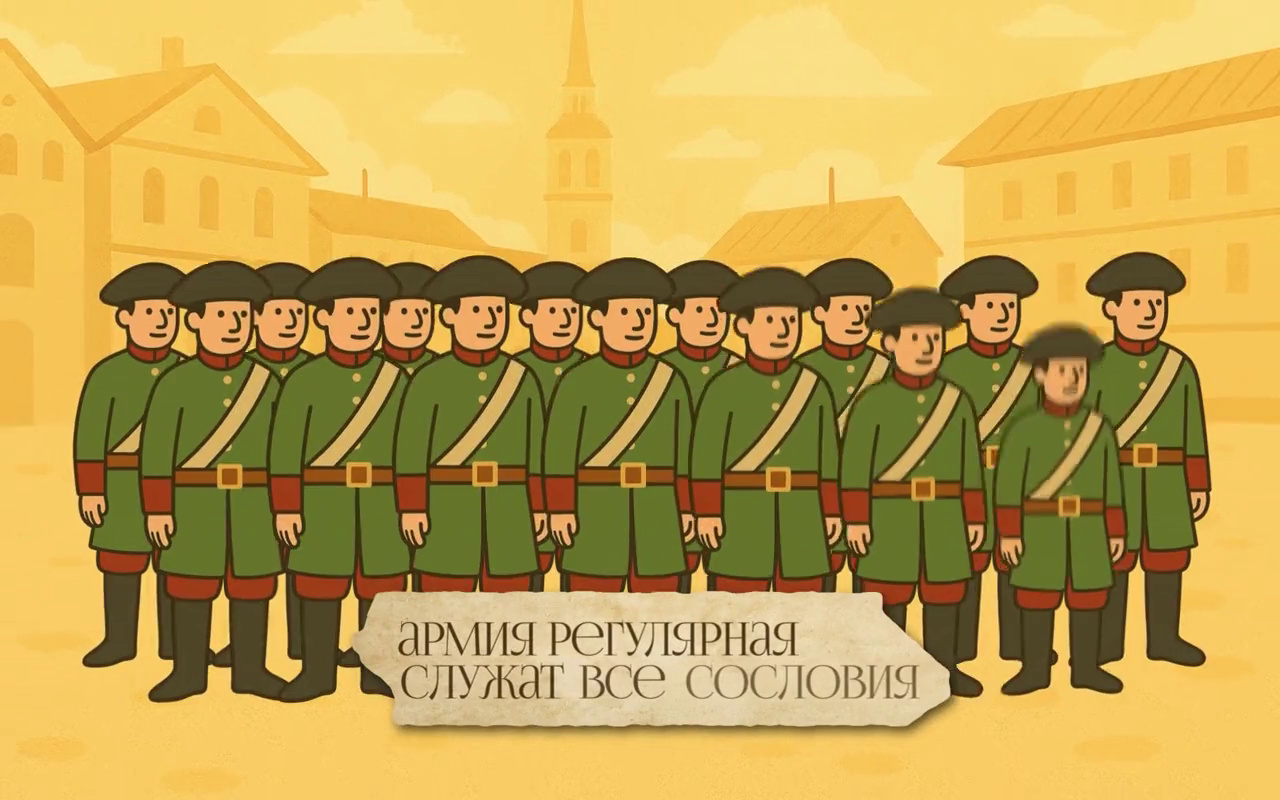 Ryazan History Museum. “Ryazan Governorate”
/2026 — Museums
Ryazan History Museum. “Ryazan Governorate”
/2026 — Museums
-
 Museum of the Heroes of the Underground in Donetsk
/2026 — Museums
Museum of the Heroes of the Underground in Donetsk
/2026 — Museums