Museums · 2026
Museum of the Heroes of the Underground in Donetsk
Museums / Museum of the Heroes of the Underground in Donetsk
About the project
Software, films and sound for 17 multimedia installations at the Museum of the Heroes of the Underground in Donetsk, which opened in January 2026 on the site of the Dulag 162 prisoner-of-war camp.
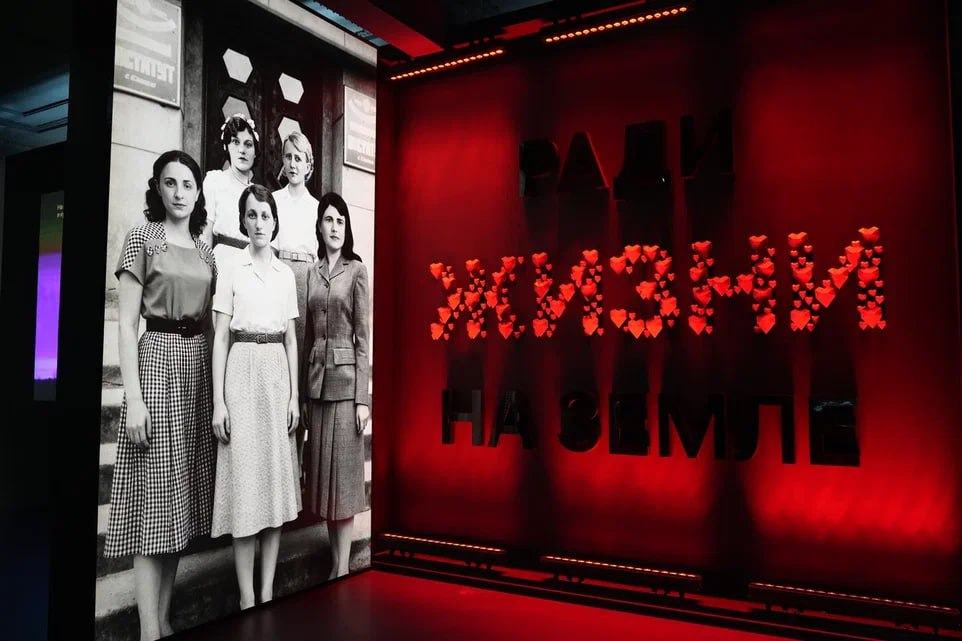
On 19 January 2026, the Museum of the Heroes of the Underground opened in Donetsk. It is housed in the Centre of Slavic Culture — the building that during the occupation held the Dulag 162 transit camp for prisoners of war. The main theme of the exhibition is the five young women of the Rutchenkovo underground group, who saved 240 prisoners and were shot on 15 January 1942. The museum was created in four months with the assistance of the Ministry of Culture of Russia and the State Central Museum of Contemporary History of Russia.
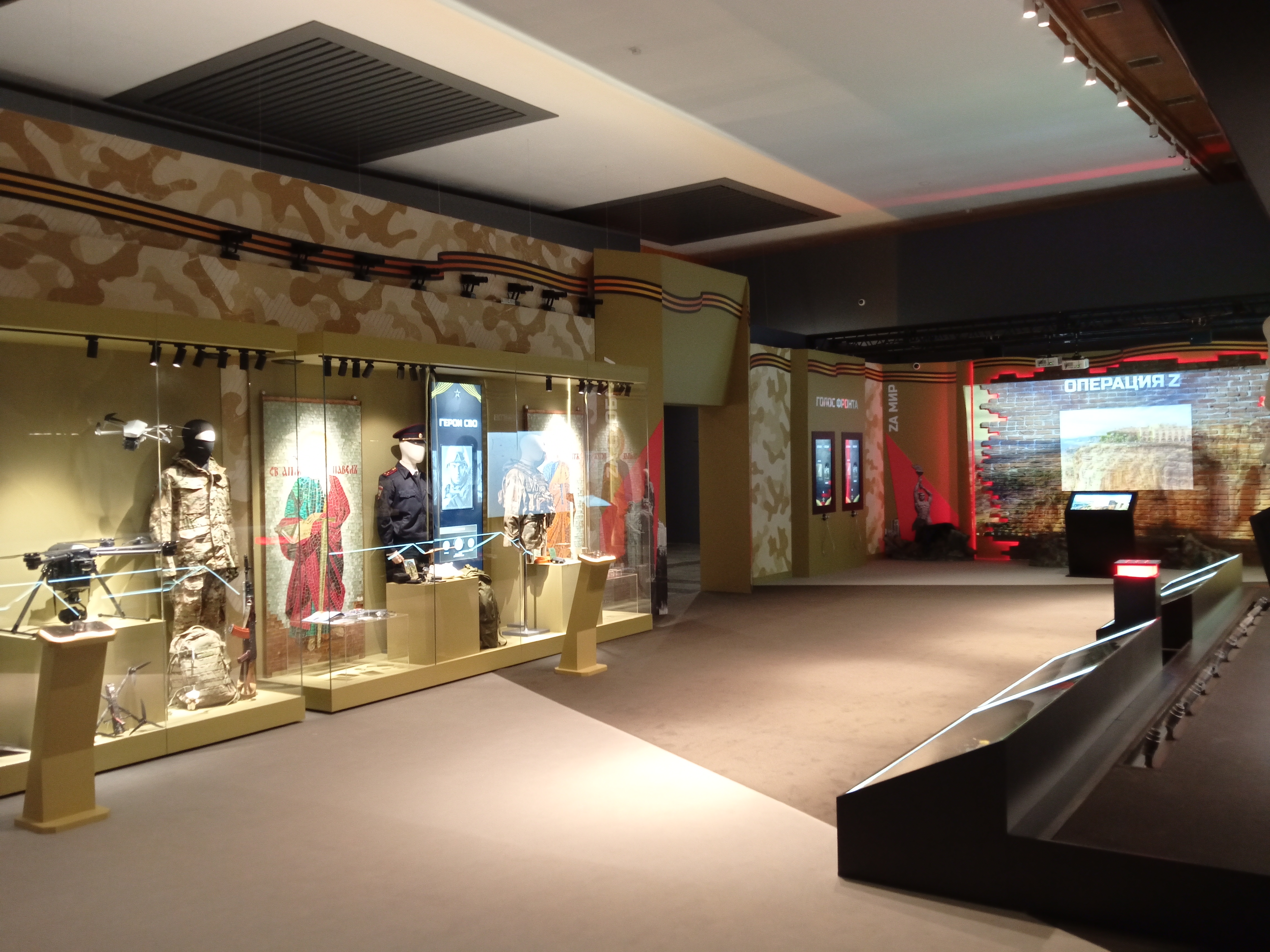
Commissioned by the general contractor, we made the multimedia for the exhibition: touch-screen applications, films for projections and vertical screens, sound installations and an intro video for the entrance area — 17 installations covering the period from pre-war Stalino to the liberation of the city.
Year
2026
Industry
Museums
Scope of work
17 multimedia installations and an intro video
Venue
Museum of the Heroes of the Underground, Centre of Slavic Culture, Donetsk
- 17
- multimedia installations
- 13
- programs for screens
- 19.01.2026
- museum opens
The task
The exhibition is built on archive materials: German leaflets and orders, newsreels, documents on the crimes of the occupiers, letters and recollections of residents, lists of underground groups. Visitors had to be able to browse and listen to these materials themselves, while the story of the underground fighters and of the occupation of the city was to be told through projections and screens. The work ran from 1 October to 5 December 2025.
What we did
Pre-war Stalino
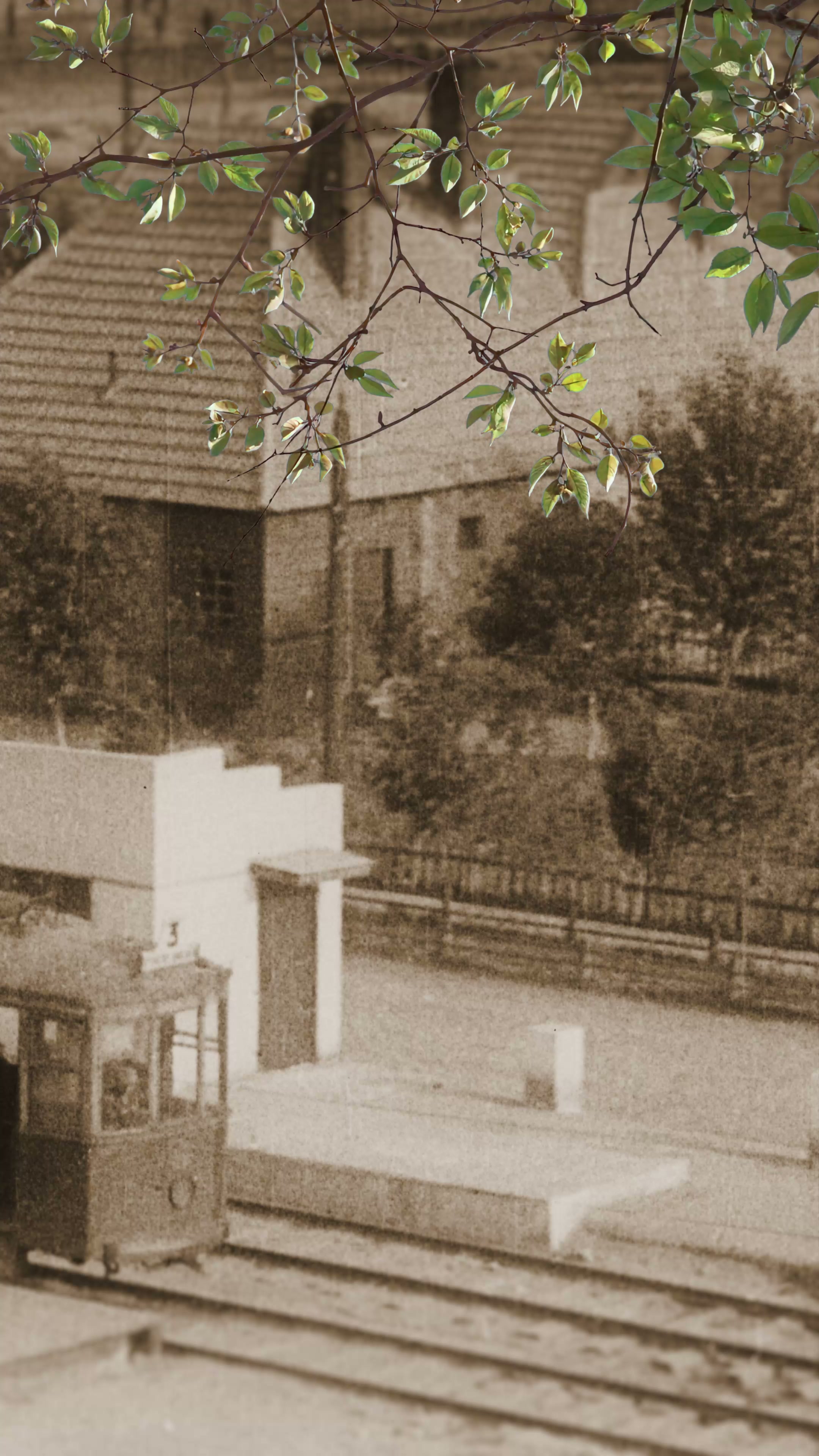
“Peacetime” is a vertical screen showing a loop of newsreels, archive photographs and paintings of the pre-war city: streets, trams, leisure by the pond; over them are blossoming branches, as if you were looking through a window. “Tomorrow was the war” is a second vertical screen in a window: how residents prepared for the invasion, told in photographs, documents and newsreels; off screen are Levitan’s broadcast and German soldiers marching. “Newspaper clippings” is a touch screen with newspapers on the events of pre-war Stalino, a diary of recollections that can be listened to, and a photo album. “Radio set” presents five newspaper articles read by actors.
“Bookshelf”
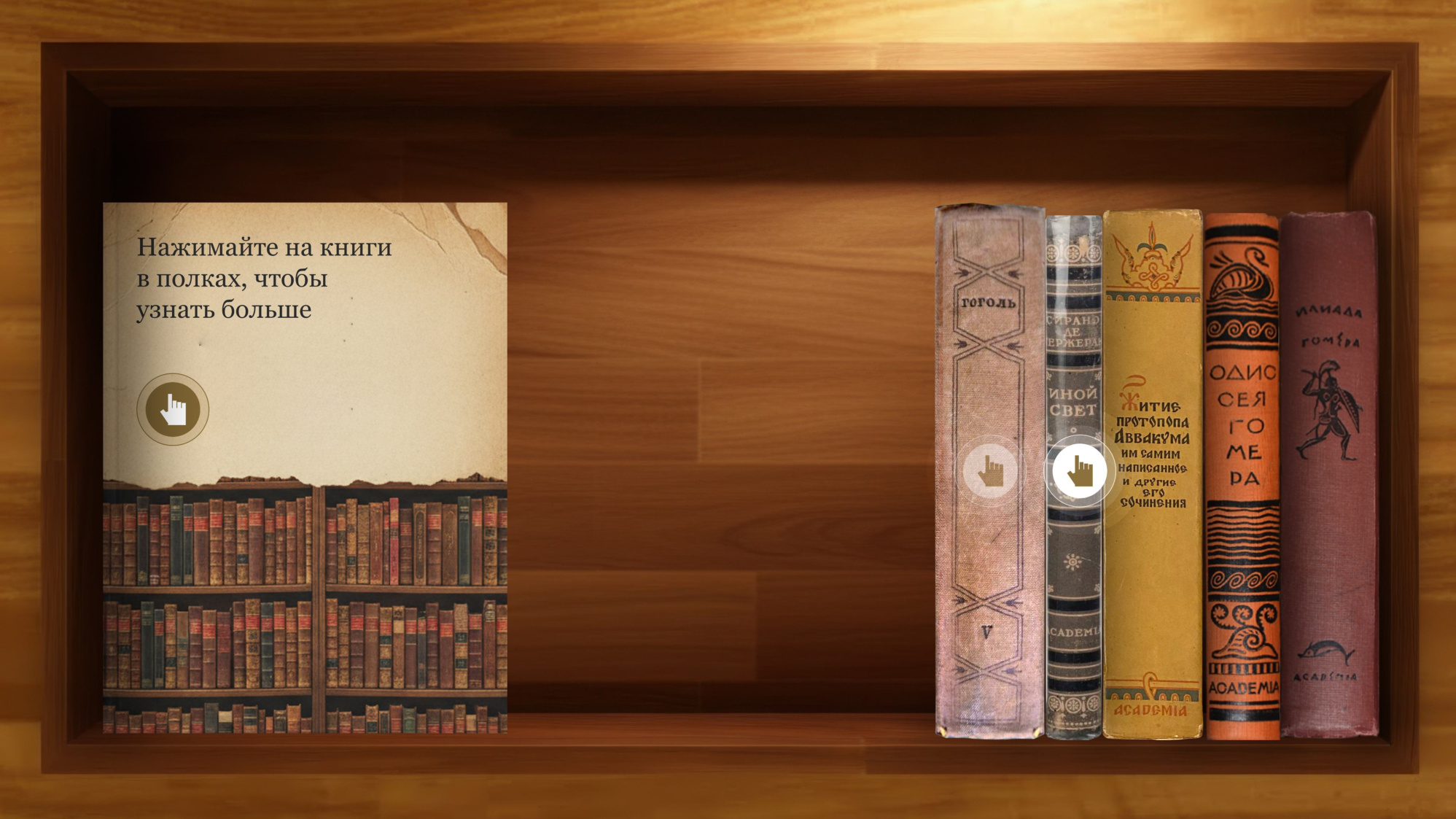
Real books stand on a real shelf, with a screen built in next to them. The visitor touches a spine, and quotations from that book appear on the screen. In standby mode the screen draws a continuation of the shelf: Gogol’s “Dead Souls”, Cyrano de Bergerac’s “The Other World”, “The Life of Archpriest Avvakum”, the “Odyssey” and the “Iliad” — these can also be opened and read.
The occupation
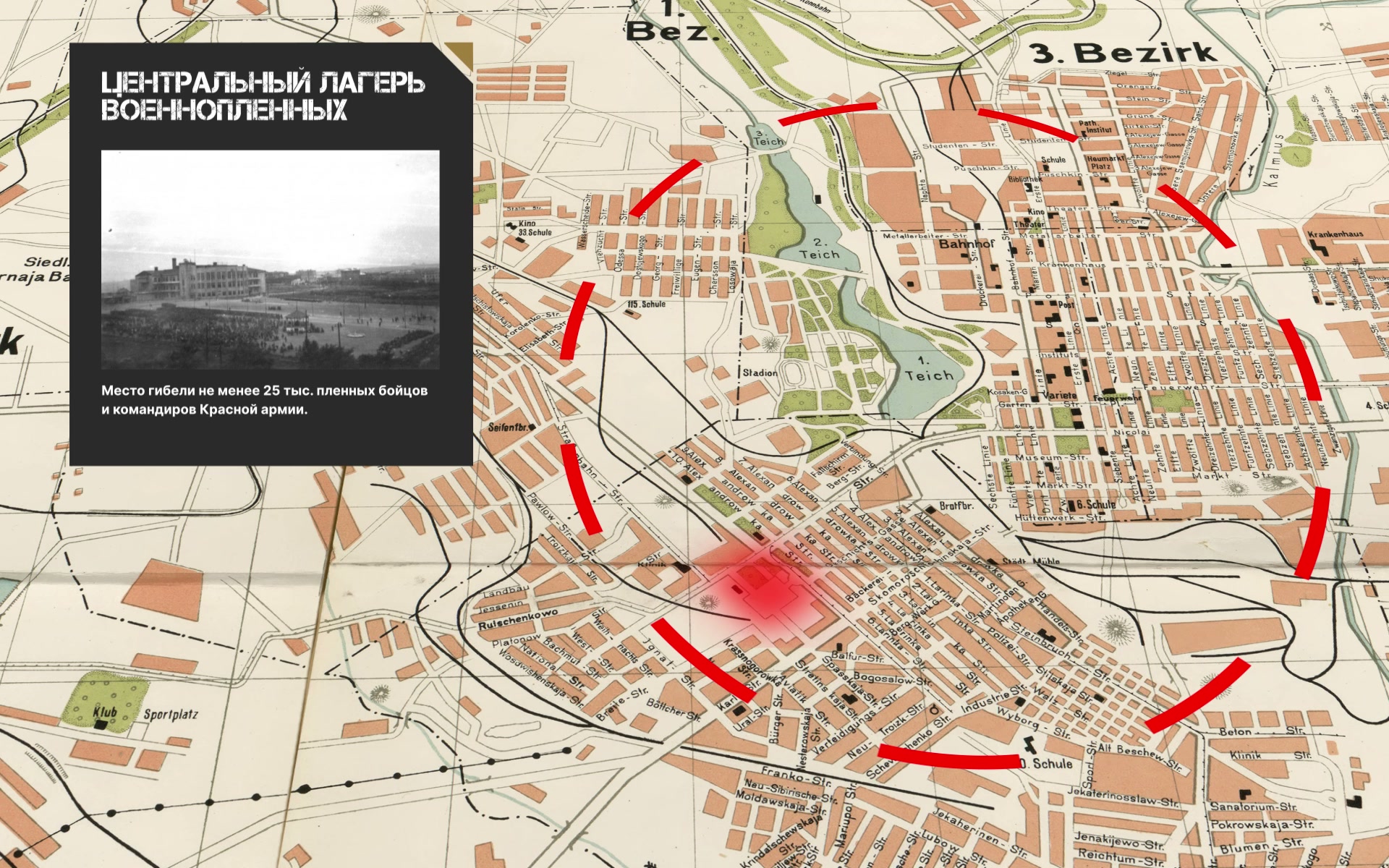
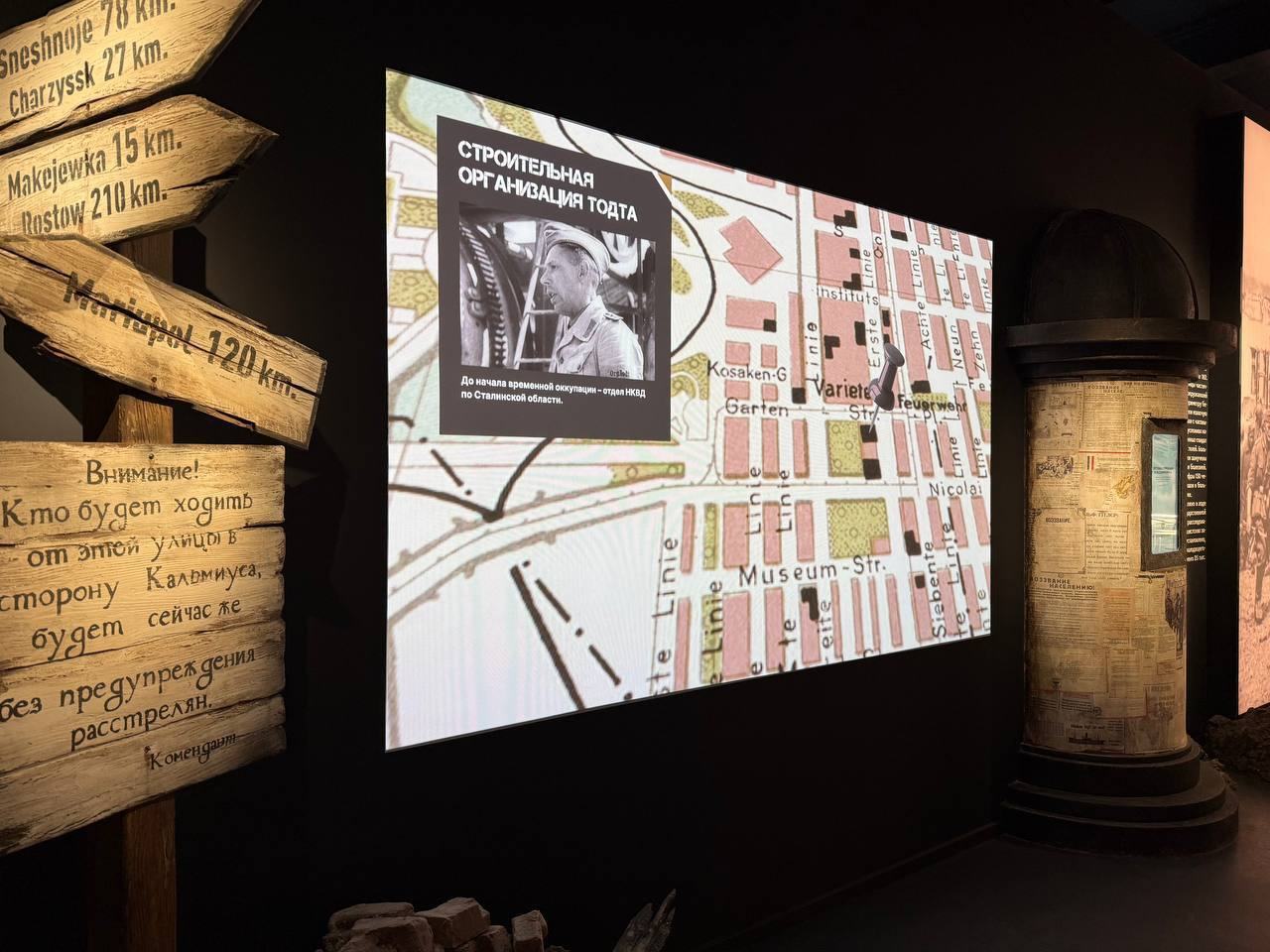
“Map” is a projection video started with a button: a German plan of Stalino on which the locations of the occupying forces and the sites of executions are revealed one after another — the central prisoner-of-war camp, the Jewish ghetto, the German hospital, the field commandant’s office; each comes with a photograph and a caption. “Notice board” is a touch screen with German leaflets, orders and instructions from 1941–1943: they are “pasted on the wall”, and any of them can be opened and enlarged. “Occupation” is a touch screen with two issues of the German newsreel Die Deutsche Wochenschau, from November 1941 and September 1943, with Russian subtitles.

No statute of limitations
A touch screen with documents on the occupiers’ crimes in Stalino and on the 1947 trial of collaborators. “Recollections” presents about 30 letters from residents about the camps and executions: they can be read on the screen or listened to through a handset; the letters were voiced by professional narrators.
The underground
“Desk” is a touch screen built into a work desk: a card index of six underground organisations with photographs and lists of members, the story of the five young women of the underground, infographics. Two more built-in touch screens: “Underground”, with archive photographs and documents on the underground fighters’ activities, and “Partisan movements during the Great Patriotic War”, about the underground across the Soviet Union.
The heroism and death of the young women of the underground
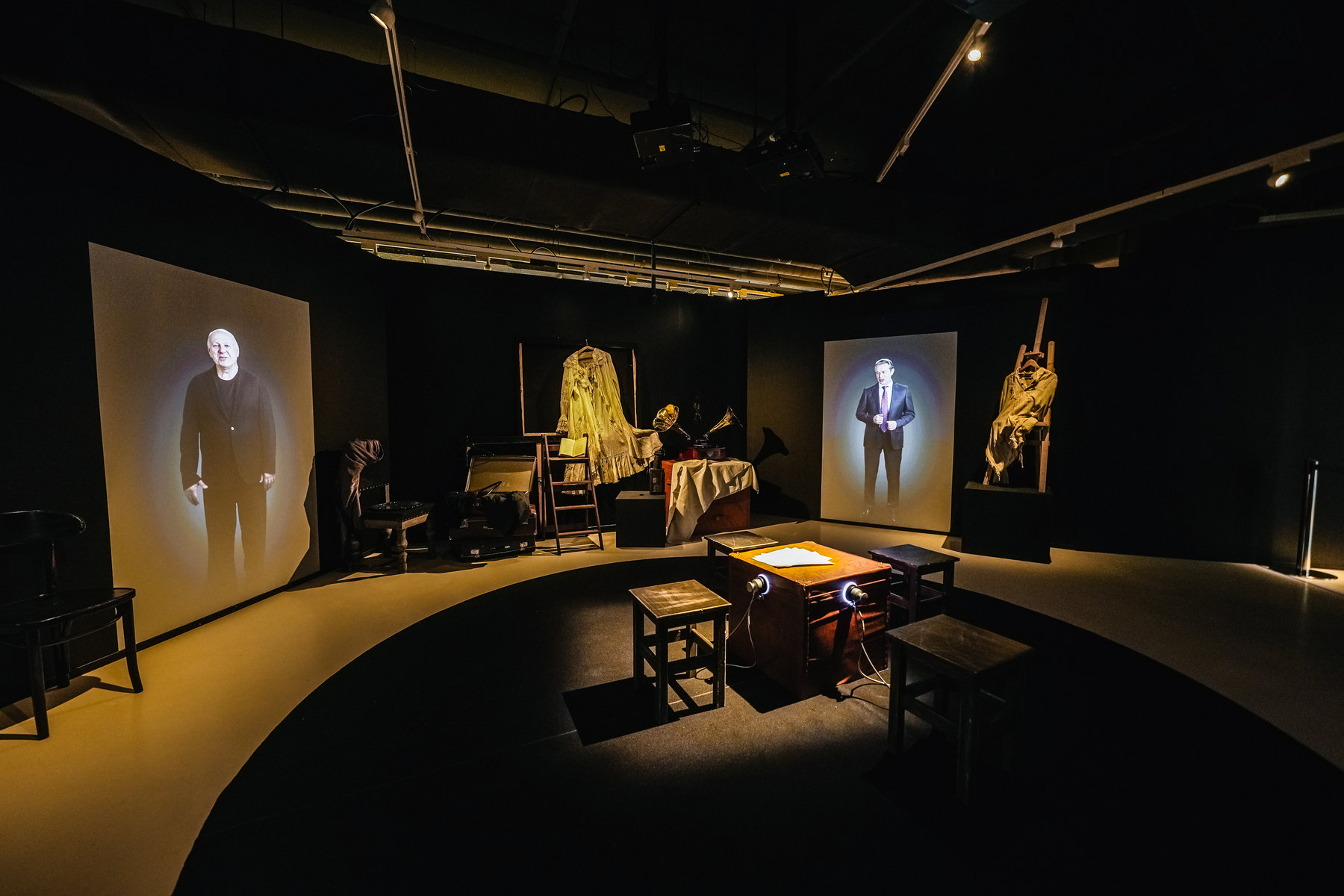
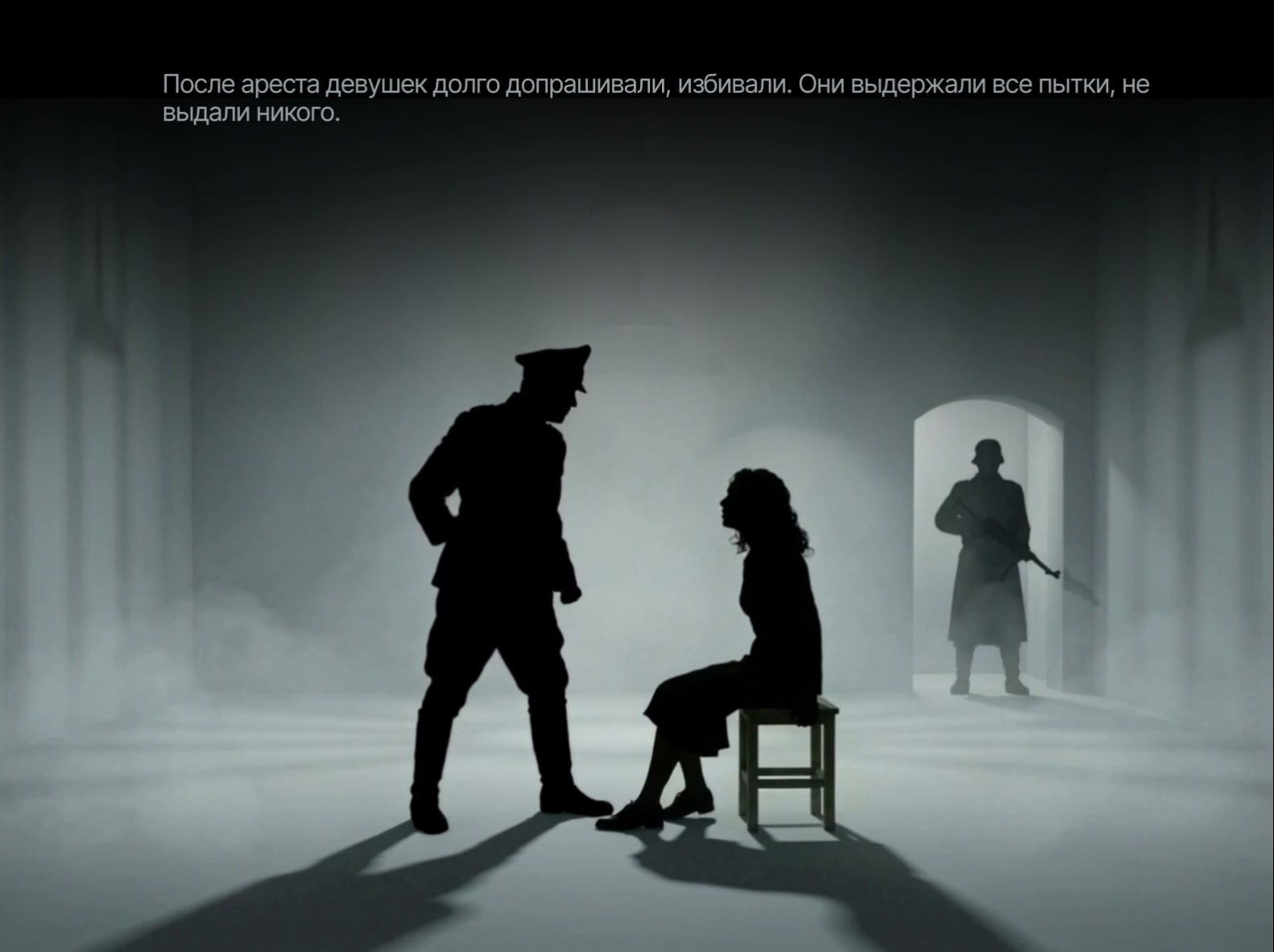
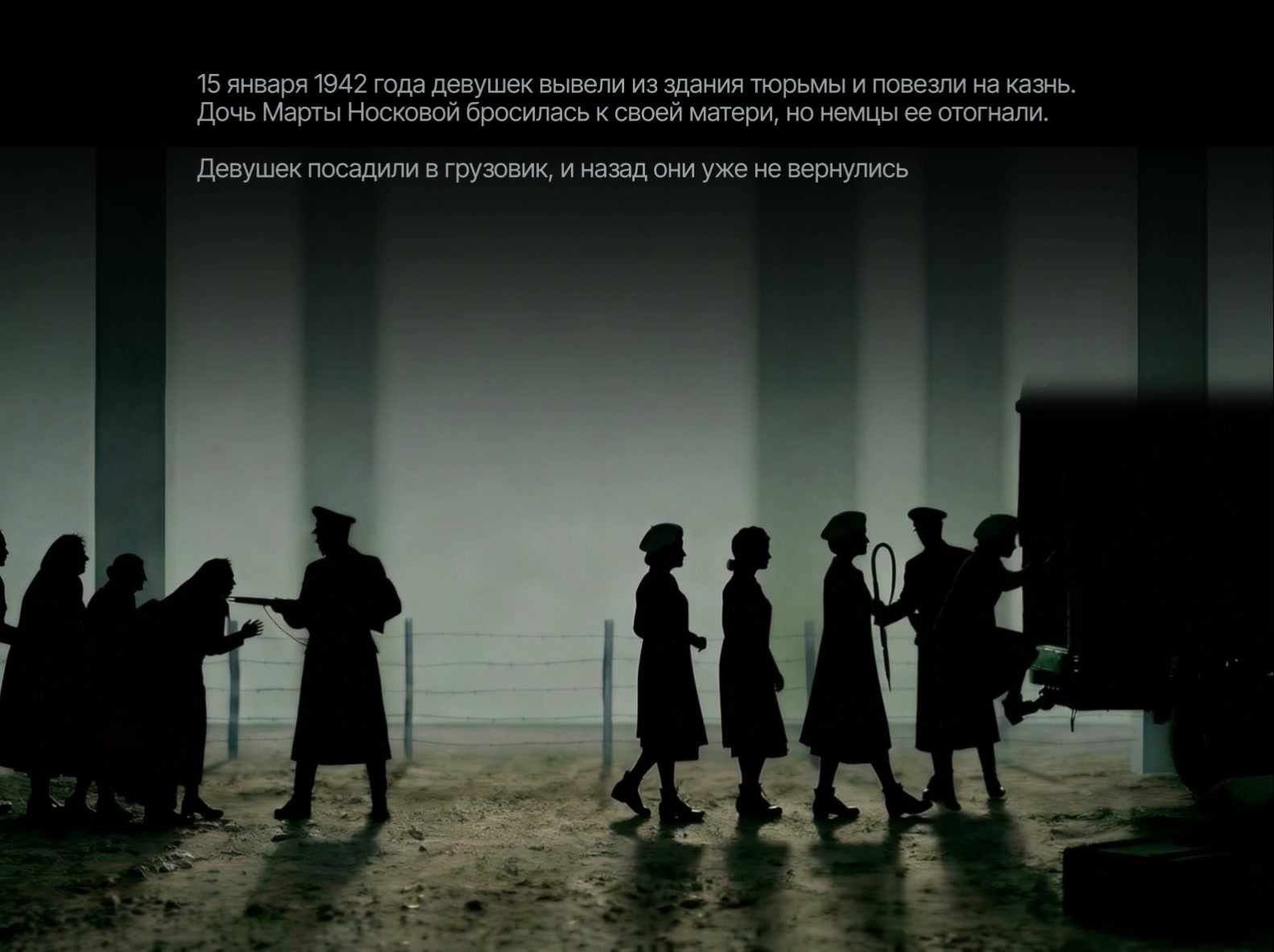
“The girls’ feat” is a shadow-theatre-style projection about how the young women saved the prisoners. “A story of betrayal” consists of three scenes: whispering as if from behind a door; street sounds and a knock at the door; a silhouette film about the denunciation, the arrests in December 1941, the interrogations and the execution on 15 January 1942.
Liberation
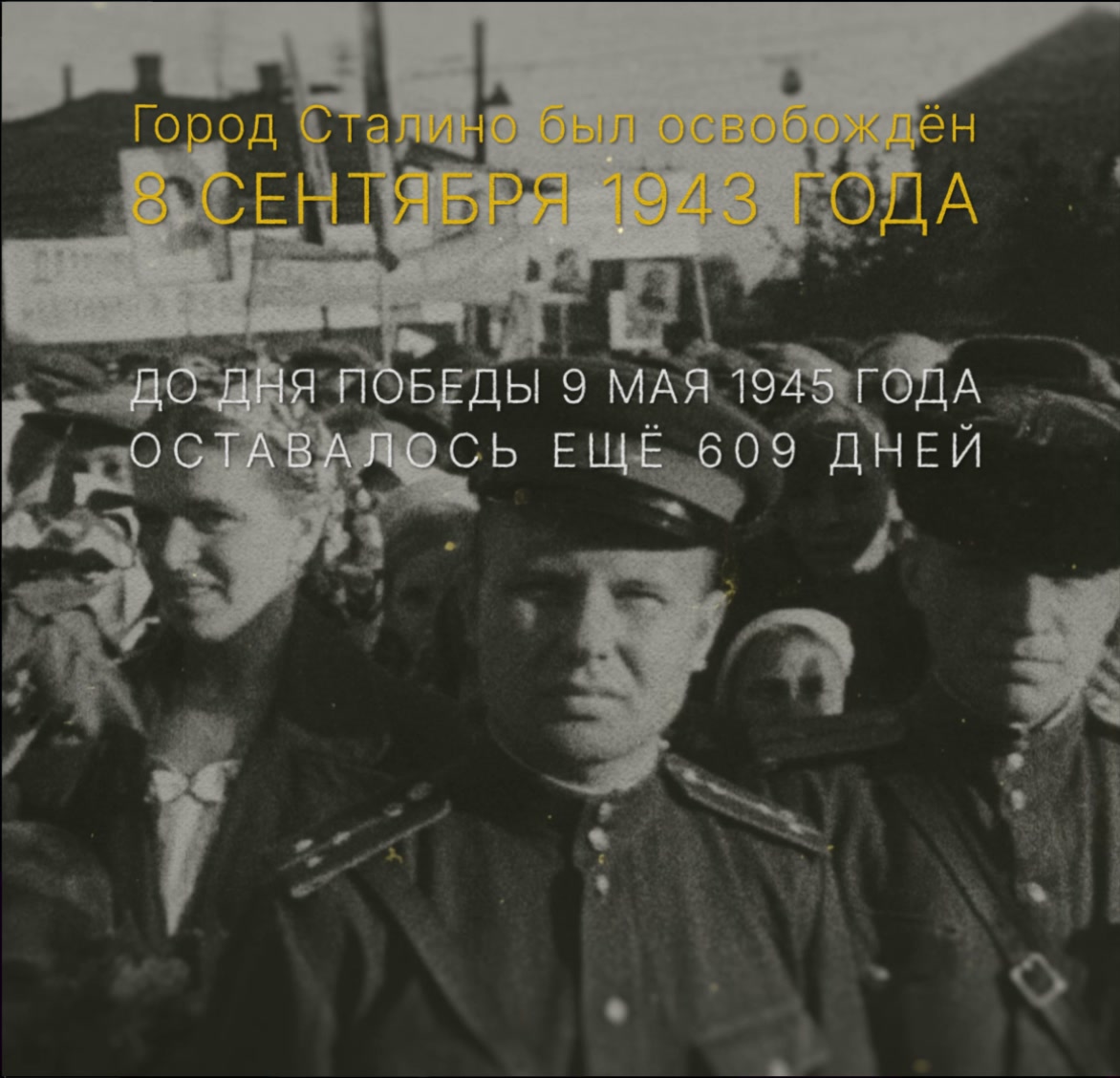
“The liberation of Stalino” is a projection with sound: newsreel footage of the liberation of the city on 8 September 1943 and the caption “There were still 609 days to go until Victory Day on 9 May 1945”. One more touch screen covers the Red Army’s battles for the city.
Entrance area
A one-minute intro video about the museum and ticket prices.
How it is built
The touch-screen applications and the videos for the vertical screens are built as separate Windows programs; the projection films are video files.
“Bookshelf” is linked to the real books: sensors are built into some of them, and touching a spine brings quotations up on the neighbouring screen; after a minute of inactivity the screen returns to its start screen.
Sound is used where it is needed: directional sound in “Tomorrow was the war” and “A story of betrayal”, an audio handset in “Recollections”; “Radio set” is a separate sound installation.
The “Peacetime” video is made for a vertical 4K screen (2160×3840).
The archive materials in the applications are credited to their sources: “From the collections of the State Central Museum of Contemporary History of Russia and the State Archive of the Russian Federation”, “From the collection of Gosfilmofond of Russia”.
Result
The museum opened on 19 January 2026. Its exhibition holds about 450 items, both original and in multimedia form.