Museums · 2026
Ryazan History Museum. “Two capitals”, “The book in the Age of Enlightenment”, “Folk costume”
Museums / Ryazan History Museum. “Two capitals”, “The book in the Age of Enlightenment”, “Folk costume”
About the project
Software, videos and voice-over for three halls of the new exhibition at the Ryazan History Museum: “Two capitals of the Ryazan Principality”, “The book in the Age of Enlightenment” and “Ryazan folk costume”.
On 13 March 2026, a new permanent historical exhibition opened to visitors at the Ryazan History Museum on Sobornaya Street: four sections and more than 4,500 objects from the museum’s collections. Three of the four sections are devoted to Old Ryazan and Pereyaslavl-Ryazansky, to the book culture of the Russian country estate and to Ryazan folk costume.
For these three halls we made 29 installations: software for touch screens, projections and audio handsets, videos and voice-over. The work ran from late September to early November 2025; we also carried out the on-site commissioning.
This is the second stage of our work at the museum. We made the “Ryazan Governorate” section and the entrance area in the first stage, which is a separate project.
Year
2026
Industry
Museums
Scope of work
29 installations in three halls, comprising 21 programs, 6 videos and 4 audio recordings
Venue
Ryazan History Museum, Ryazan
- 29
- installations in three halls
- 21
- programs for screens, projections and audio handsets
- 13.03.2026
- exhibition opens to visitors
The task
The installation scripts came from the general contractor. Based on them, within a month — from 1 October to 2 November 2025 — we had to produce the software, videos and sound for three halls, and to have everything running in the museum by 7 November. Almost every installation has its own controls: a touch screen, buttons, blacksmith’s bellows, an audio handset, a spinner, a book page.
What we did
“Two capitals of the Ryazan Principality”. Old Ryazan
A projection onto a model of Old Ryazan: the projector lights up the districts and buildings of the city, and the district is selected on a touch screen — the Northern Cape, the Northern and Southern hillforts, the posad, and the Cathedrals of Saints Boris and Gleb, of the Dormition and of the Saviour. An interactive wall map with a timeline: the visitor presses the button for a period and sees how the borders of the principality change, towns appear and battles take place.
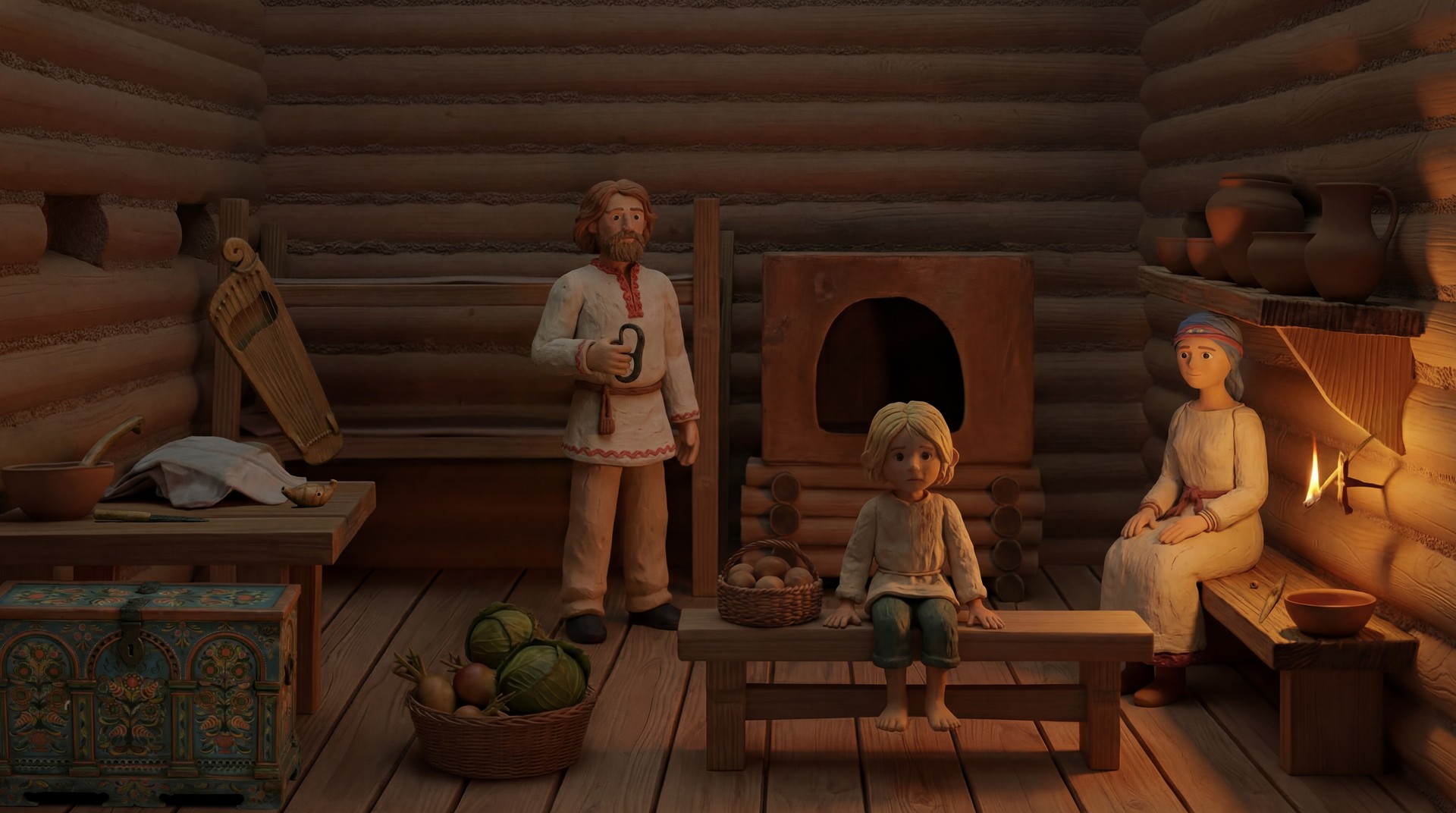
A table with a screen in the photo zone styled as an izba holds three children’s games: “Archaeological puzzle”, “Inside an Old Russian izba” (find the objects and put them in their places) and “Craft workshop of Ancient Rus”, where you make the work of a glassblower, bone carver, blacksmith or potter step by step.
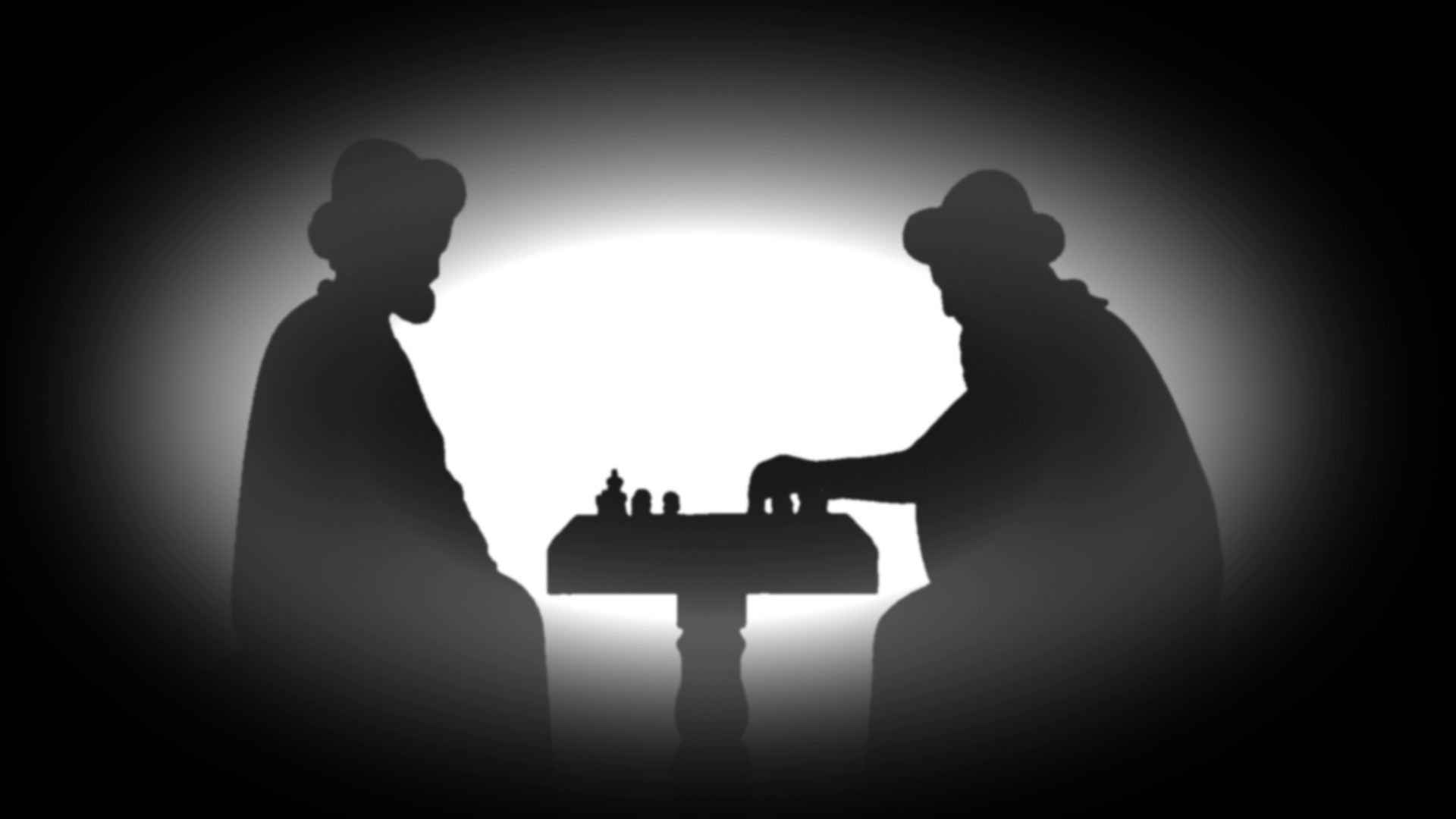
The forge: the visitor pumps real blacksmith’s bellows, and the projected blacksmith starts forging; to keep the work going, the fire in the hearth has to be fed with the bellows. A shadow projection: two jewellers at a chessboard. A video on bone carving: close-ups of the craftsman’s hands with text explanations.
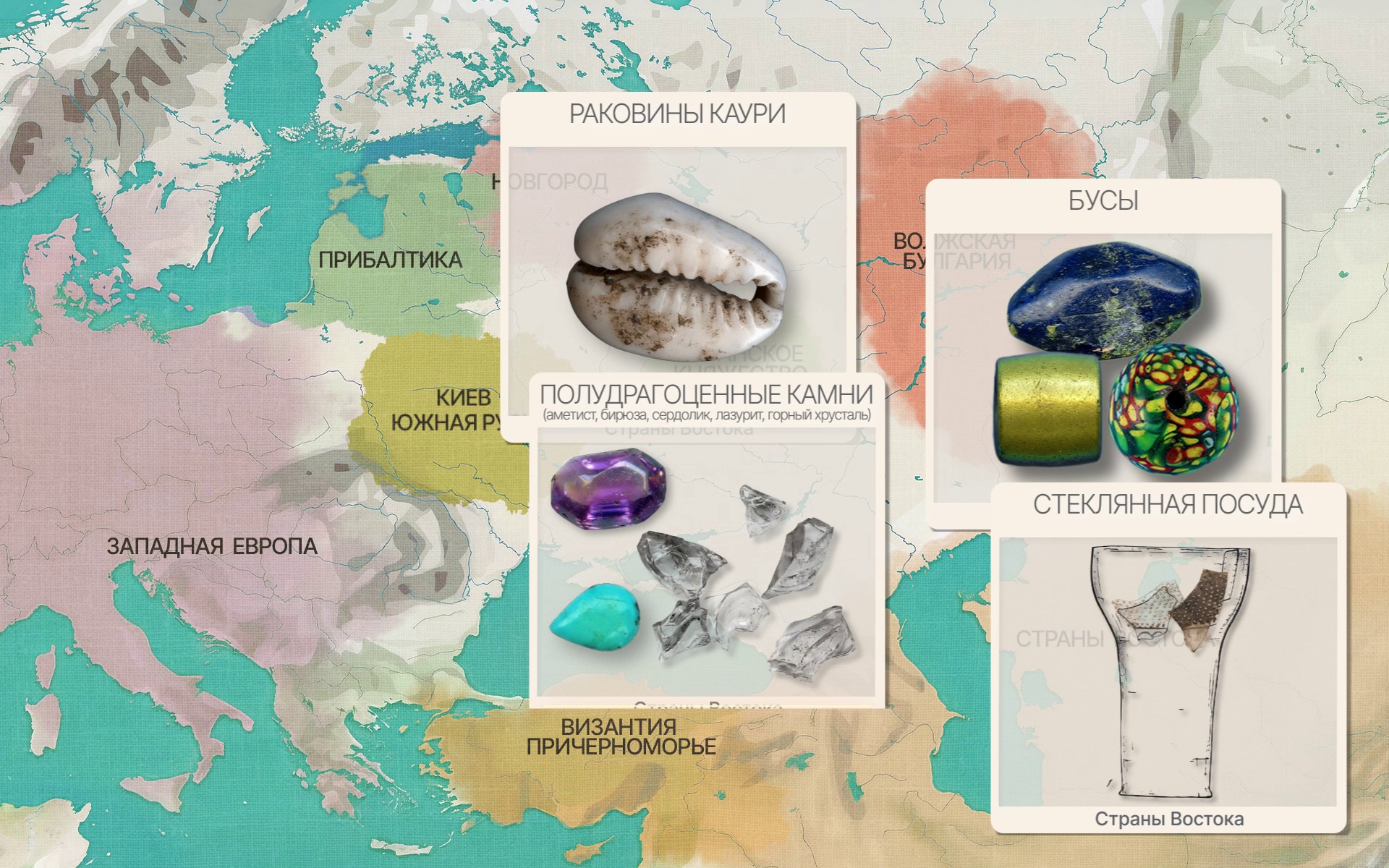
“The 1822 hoard” is a touch screen with an archaeological map and seventeen hoard finds. A map of imported goods: the routes by which goods reached Ryazan from the Baltic, Novgorod, Volga Bulgaria, Kyiv, Western Europe, Byzantium and the countries of the East. Cards of goods appear on the map — cowrie shells, beads, glassware, coins, grivnas, amber.
“The Mongol invasion” — projections onto three walls around the museum’s diorama, with a voice-over. “How an Old Russian book is made. The Arkhangelsk Gospel”: the visitor assembles a pre-Mongol book from its materials in the right order.
Solotcha Monastery
A projection controlled from a touch screen: an 18th-century plan of the monastery, its churches and buildings, and an animation of its construction.
Pereyaslavl-Ryazansky
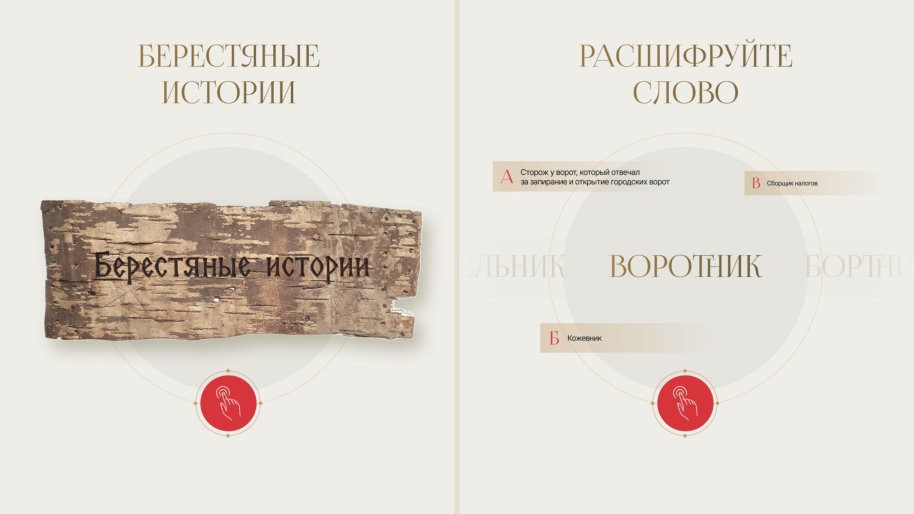
“How to write on birch bark?” — the history of birch-bark letters and the quiz “Decipher the word”. The projection book “Sledovannaya Psalter”: the image falls onto paper pages, and the book recognises the page by its barcode. “Reconstructing footwear”: next to an original boot in the showcase is a screen where the footwear comes apart into pieces, each with its name and material.
An audio handset with eight sections on the archaeology of Pereyaslavl, and the prikaznaya izba (government office) with electronic labels “Petitions of the late 17th century”: a copy of each petition, a translation into modern Russian, and voice-over for ten of the petitions.
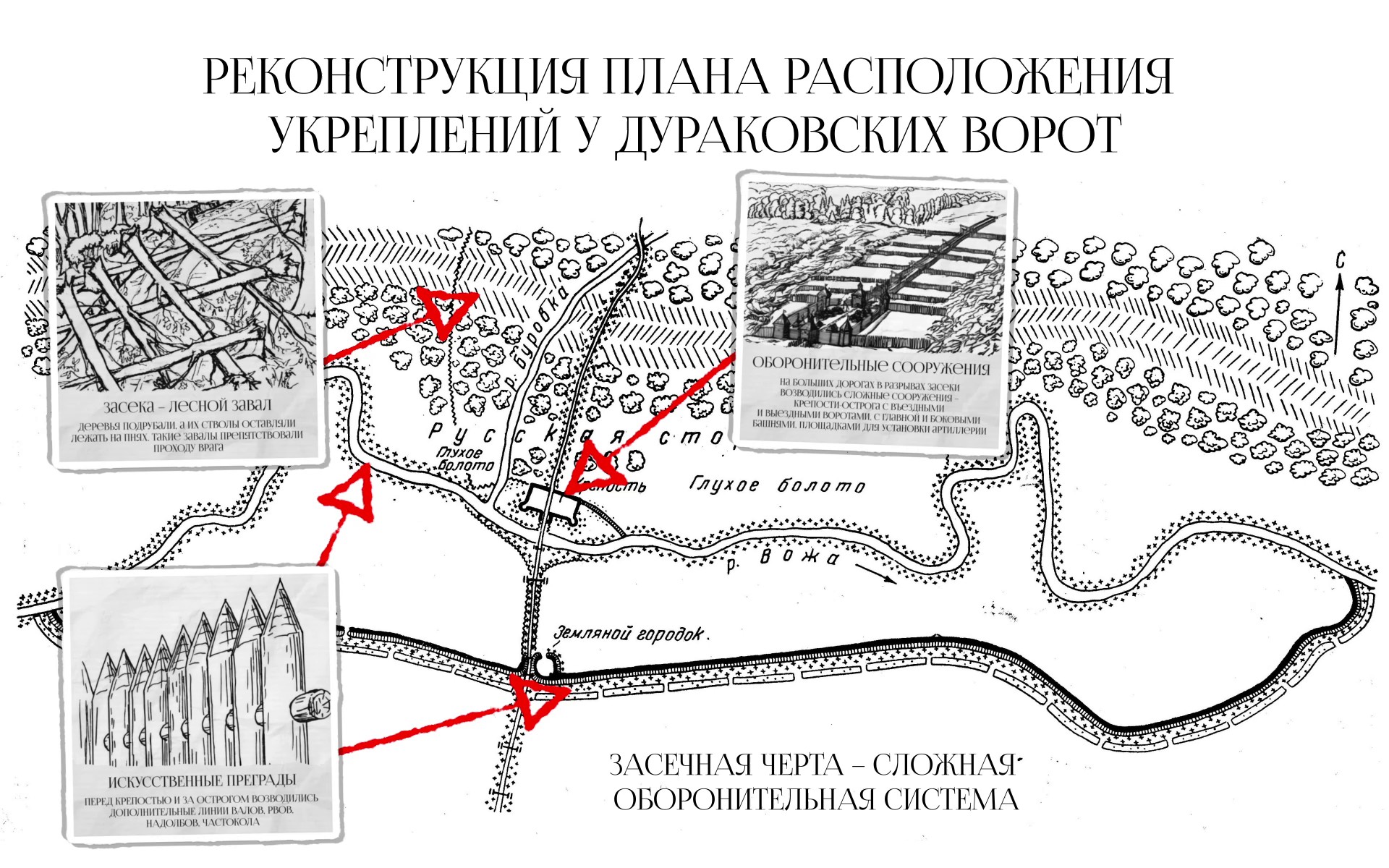
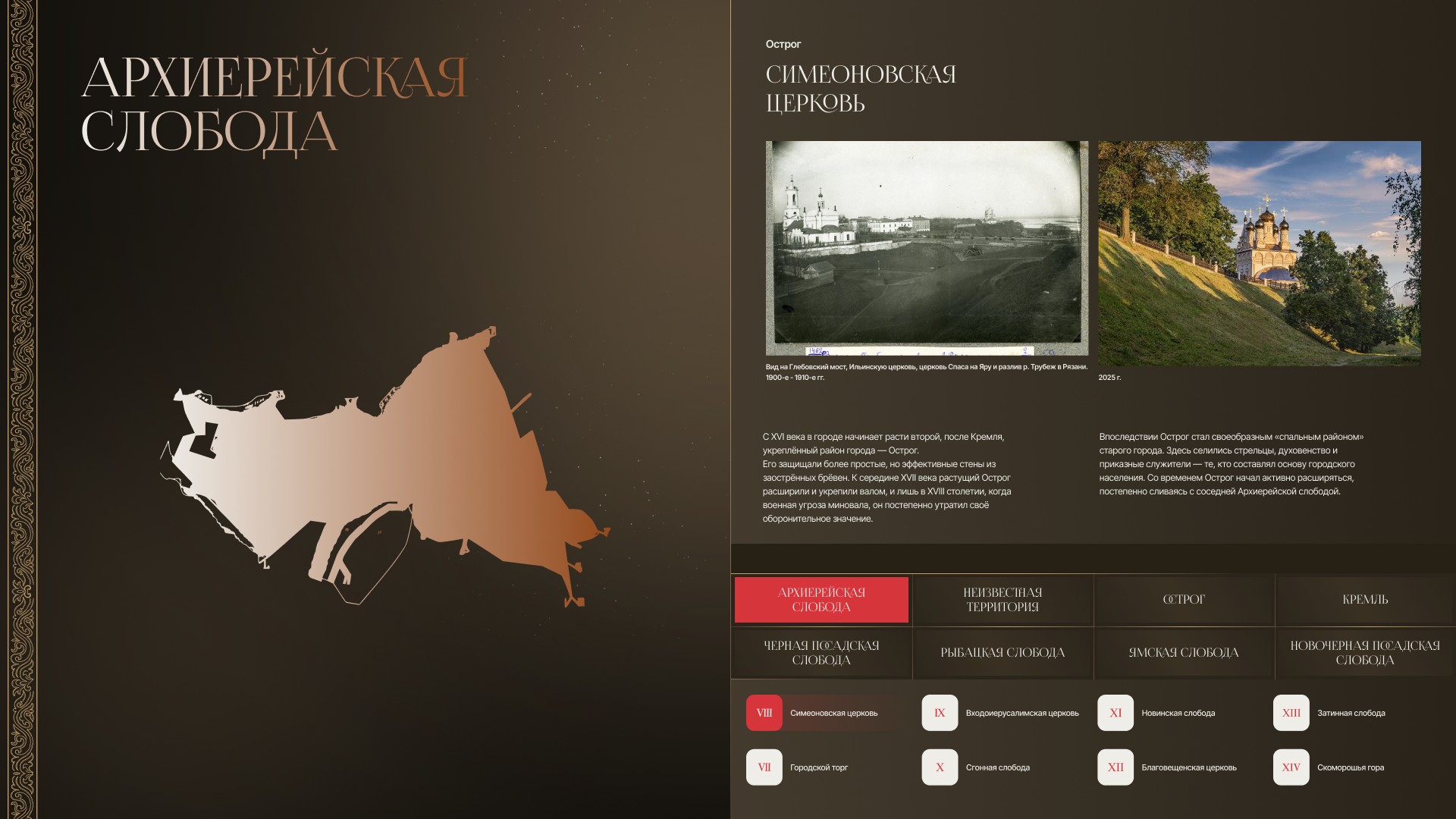
The video “The abatis line” — about the Great Abatis Line, some 600 km long, from Kozelsk to Pereyaslavl-Ryazansky, and about the Ryazan abatis. A multimedia map: modern Ryazan with the boundaries of the slobodas taken from a 17th-century map — the Arkhiereyskaya, Rybatskaya and Yamskaya slobodas, the Ostrog, the Kremlin and others — and “then and now” photographs.
Church
The “Gilding the chalice” audio handset: voice-over.
“The book in the Age of Enlightenment”
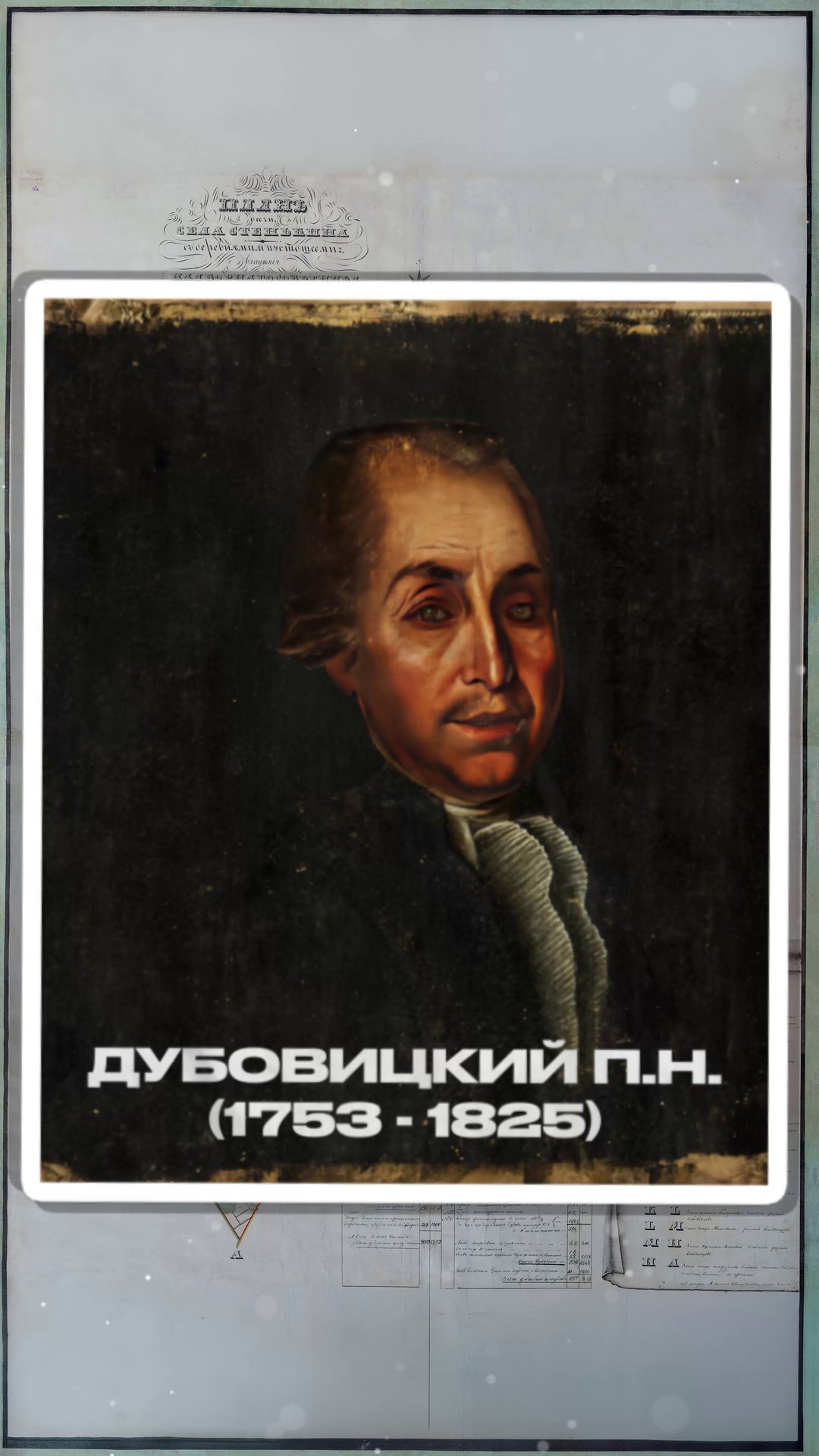
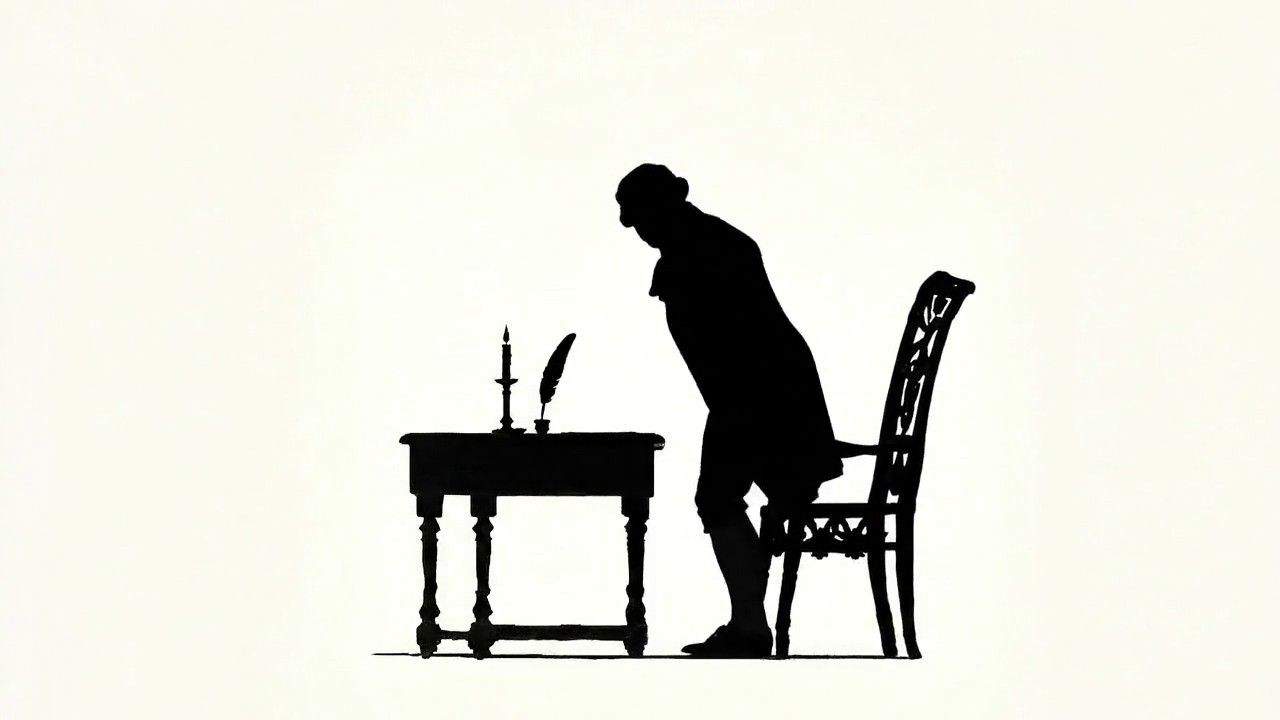
“Map” — a video about the Dubovitsky estate in the village of Stenkino: the plan of the village, portraits of the owners, the main house, the library. A catalogue in the “bureau”: twelve sections on landowners’ libraries and lists of books. “The study” — a shadow animation: Admiral Vasily Golovnin recalls his voyages and writes his memoirs.
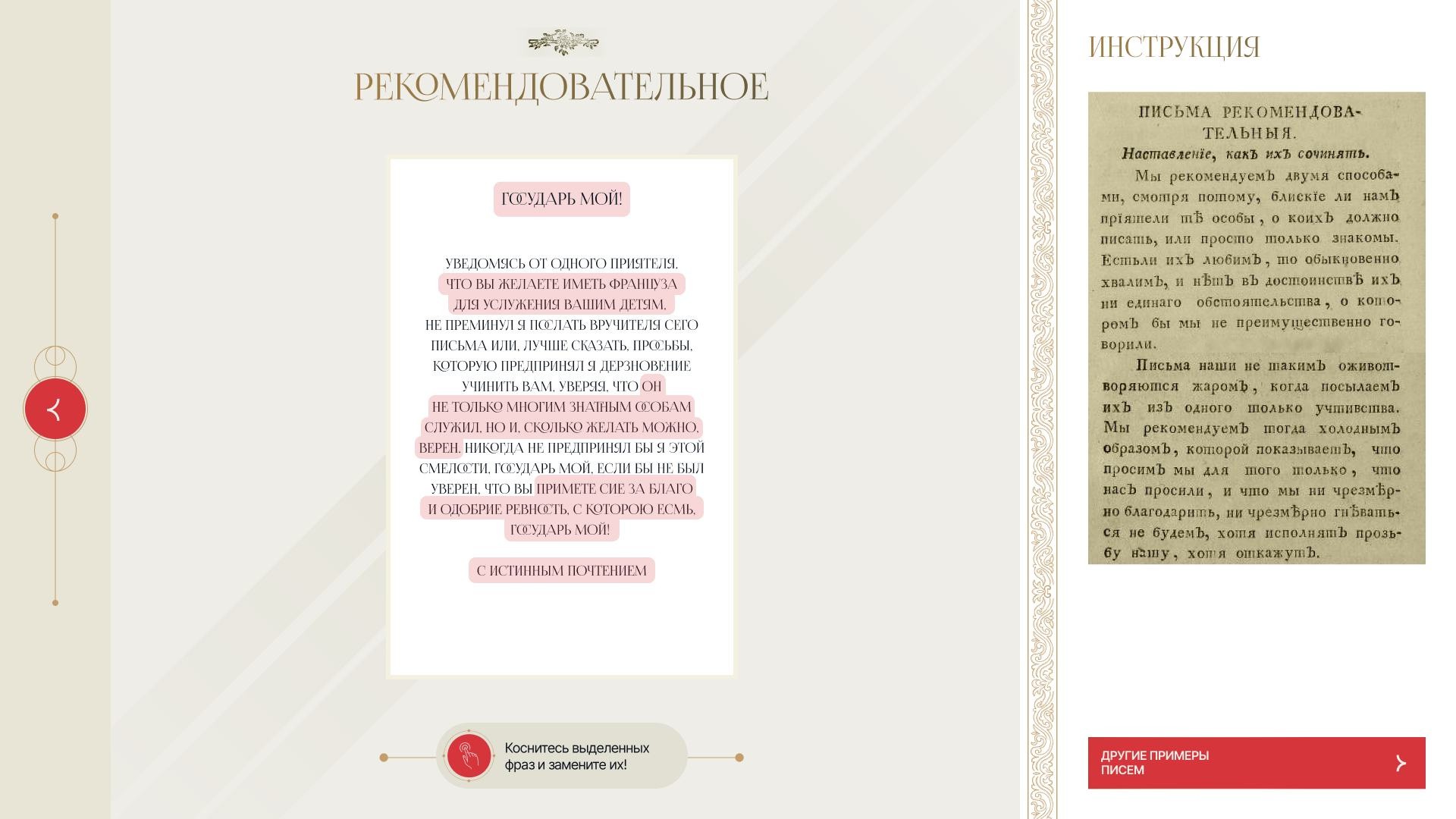
“The lecture room” — a screen in a picture frame; in standby mode it shows paintings about reading and libraries brought to life by a neural network. “The book”: the visitor assembles a page of an 18th–19th-century edition — binding, endpaper, title page, headpiece, tailpiece, typefaces. A game about the letters of the era: choose one of ten kinds of letter, from a letter of request to a letter of congratulation, replace the highlighted phrases with your own and check them against the guidance in an old letter-writing manual.
“Ryazan folk costume”
A projected map of the Ryazan Governorate divided into historical and ethnographic districts: the visitor touches a district, switches sections with a spinner and sees photographs and texts about the costume of that area. Three vertical screens with buttons — “Meshchera side”, “Ryazan side” and “Steppe side”: poneva skirt, kokoshnik, belt, sarafan, shirt.
How it is built
The interactive features are tied to objects in the hall: the blacksmith’s bellows launch a video, the period buttons control the map, a spinner controls the costume map, the audio handsets work in tandem with touch screens, and the projection book reads the barcodes of its pages.
The projection onto the city model is controlled from a separate touch screen; the map of the Pereyaslavl slobodas is a touch-sensitive projection.
The videos are built on archive maps, plans and photographs; shadow animation is used for the jewellers and for Golovnin’s study.
Result
The general contractor accepted the work on 7 November 2025. The exhibition opened to visitors on 13 March 2026; the official opening took place on 11 March.