Museums · 2026
Interactive installations for the museum of the Central Moscow Hippodrome
Museums / Interactive installations for the museum of the Central Moscow Hippodrome
About the project
Software and content for nine interactive installations, plus the visual identity, for the museum at the Central Moscow Hippodrome, which reopened after reconstruction on 17 September 2026.
On 17 September 2026, after a comprehensive reconstruction, the Central Moscow Hippodrome on Begovaya Street reopened. Founded in 1834, it is the oldest in Russia. The Museum of the History of the Hippodrome and Horse Breeding in Russia, located in its main building, has grown sixfold and now has three permanent exhibitions.
We made the software, interfaces and content for the museum’s nine interactive installations, a shared administration panel and the exhibition’s visual identity; we also wrote the instructions and carried out the on-site commissioning.
Year
2026
Industry
Museums
Scope of work
9 interactive installations, an administration panel, a visual identity
Venue
Museum of the History of the Hippodrome and Horse Breeding in Russia, Central Moscow Hippodrome, Moscow
- 9
- interactive installations
- 7
- animated videos for the interactive book
- 17.09.2026
- hippodrome reopens after reconstruction
The task
The museum tells the story of the hippodrome, horse breeds, stud farms and the people of harness racing and flat racing. Each topic needed its own way of interacting: a model with control panels, a slider along a timeline, a horseshoe, a tablet pointed at a sculpture or a wall, a spinner, a touch screen. All the screens had to share one style, be brought together in one administration system and be ready in time for the opening of the hippodrome.
What we did
“Model”
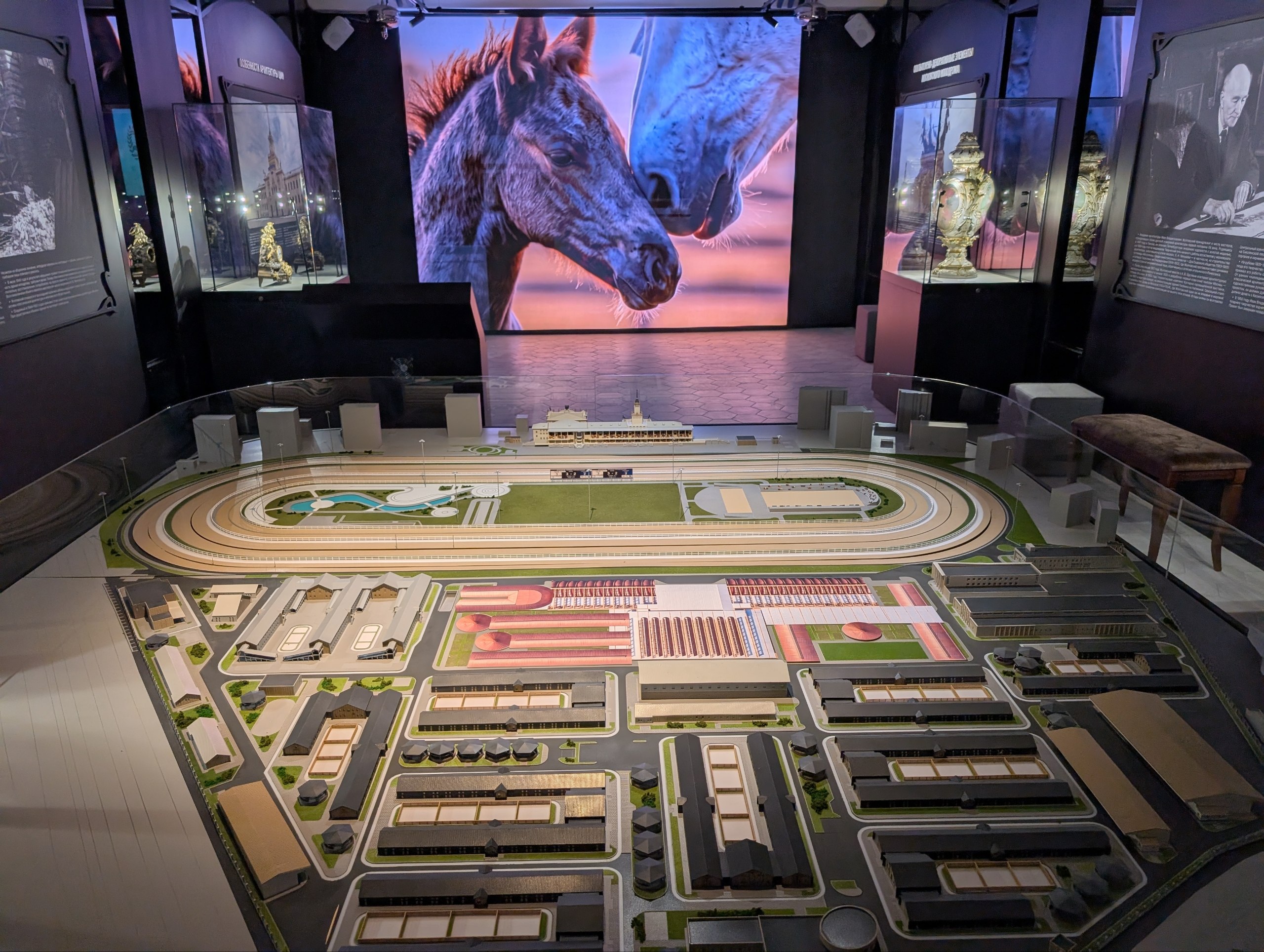
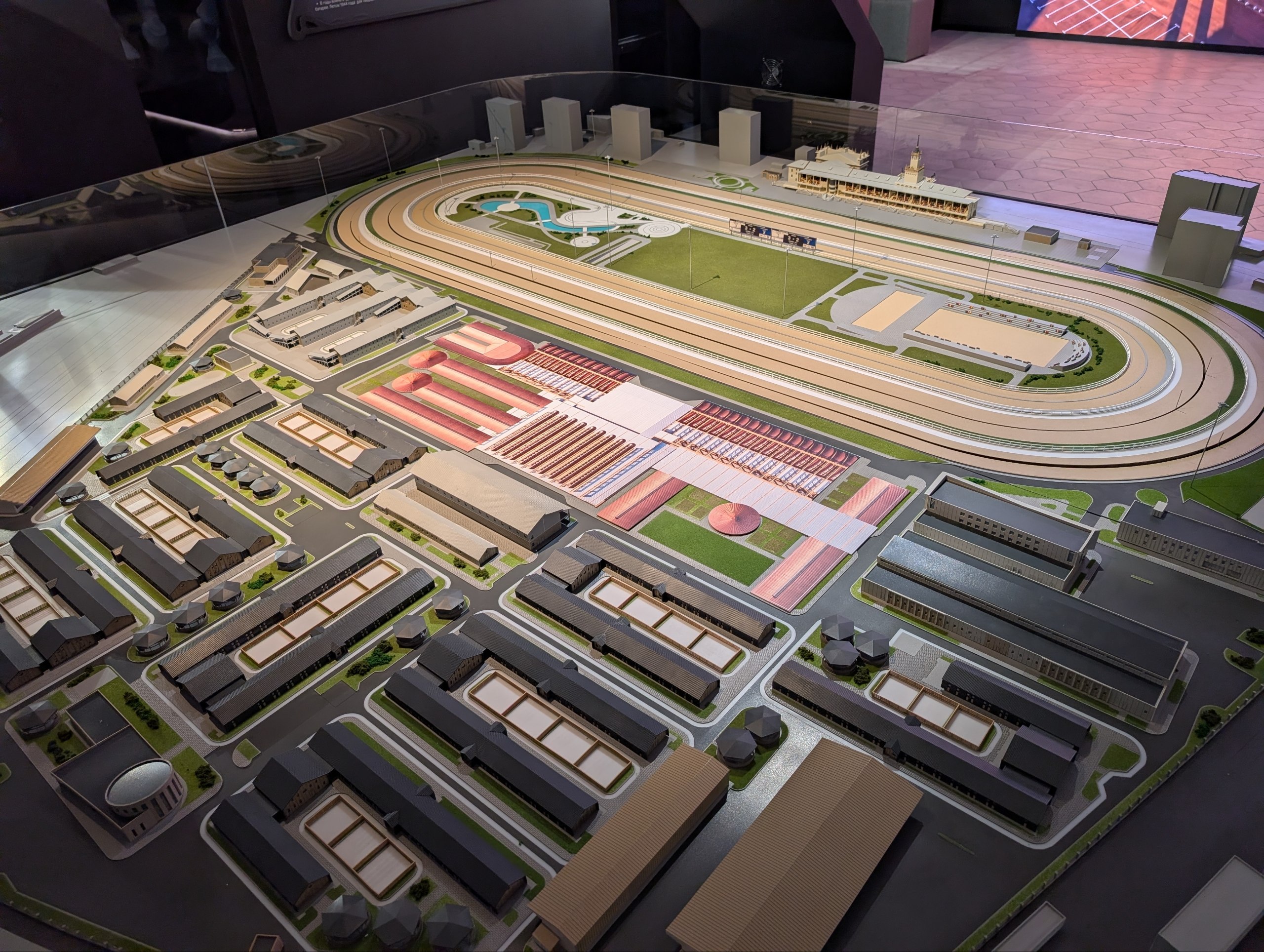
The central installation of the hall: a model of the present-day hippodrome and two touch panels. The visitor chooses a site — the main building (the “Racing Pavilion”), the entrance area with its pylons and sculptures, the harness-racing and flat-racing tracks, the stable yard with its stables, the veterinary centre, the underground tunnels — and it lights up on the model, while its history, photos and videos appear on the screen. There are two modes: a guided-tour show of up to three minutes and an autonomous loop of up to two.
“History. Facts. Events”
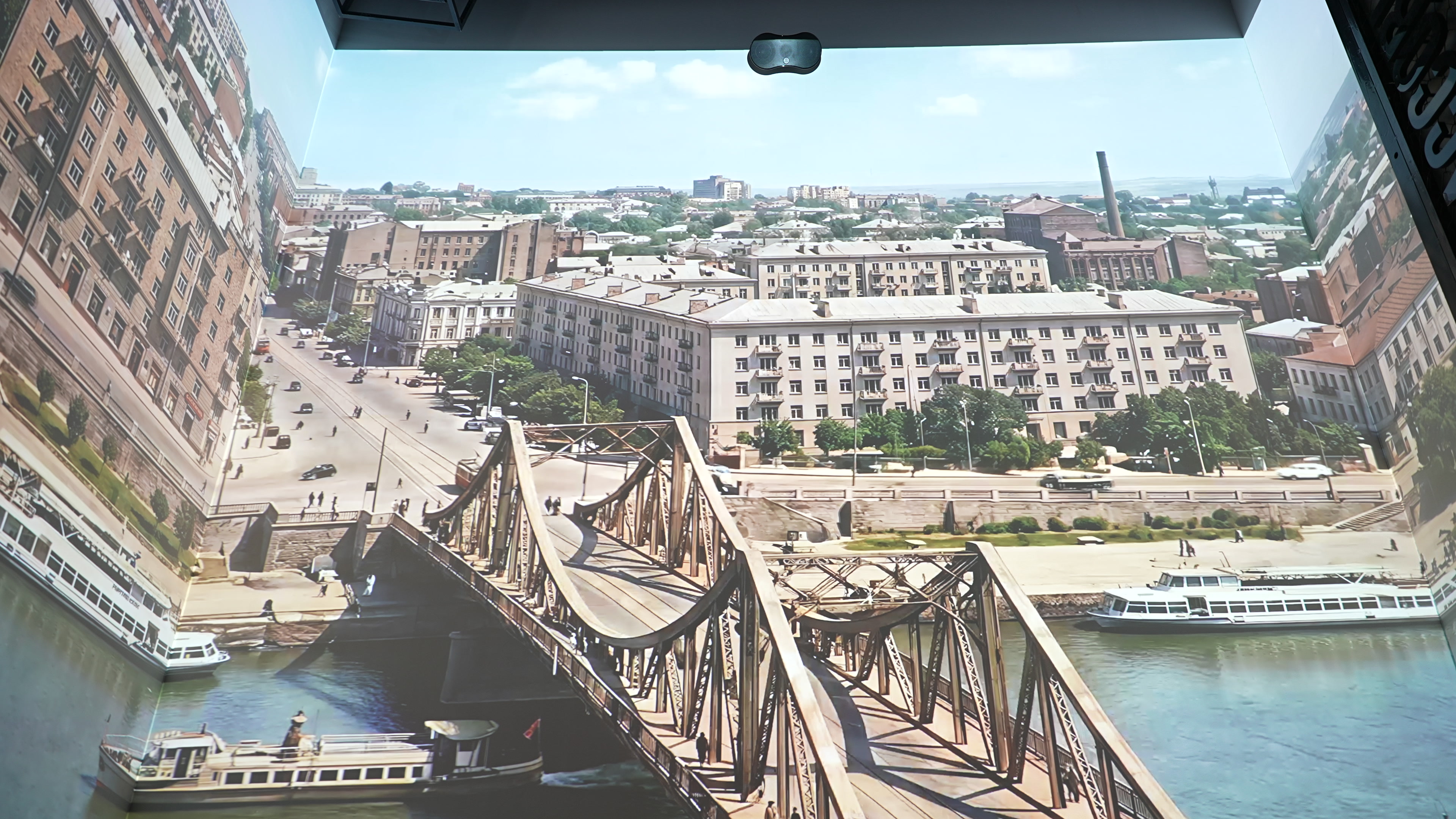
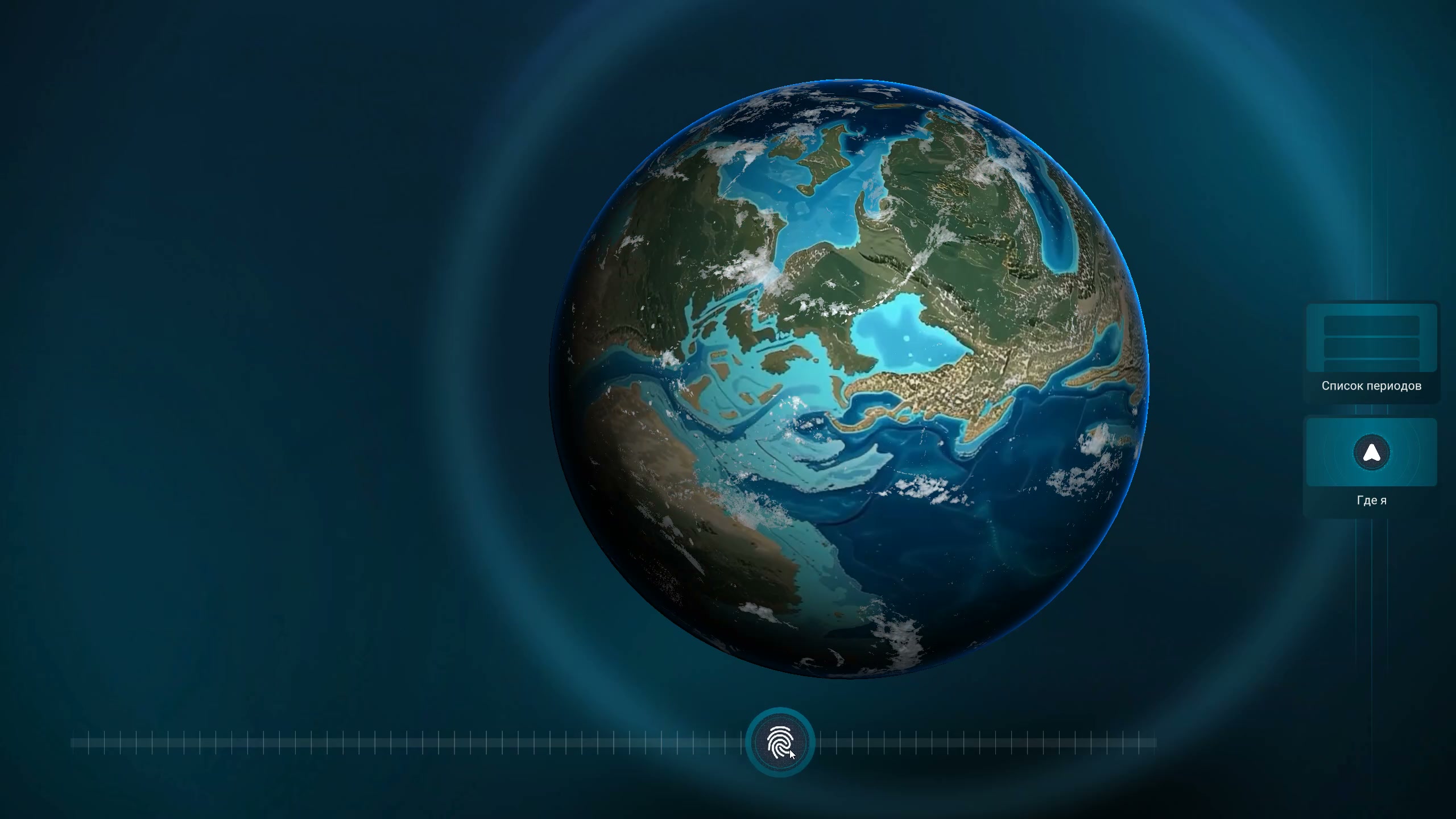
A timeline on a large screen. The visitor moves a slider along the historical scale — from the grant of land on Khodynka Field and the first race in 1834 to the start of the reconstruction — and the screen switches between videos of up to a minute: archive photographs, background notes, infographics, animation.
“Trotters / Racehorses”
A touch-screen catalogue with two sections, launched by touching a physical horseshoe. Texts, infographics and videos on how a trotter differs from a racehorse: gait, control, build, speed.
“Orlov trotter”
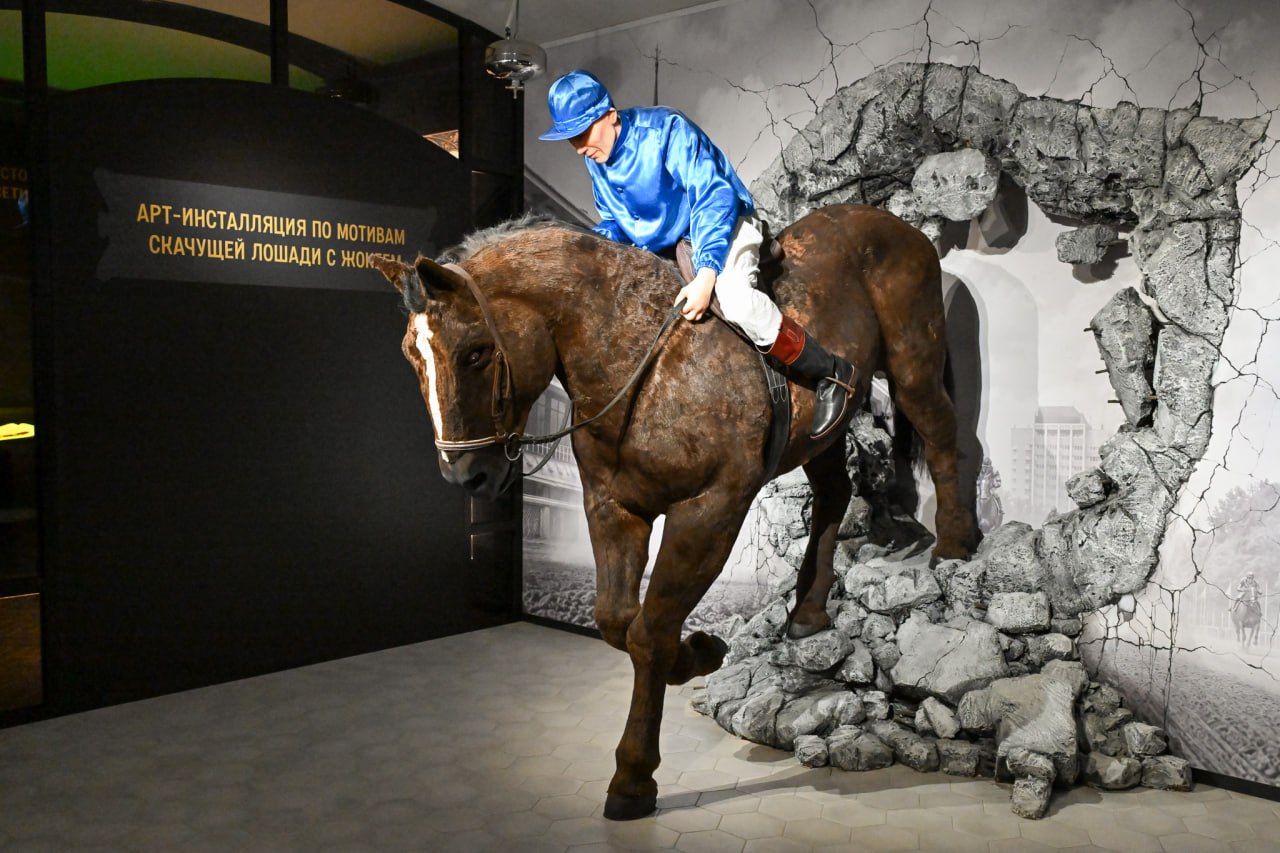
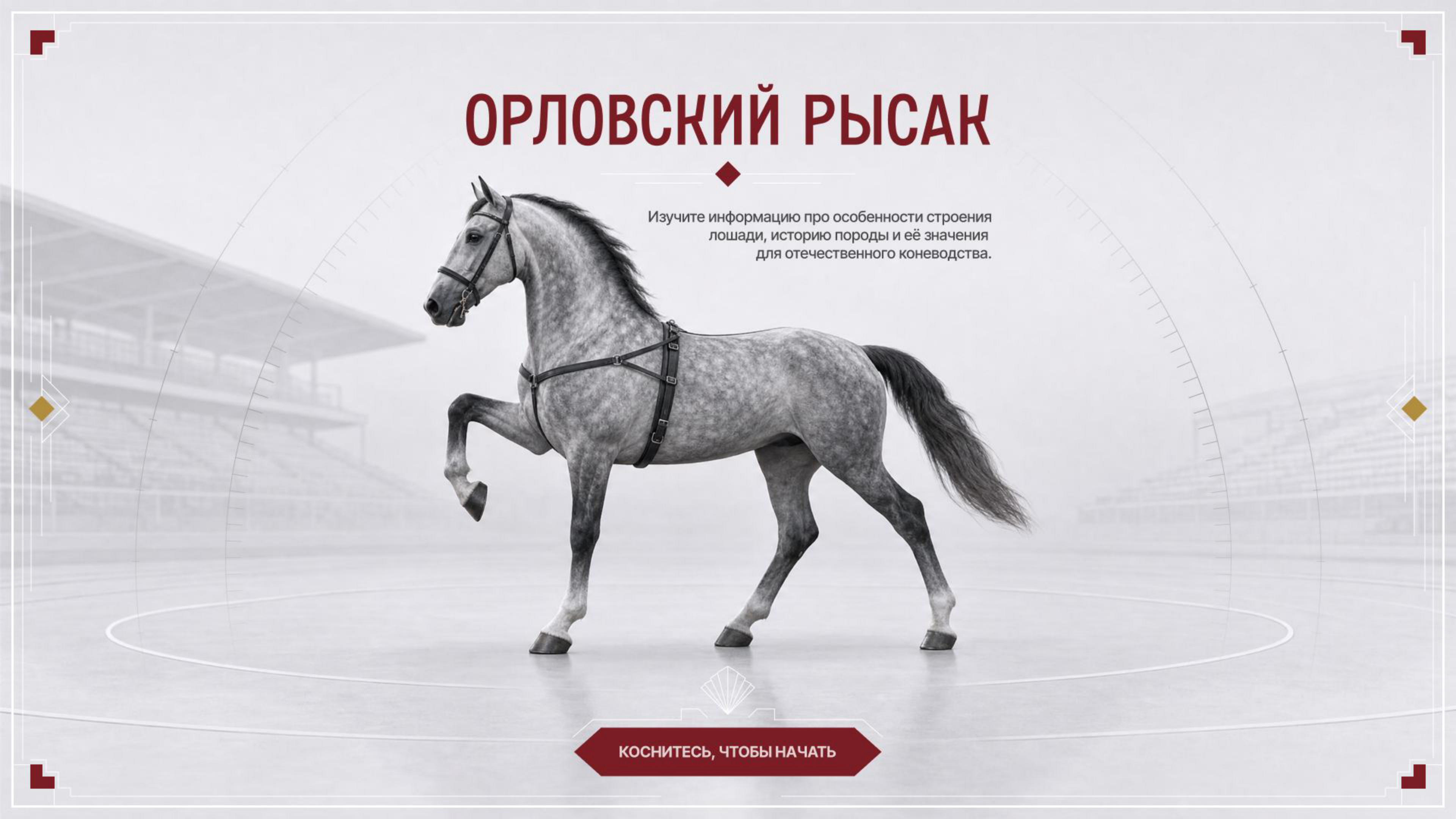
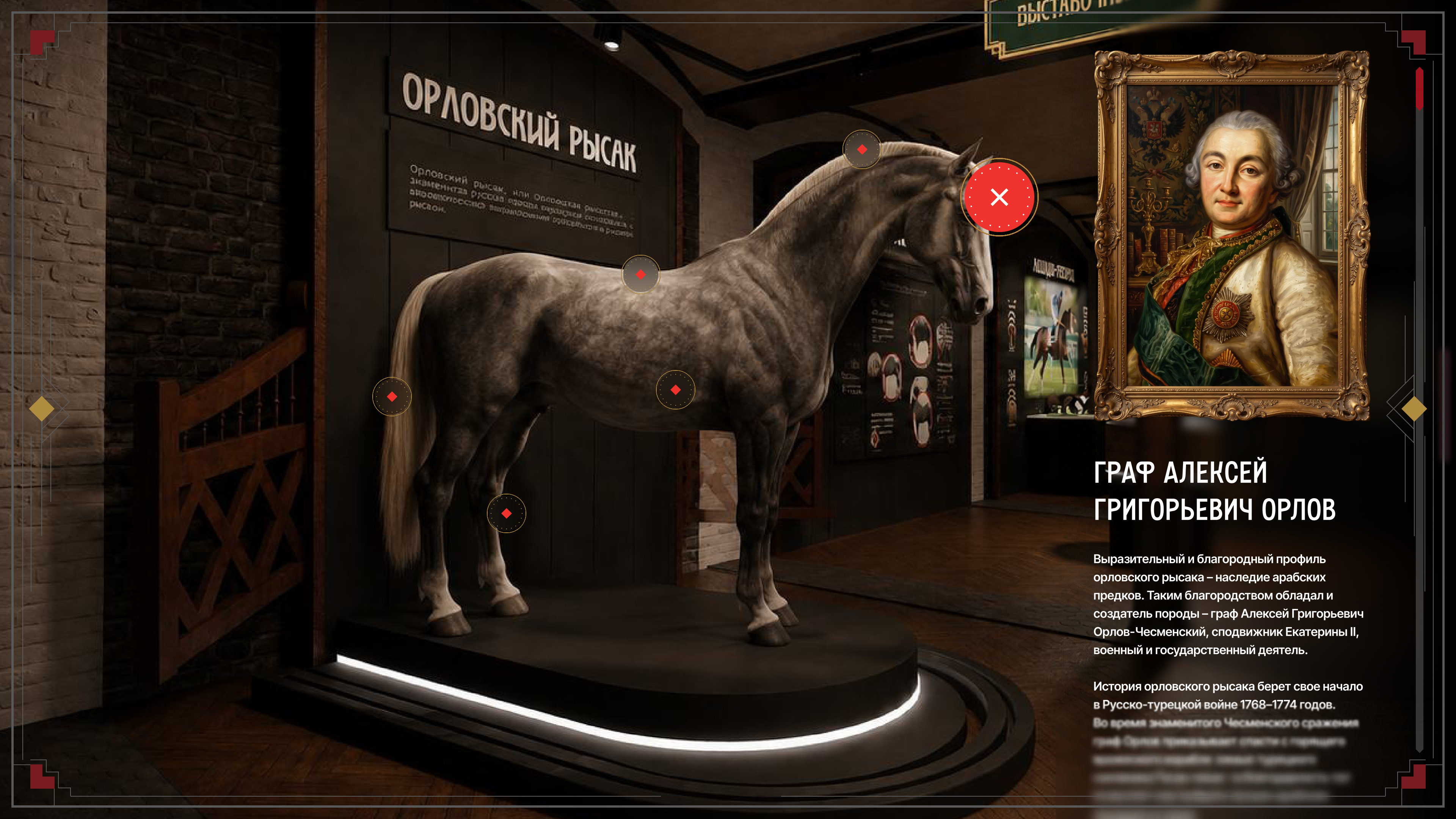
A tablet on a rail along a sculpture of a horse: the visitor points it at the part they want and gets information on anatomy, the skeleton, the muscles, the structure of the hoof, the history of the breed and its importance for Russian horse breeding. For the installation, we refined, textured and animated a 3D model of the trotter.
“Racehorses AR” and “Trotters AR”
The tablet is pointed at an image on the wall, and a digital layer appears on top of it: a horse with its height, weight, speed and the features of its breed. The photographs in these installations are brought to life with animation.
“Portrait. Stud farms”
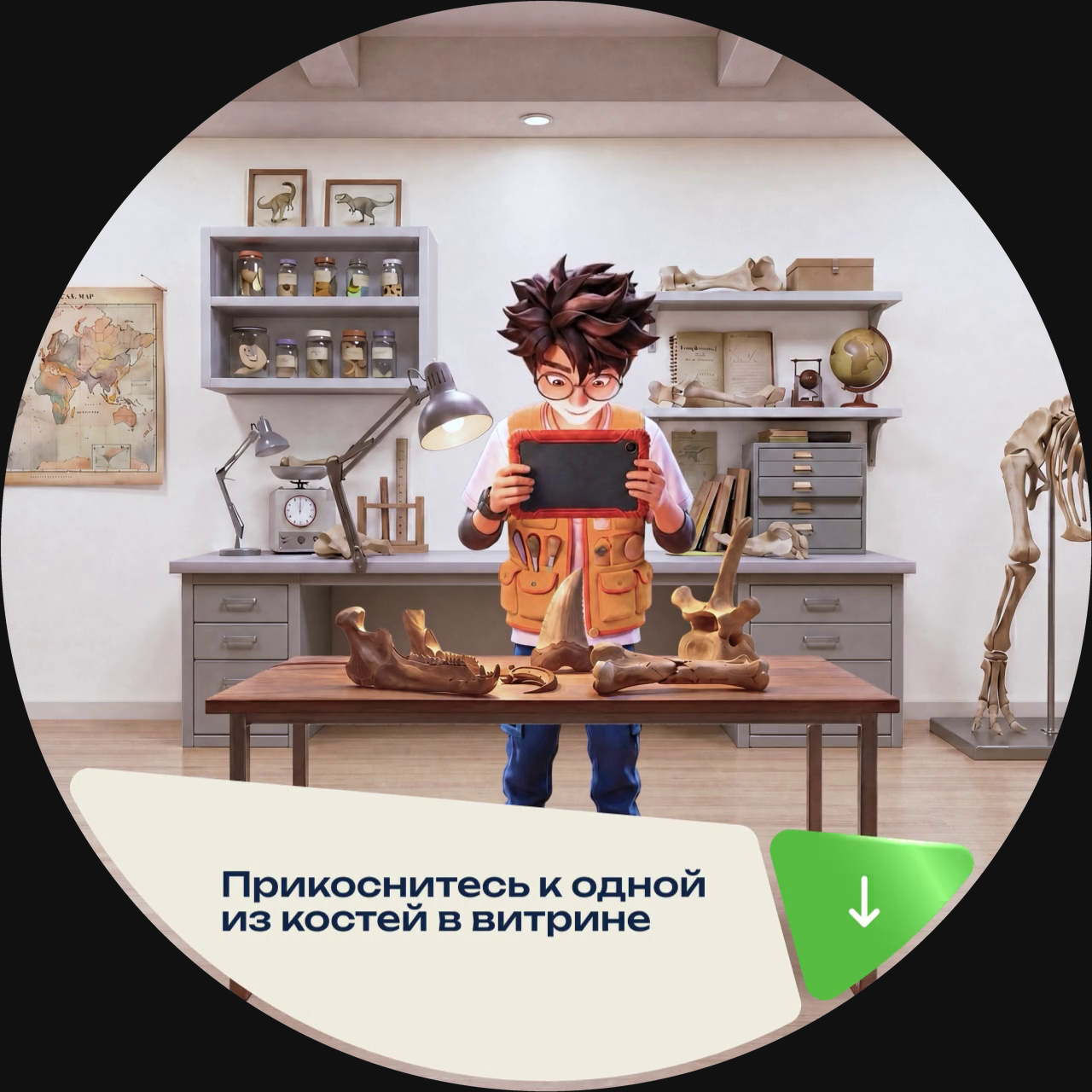
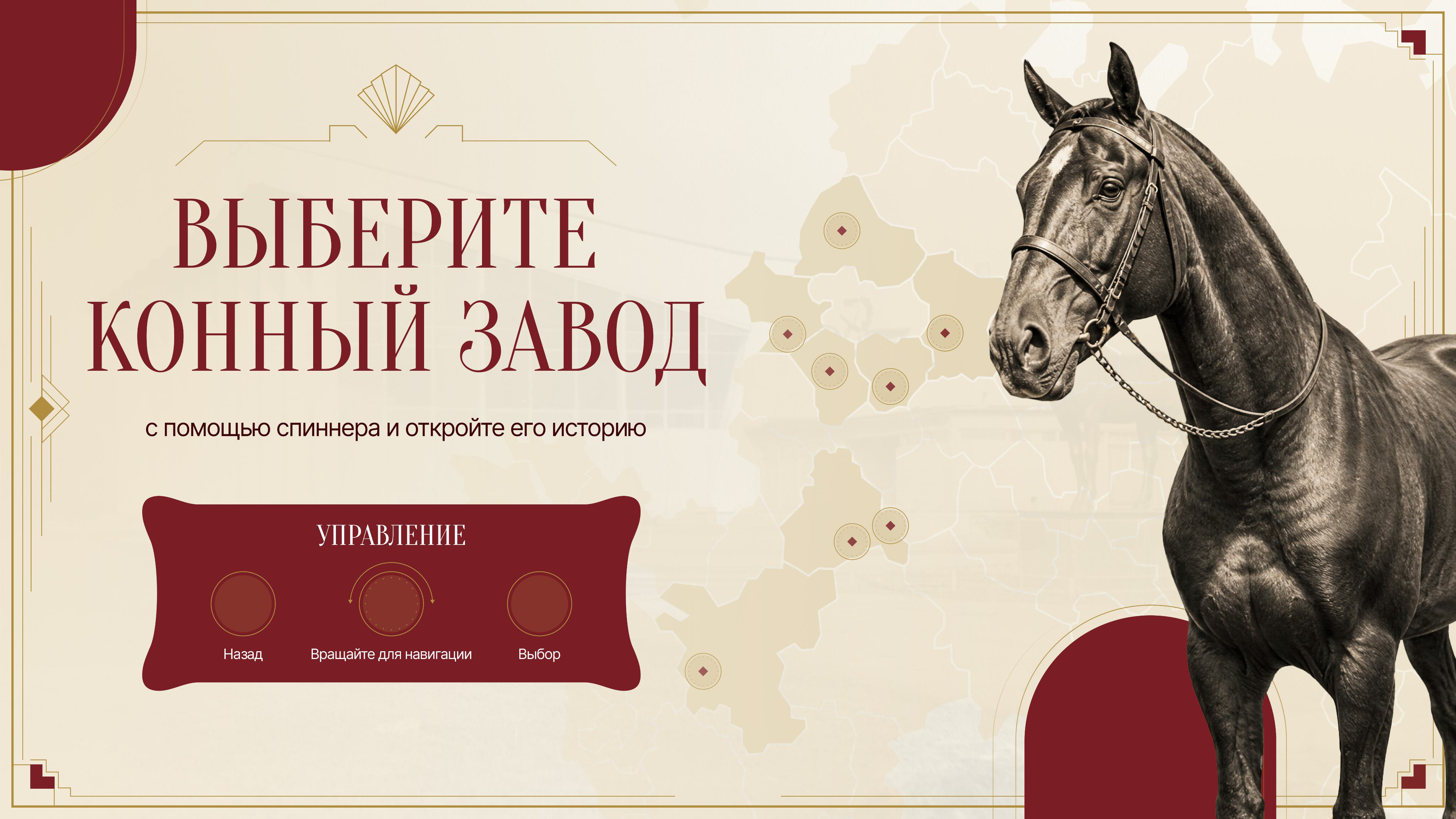
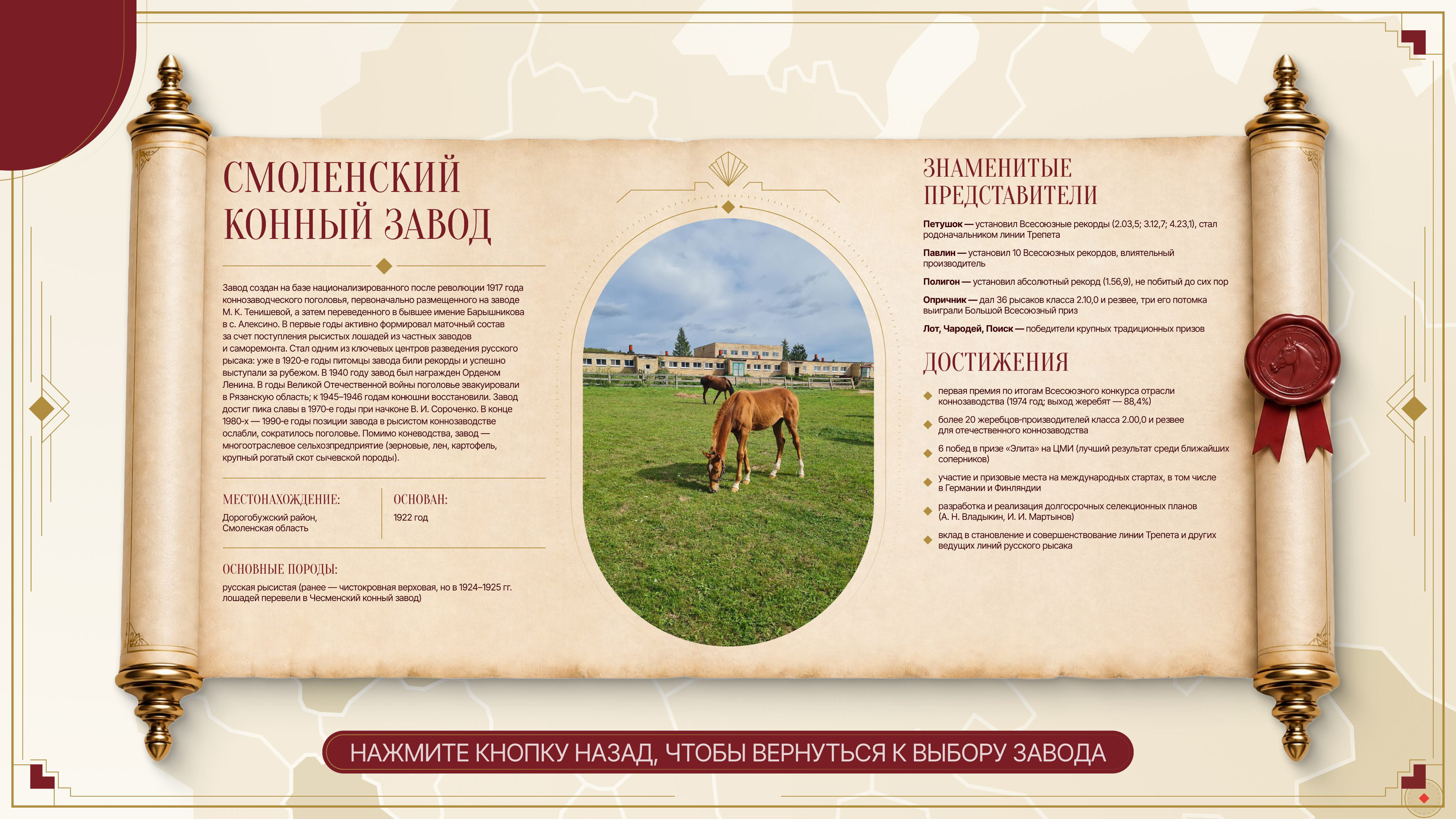
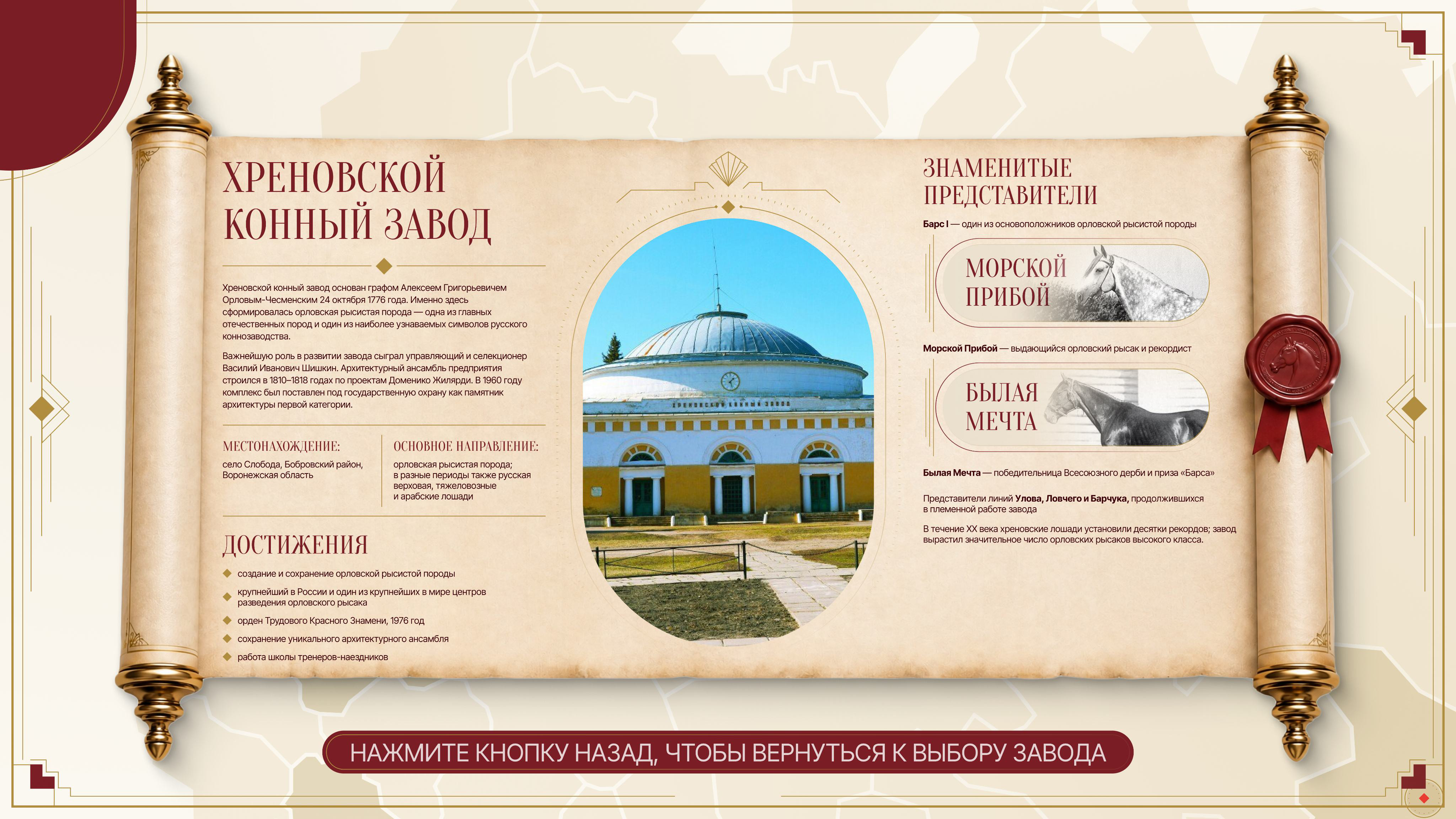
A round screen and a screen in a round mask, controlled with a rotating spinner. The visitor chooses one of nine stud farms on the map — Moscow No. 1, Khrenovskoy, Lokotskoy, Chesmensky, Perm, Prilepsky, “Voskhod”, Zlynsky and Smolensk — and “unrolls the scroll”: the history of the stud farm, its main breeds, famous horses and achievements.
“Drivers and jockeys”
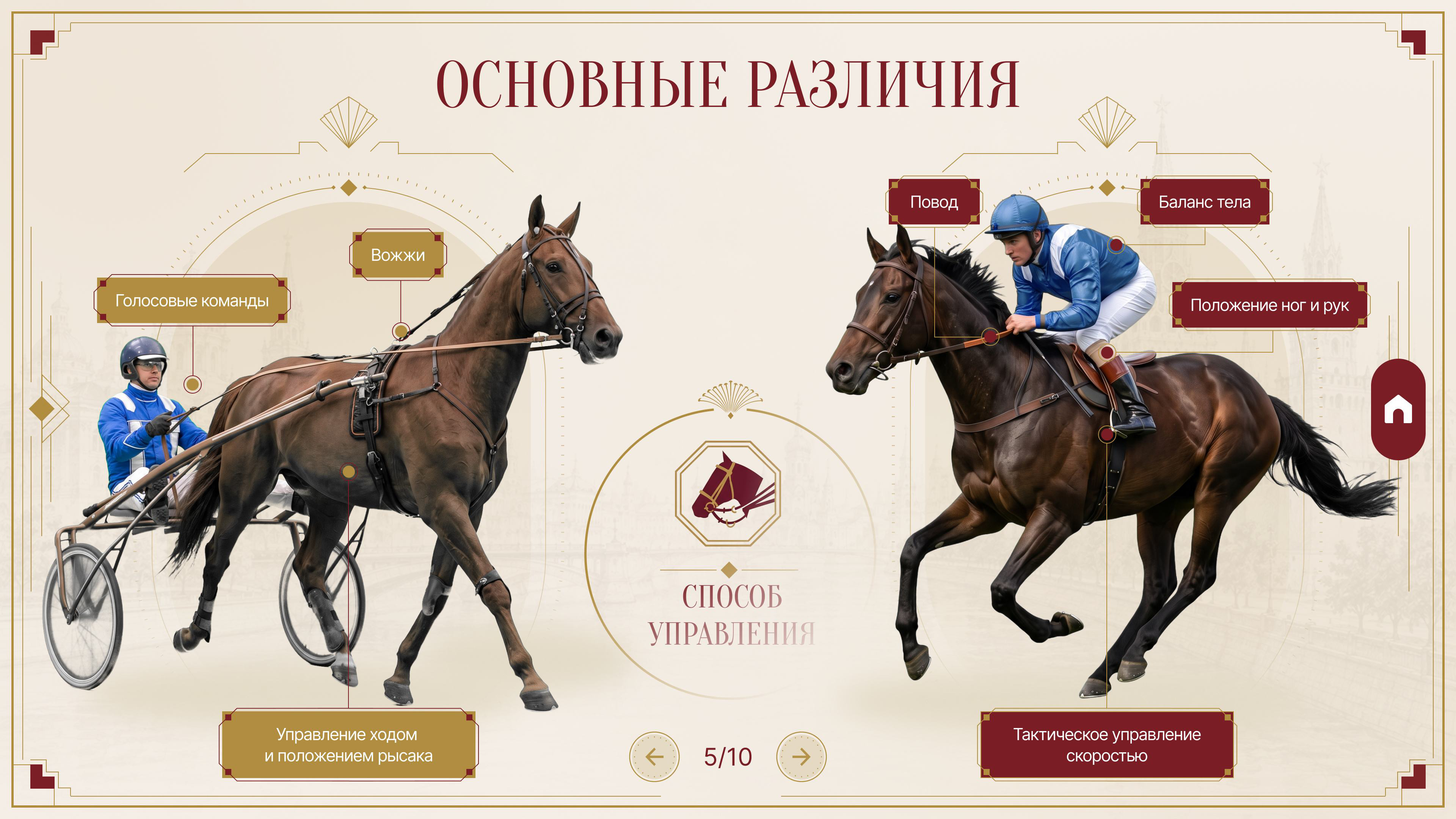
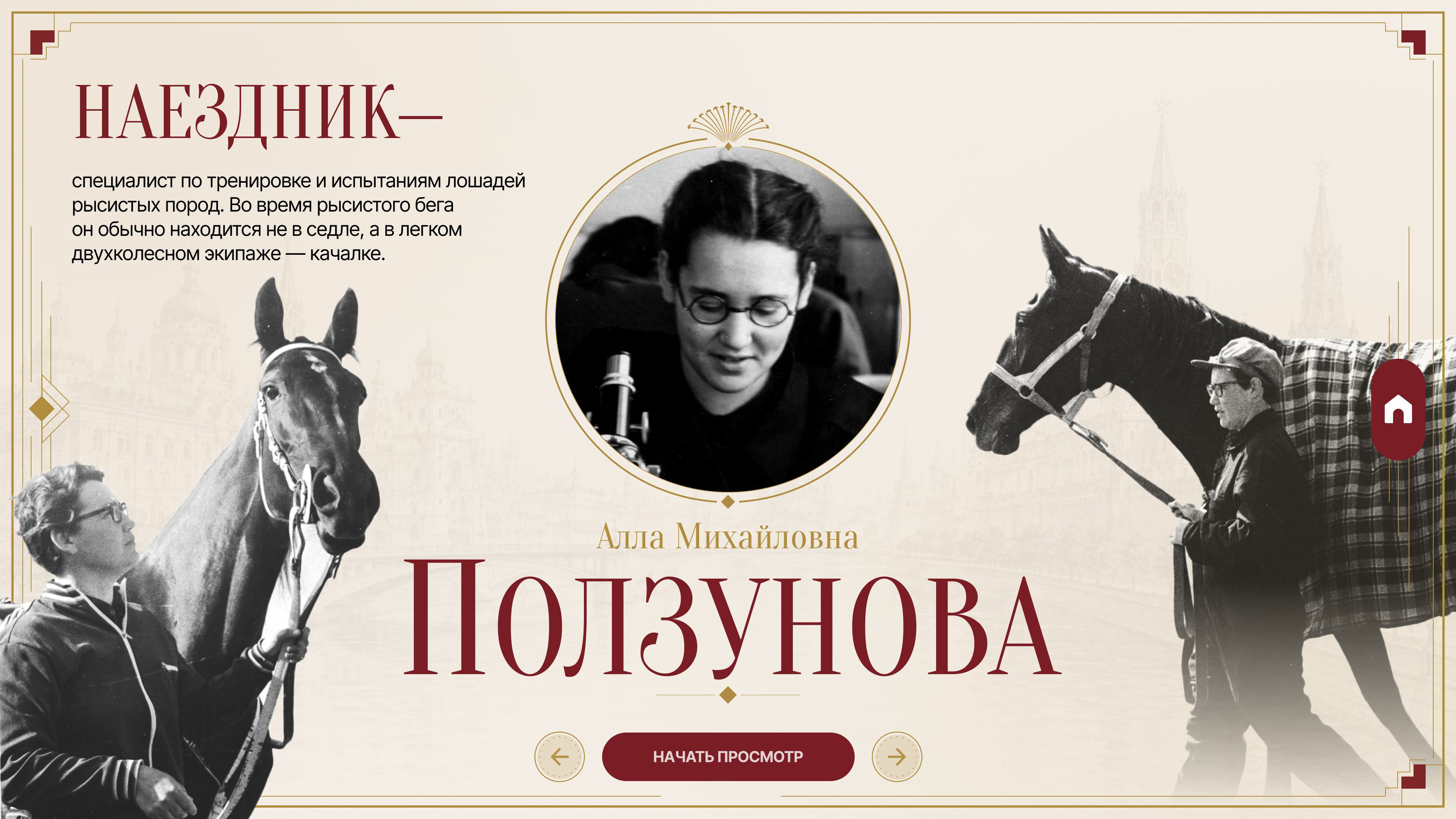
A touch screen with the sections “Drivers” and “Jockeys” and the comparison “Key differences” — ten points: type of race, type of horse, gait, position of the rider, method of control, main task, weight limits, role, qualifications, main danger. The sections hold cards of famous drivers and jockeys — Alla Polzunova, Mikhail Kozlov, Nikolay Nasibov — with videos of up to a minute.
“Visitors’ stories”
An interactive book: the visitor leafs through digital pages with archive photographs, texts, videos and the recollections of guests, staff and participants in the hippodrome’s events. We made seven animated videos for it.
Administration panel
All nine programs are brought together in one administration system.
Exhibition visual identity
The brand book: a palette of burgundy, gold, white and black; the typefaces Playen Sans for headings and Inter for text; pictograms arranged into a horseshoe; Art Nouveau frames echoing the interior of the hall; a timeline, captions and frames for photographs; labels; the interface style. The brand book sets the look of both the screens and the printed elements of the hall.
How it is built
The physical controls — the slider, the horseshoe, the spinner and the model’s panels — are connected to the software through sensors and OSC signals.
“Racehorses AR” and “Trotters AR” are built on augmented reality: the tablet recognises the image on the wall.
The interfaces are designed for 4K screens, and for “Stud farms” also for a 1280×1280 round display.
The videos for the timeline, the interactive book and “Drivers and jockeys”, as well as the animated photographs, were made with a combination of neural-network and hand animation.
Result
The work was handed over to the general contractor on 3 September 2026. The hippodrome with its renewed museum reopened on 17 September 2026.