Museums · 2026
Software and videos for the Amur Dinopark
Museums / Software and videos for the Amur Dinopark
About the project
Software and videos for five interactive installations at the Amur Dinopark in Blagoveshchensk: display cases with bones and palaeontologists’ tools, touch screens, and the “How much does a tyrannosaur eat?” scales.
On 6 June 2026 the Amur Dinopark opened on the Amur embankment in Blagoveshchensk — 462 m² in the Tribuna Hall city centre, between the House of Russian-Chinese Friendship and the Amur Seasons fair. It has more than twenty figures of prehistoric animals. The main figure is a ten-metre Amurosaurus that moves its head and tail. The dinopark is run by the Amur Region Hospitality Agency. The exhibition was created by another company, the general contractor for the project. The chief scientific consultant was palaeontologist Ivan Bolotsky.
We worked as a subcontractor to the general contractor and made the software for the interactive installations, the videos for the display cases with finds and palaeontologists’ tools, and the system used to change the content on the screens.
Year
2026
Industry
Museums
Scope of work
7 programs for 5 interactive installations, 12 videos, a content management system
Venue
Amur Dinopark, Tribuna Hall, Blagoveshchensk
- 5
- interactive installations running our software
- 12
- videos for the “Whose bone?” and “Excavations” display cases
- 06.06.2026
- opening of the dinopark
The task
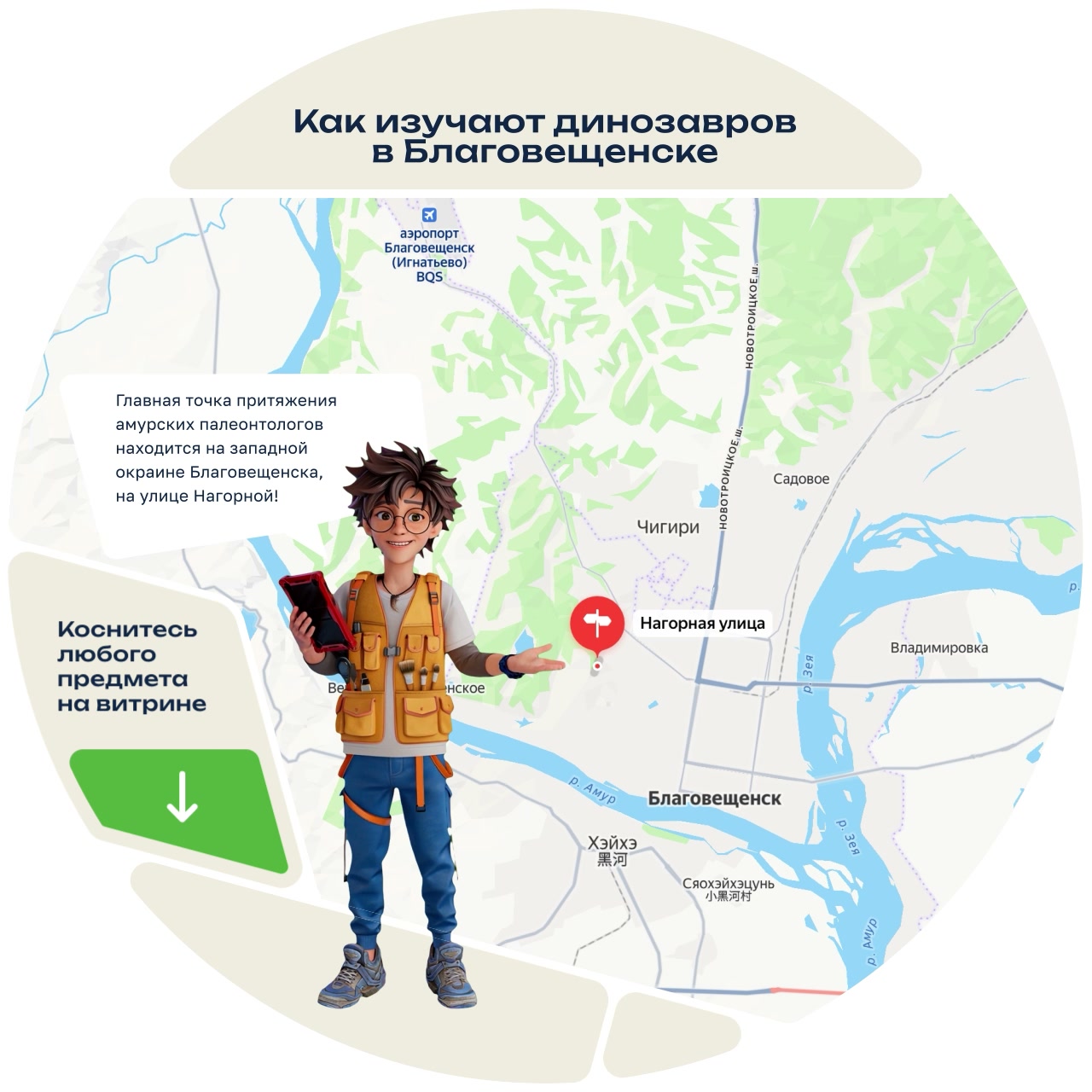
Blagoveshchensk is a city where dinosaur bones are found right within the city limits, on Nagornaya Street. Visitors needed to be shown how the bones are searched for and studied, and to be able to touch the finds. All in time for the opening in summer 2026, with two months for the work, from 20 March to 20 May.
What we did
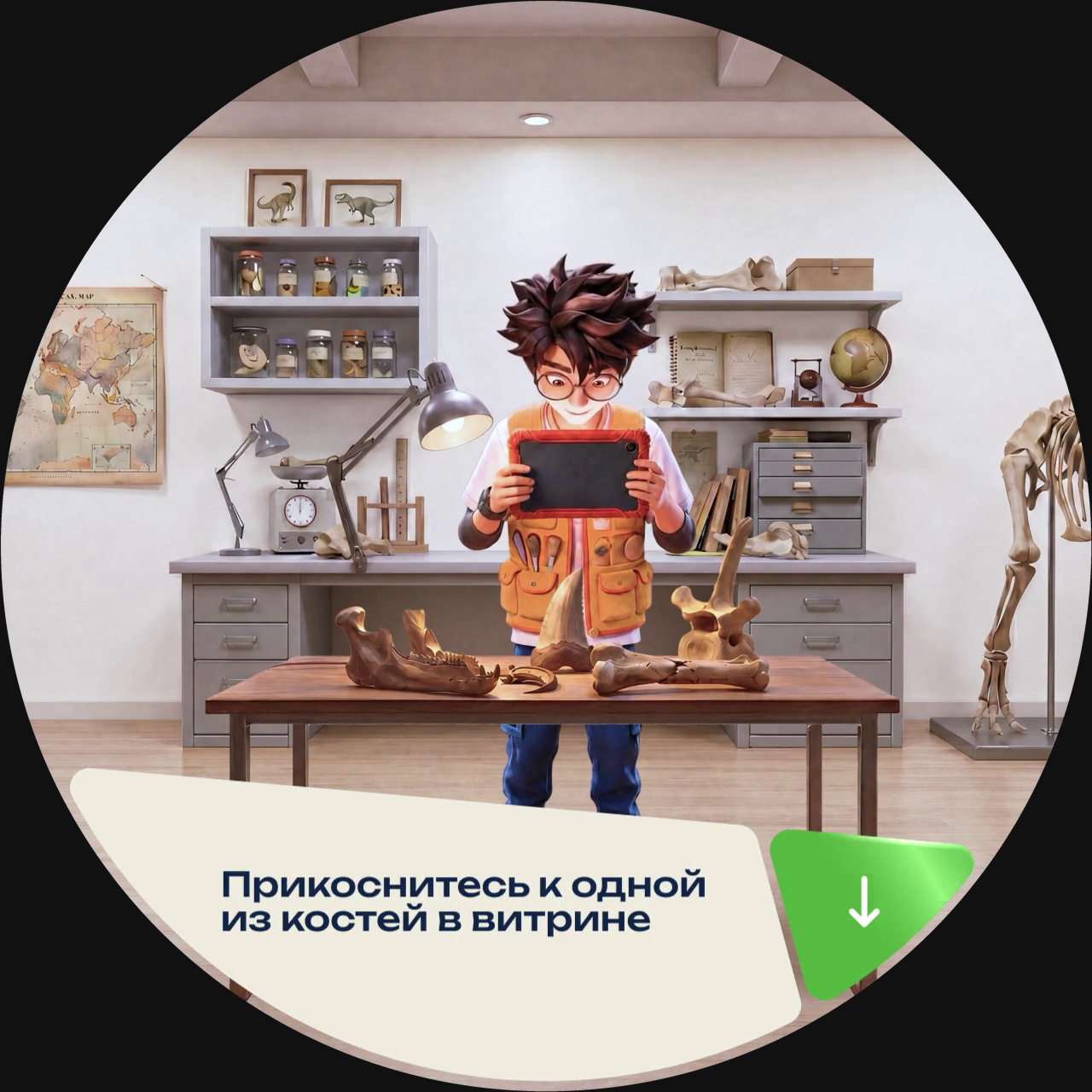
“Palaeontologists’ base — Whose bone?”
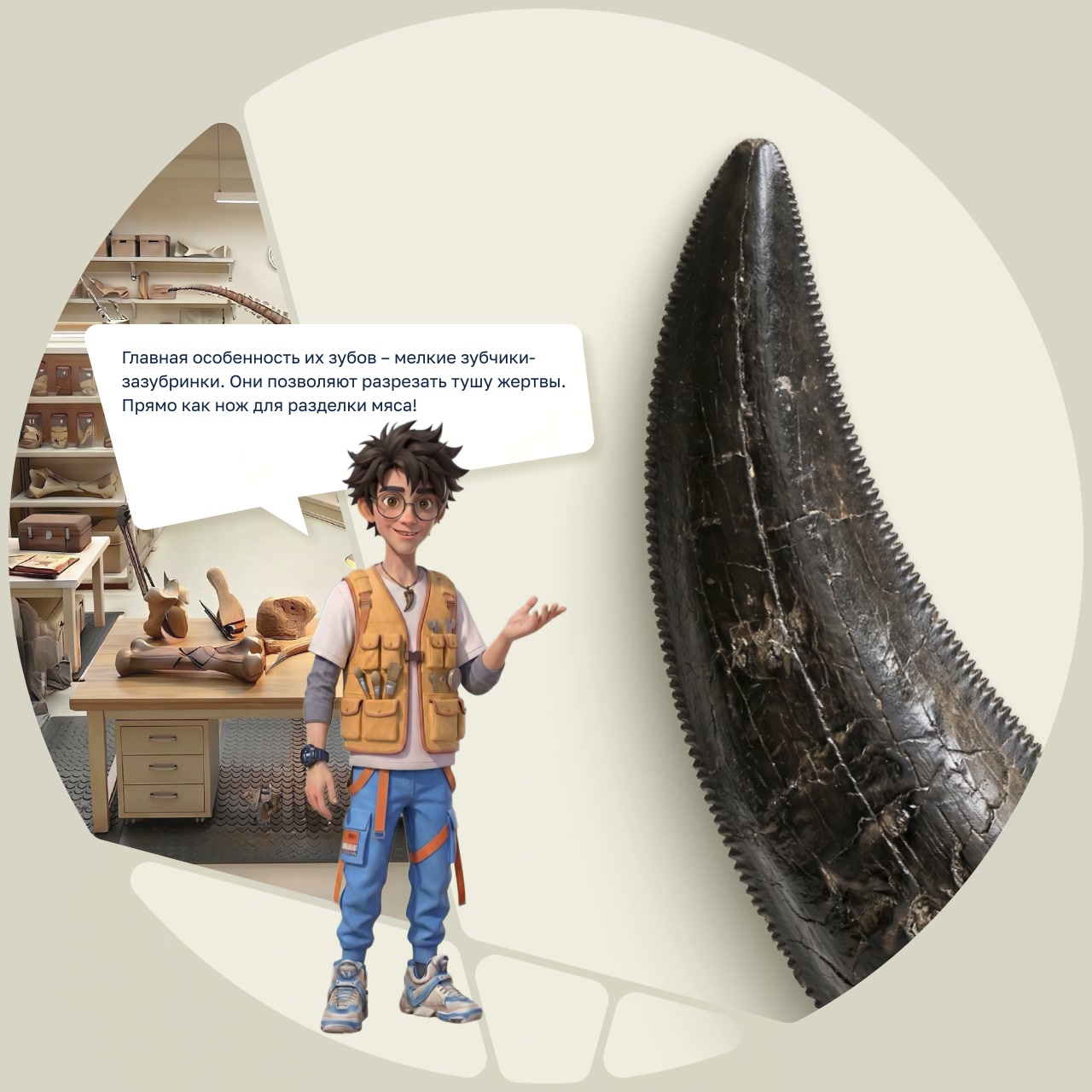
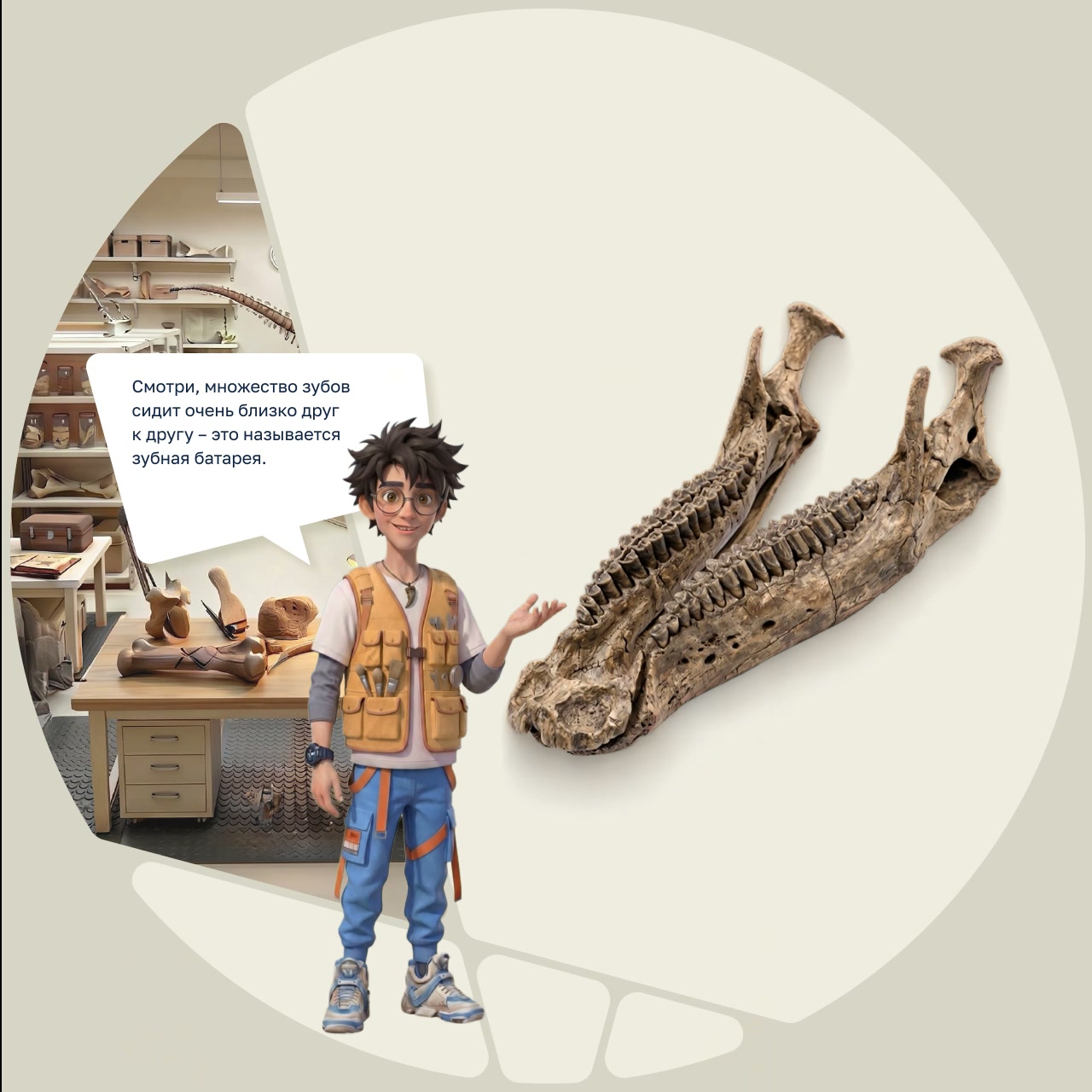
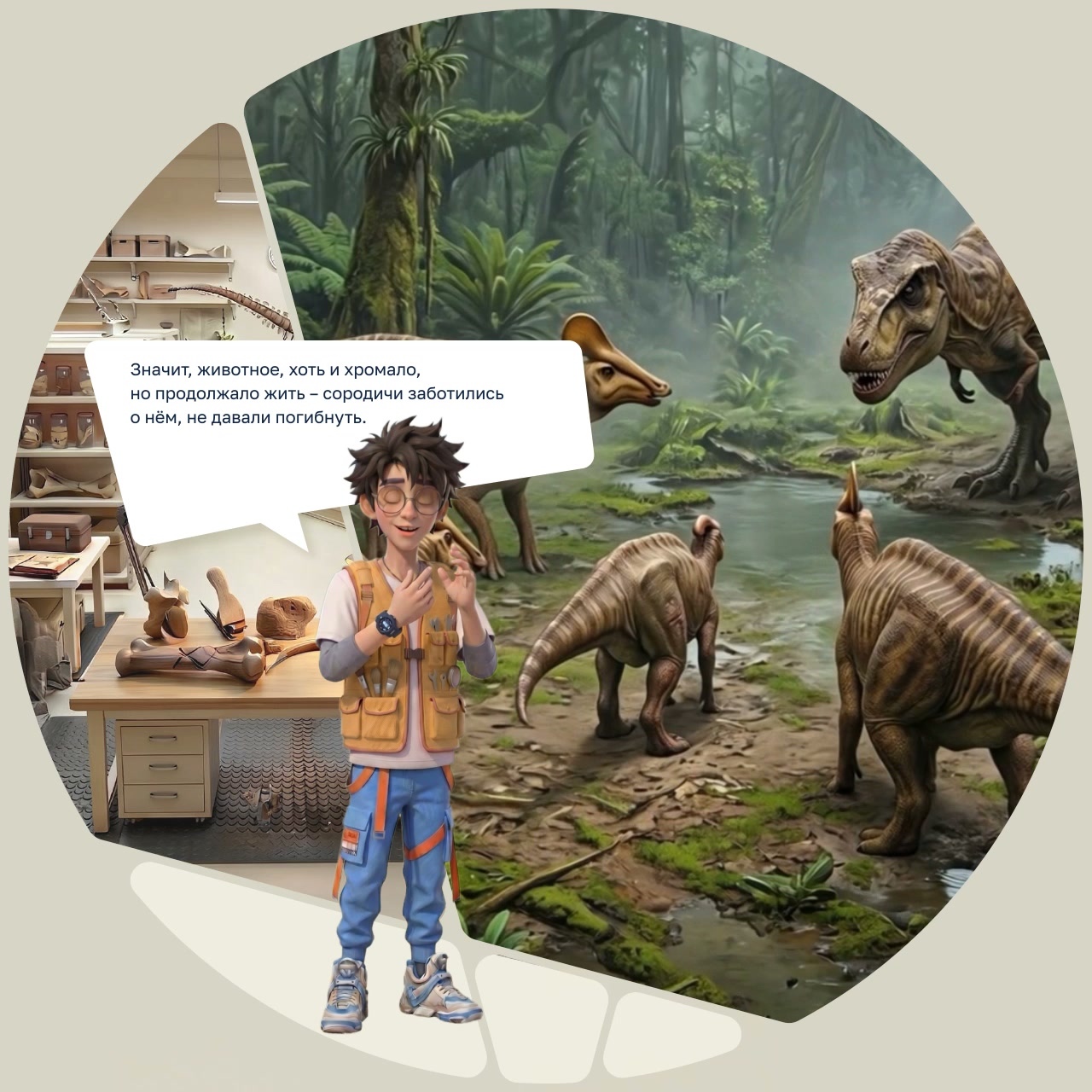
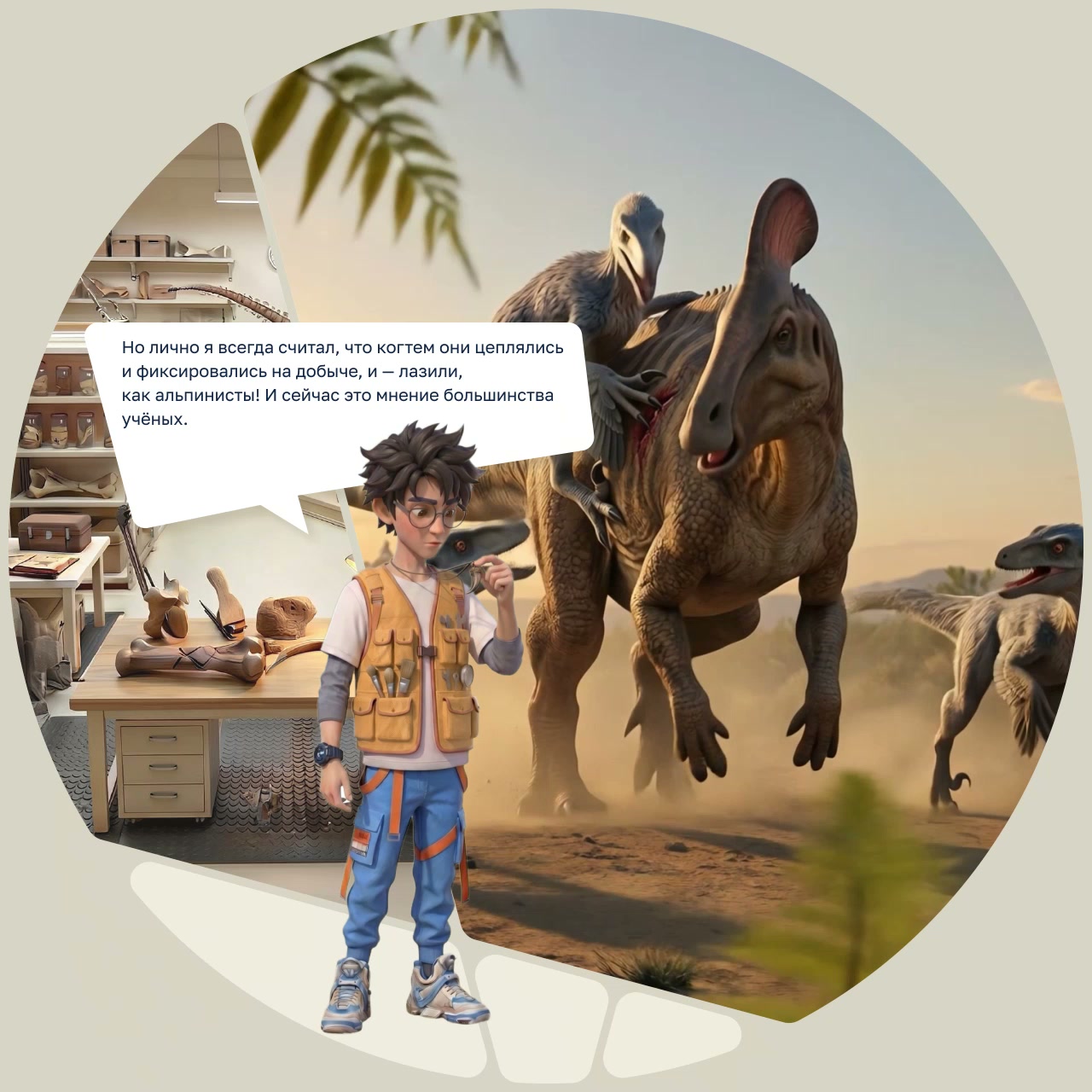
Wall niches with five bones: a tyrannosaurid tooth, a velociraptor claw, an Amurosaurus ulna, a hadrosaur tail vertebra and an Olorotitan jaw. The visitor touches a bone, and its story begins on the round screen beside it. For the tyrannosaurid it is the tiny serrations that sliced through the prey’s carcass like a knife. For the Amurosaurus, an unhealed fracture: the lame animal survived because the herd looked after it. For the Olorotitan, a “dental battery”.
“Excavations”
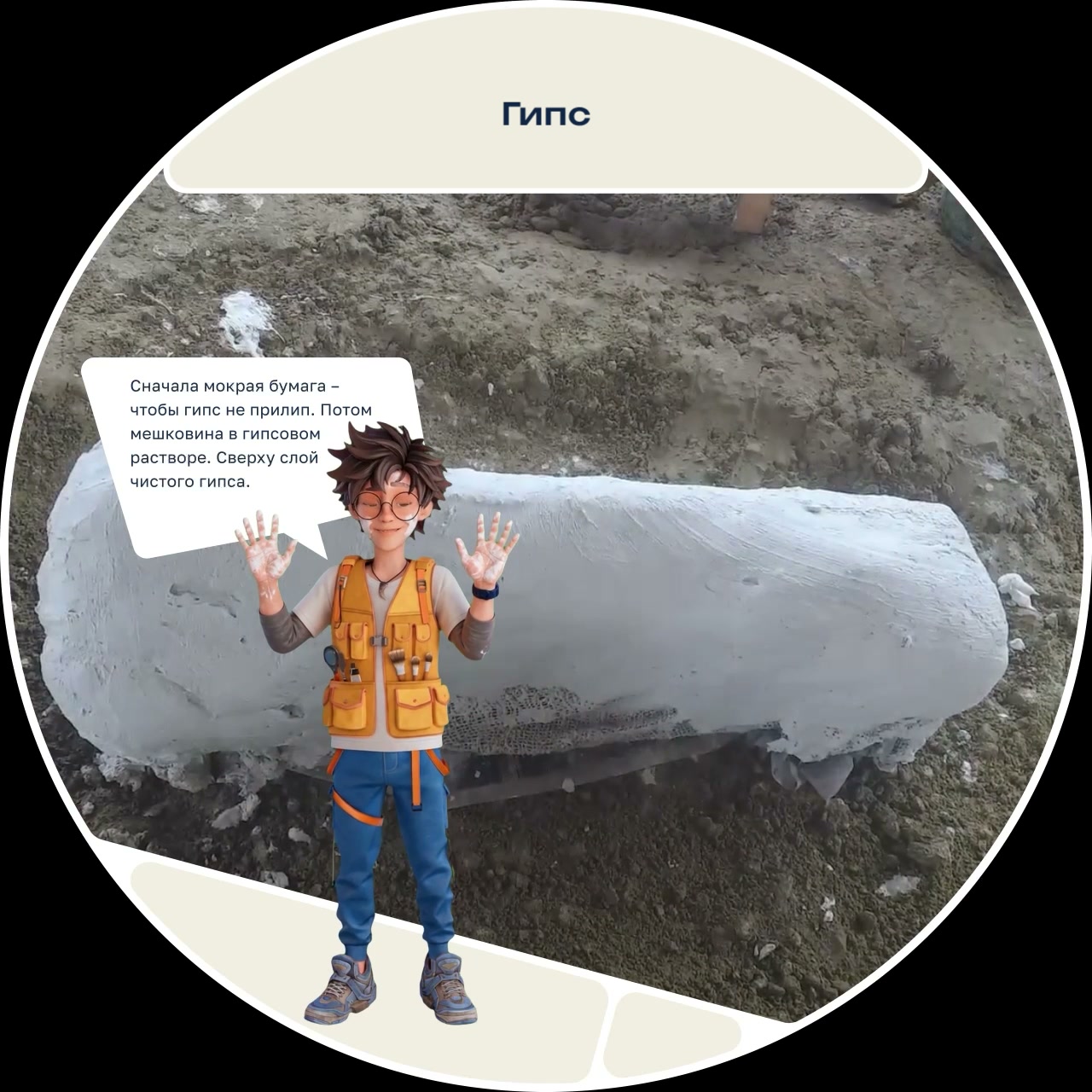
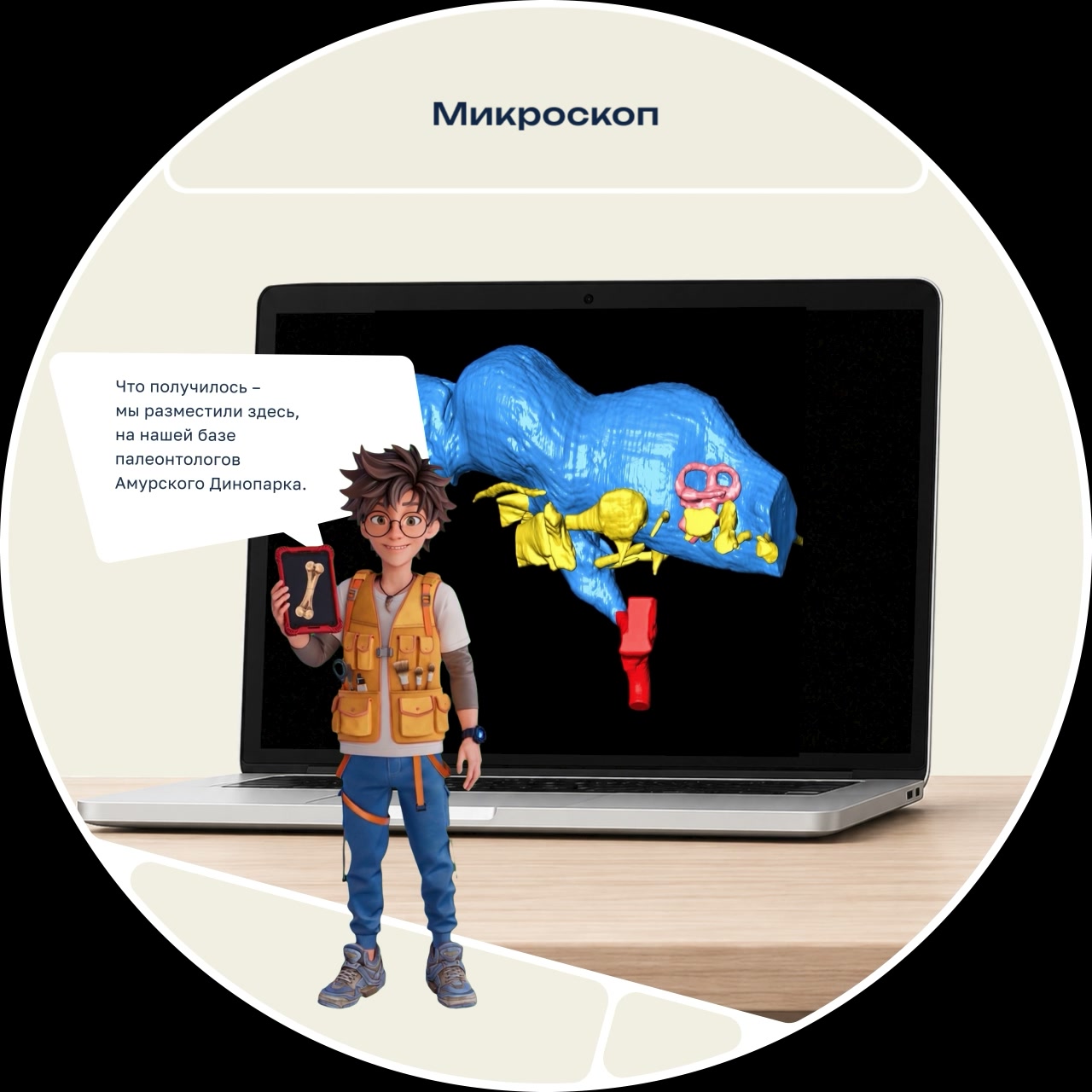
A display case of a palaeontologist’s working kit: tools for cleaning rock off bone, glue, plaster, a microscope, an air scribe. Touching a tool starts a video about a stage of the work at the Blagoveshchensk site: an excavation in soft clay, a plaster “jacket” for the bone, the laboratory, a CT scanner and a 3D model of the Amurosaurus brain.
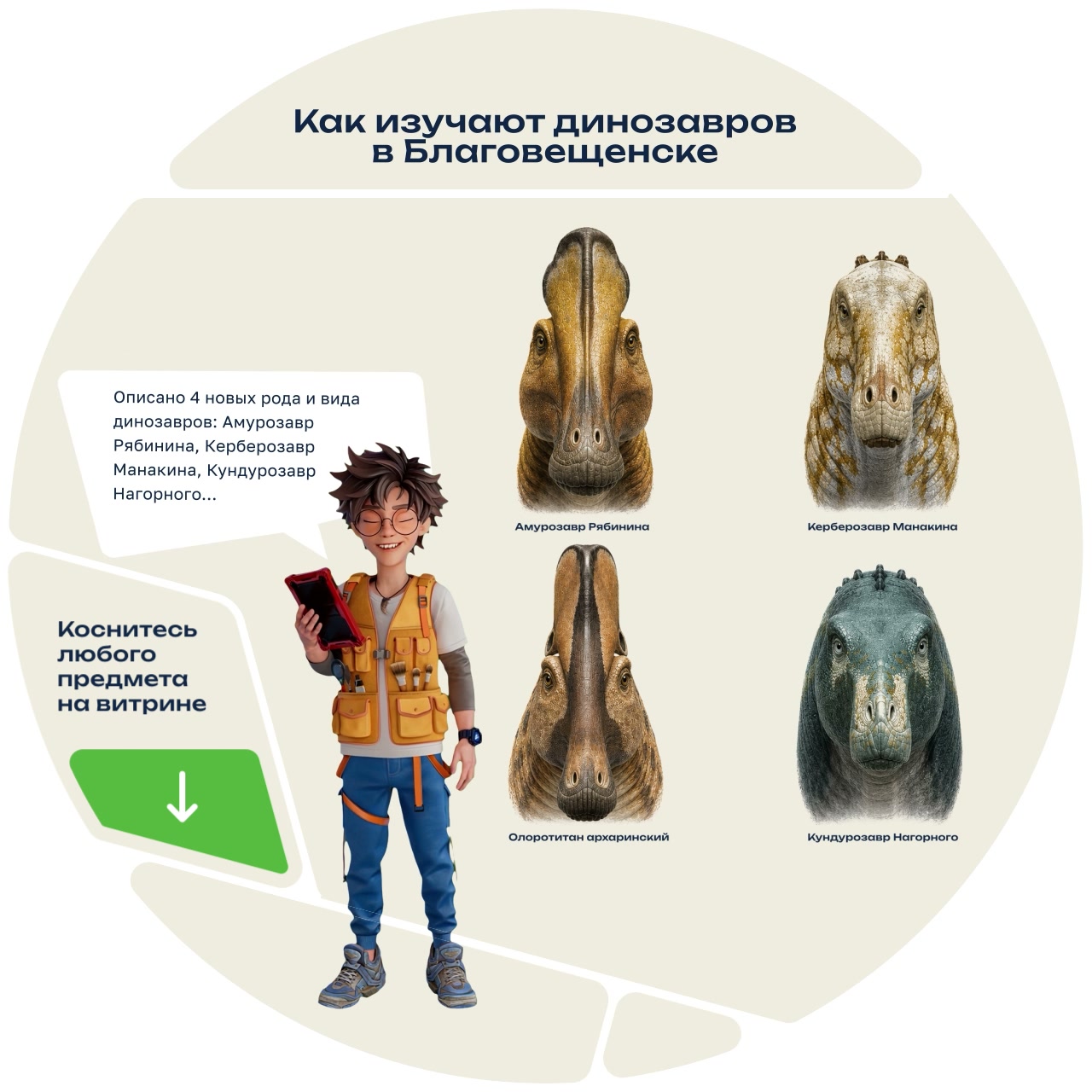
In standby mode the screen explains how dinosaurs are studied in Blagoveshchensk: the dinosaur sites on Nagornaya Street and at Kundur, the regular excavations led by Yuri Bolotsky since the early 1980s, and the four new genera and species — Amurosaurus, Kerberosaurus, Kundurosaurus and Olorotitan.
These two installations have twelve videos: one for each object plus two idle loops. The host in all of them is a cartoon young palaeontologist.
“Species diversity”
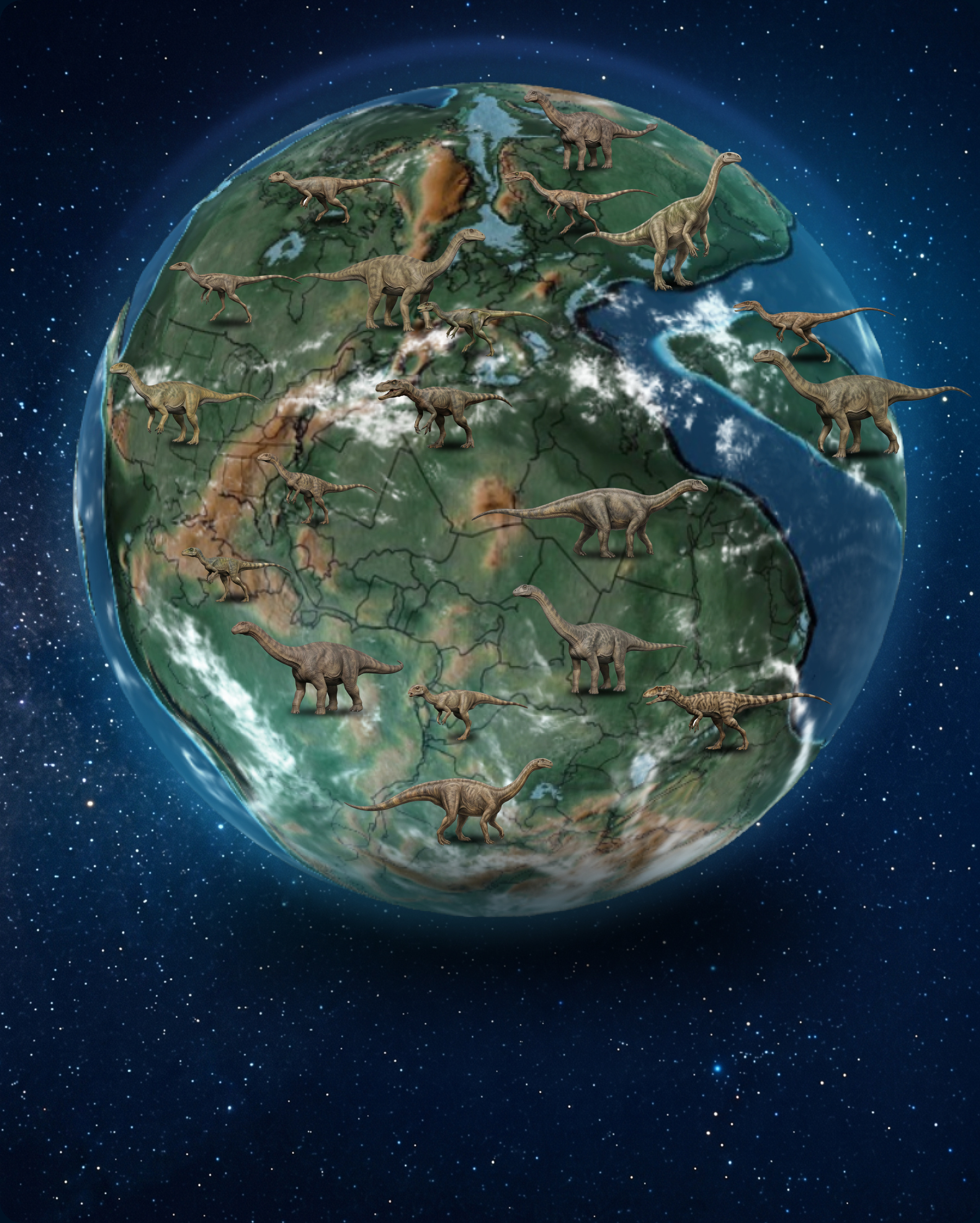
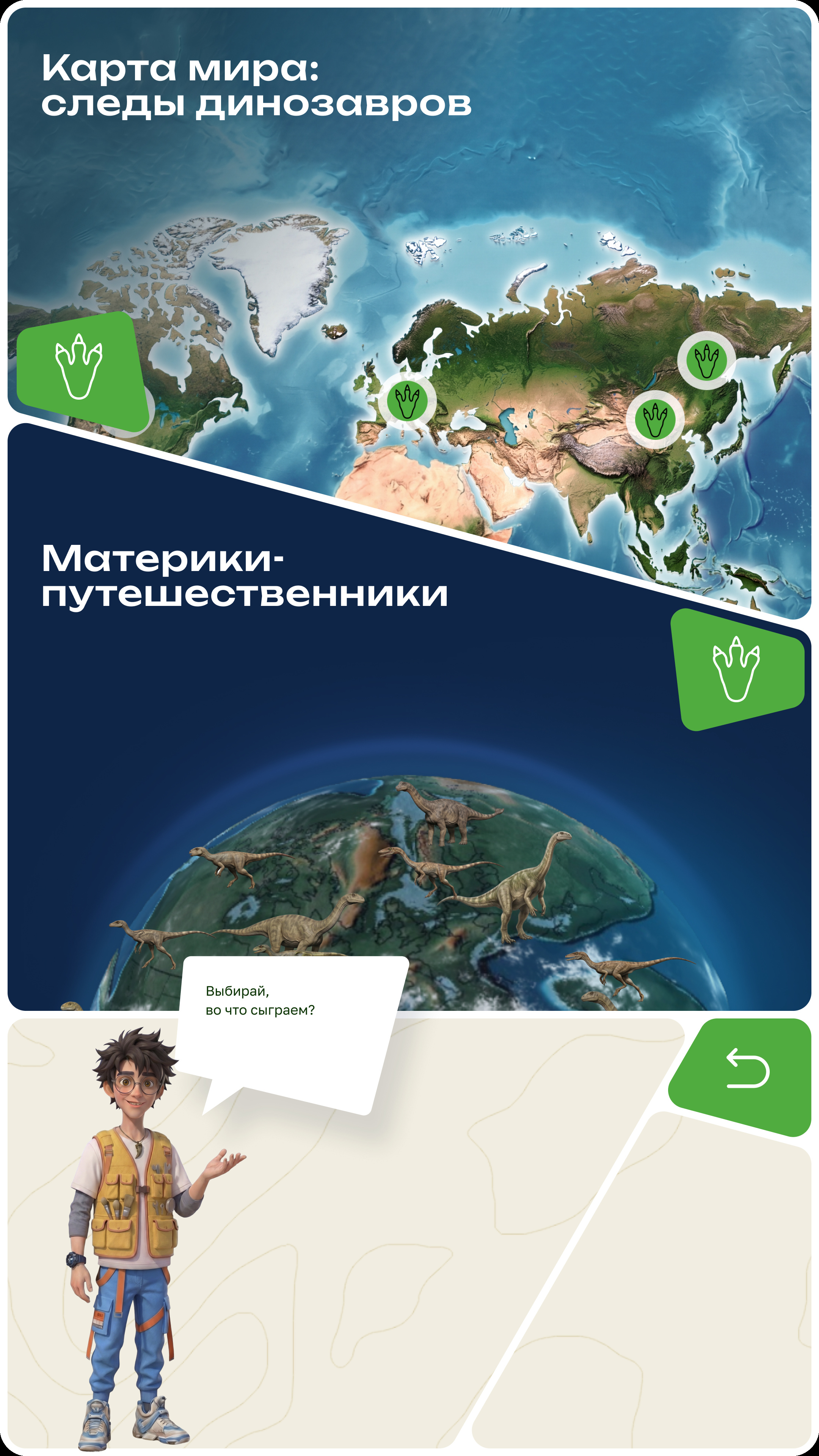
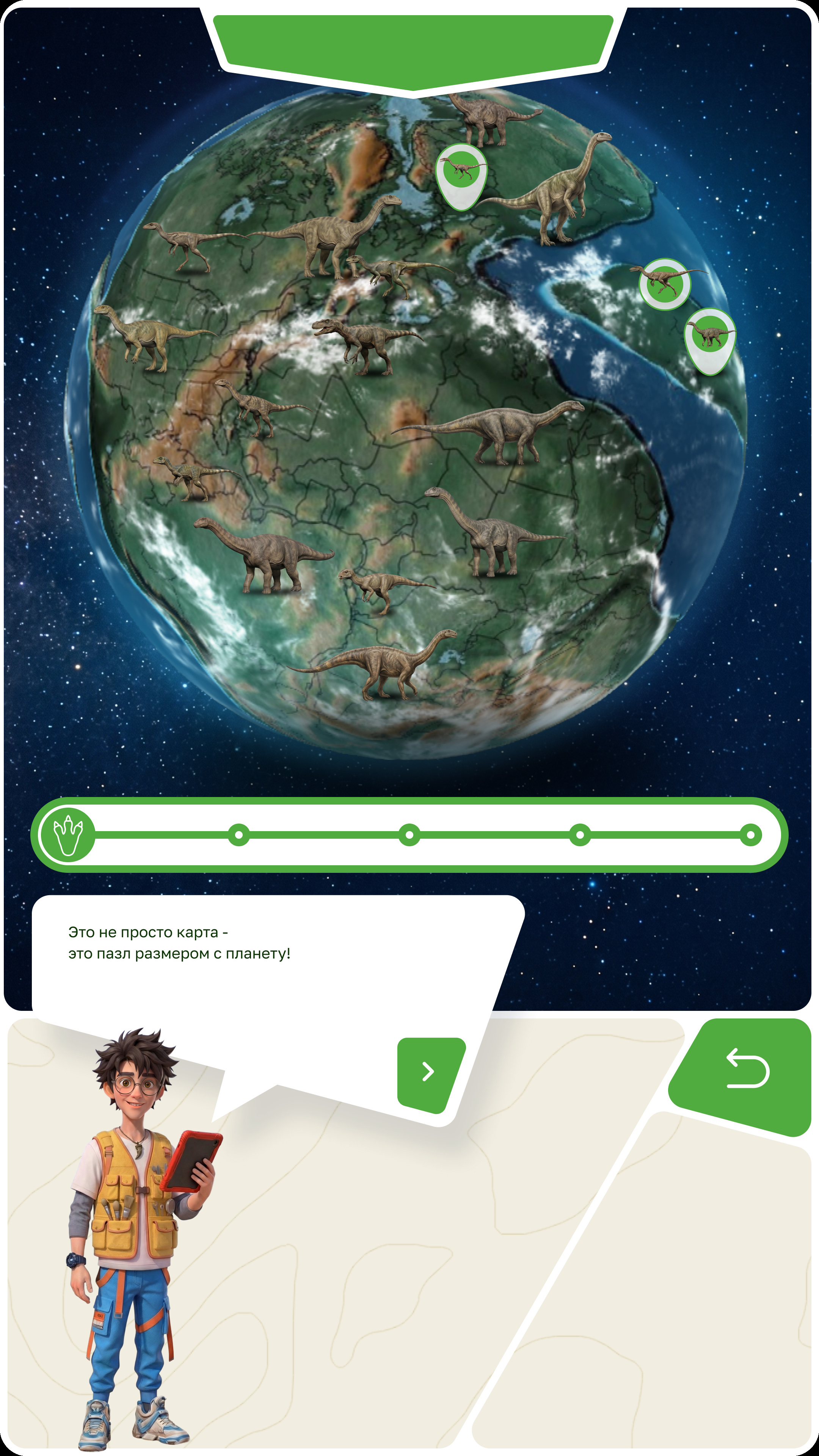
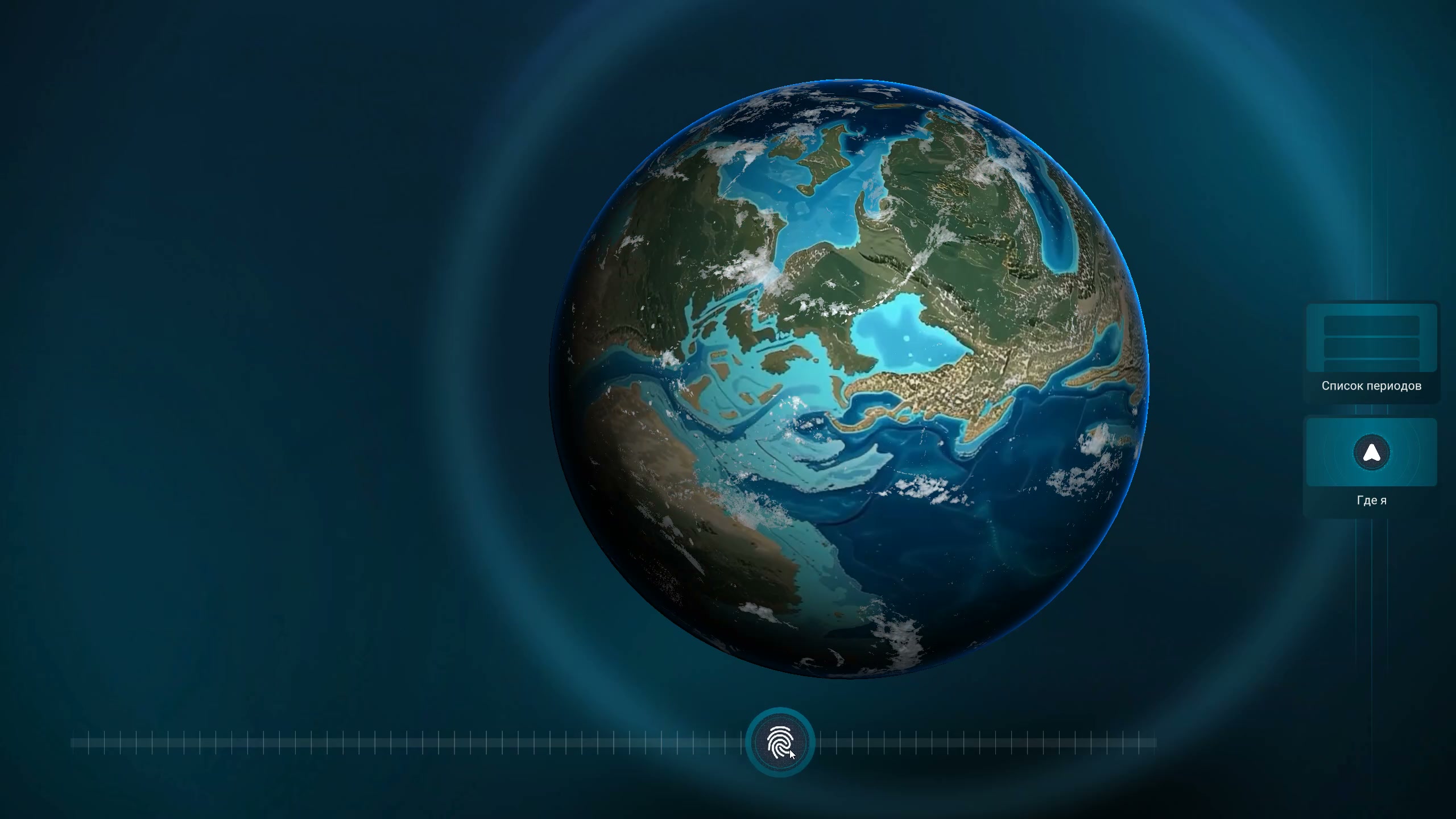
Two touch screens on the side walls of the portal: the diversity of dinosaur species, the drift of the continents from Pangaea to the present day on a rotating globe, and the spread of dinosaurs across the planet.
“World of herbivores — Species traits”
A touch screen with games about herbivorous dinosaurs: the structure of the jaws and skeleton, height and weight, habits, life in a herd or alone.
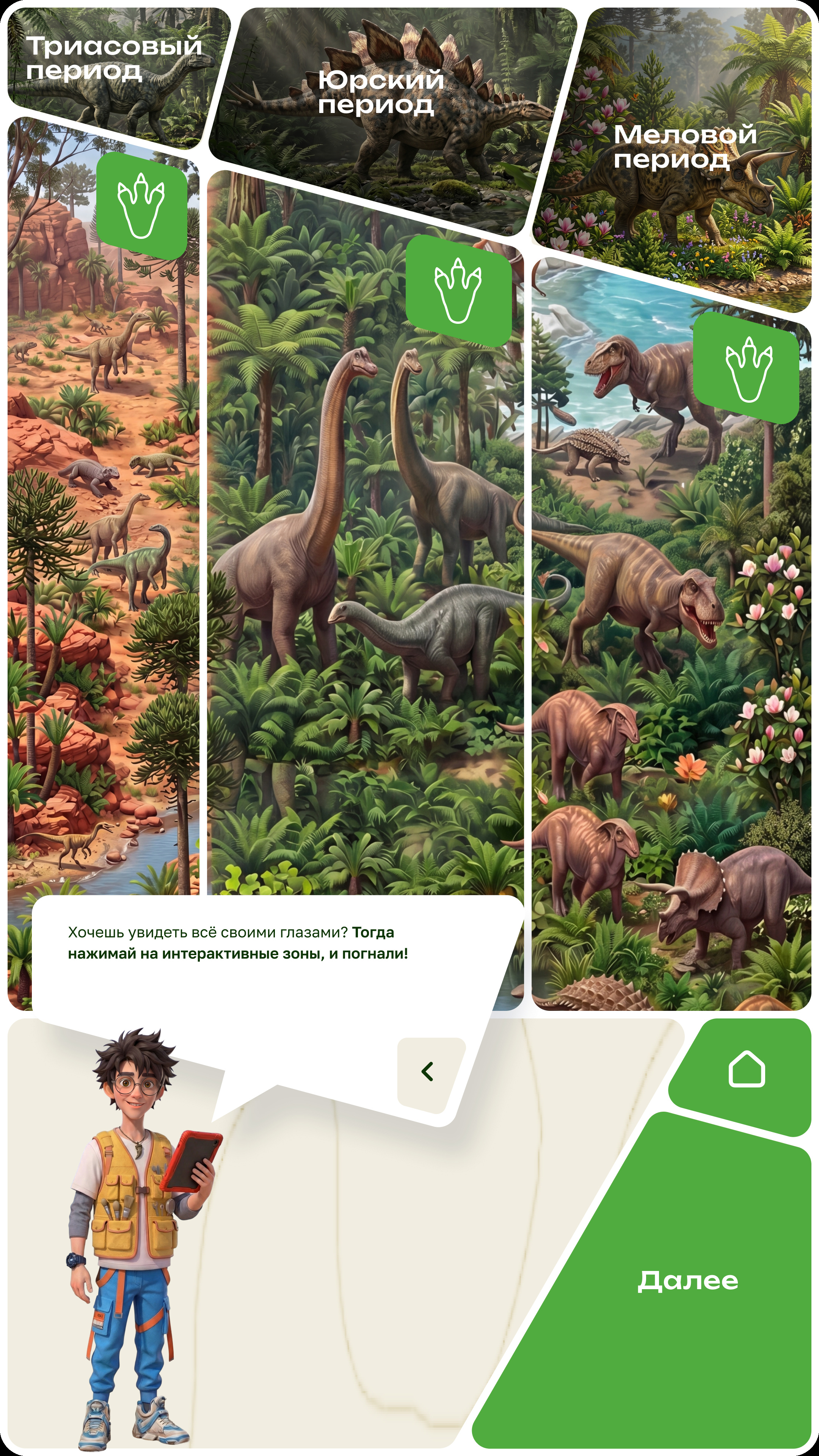
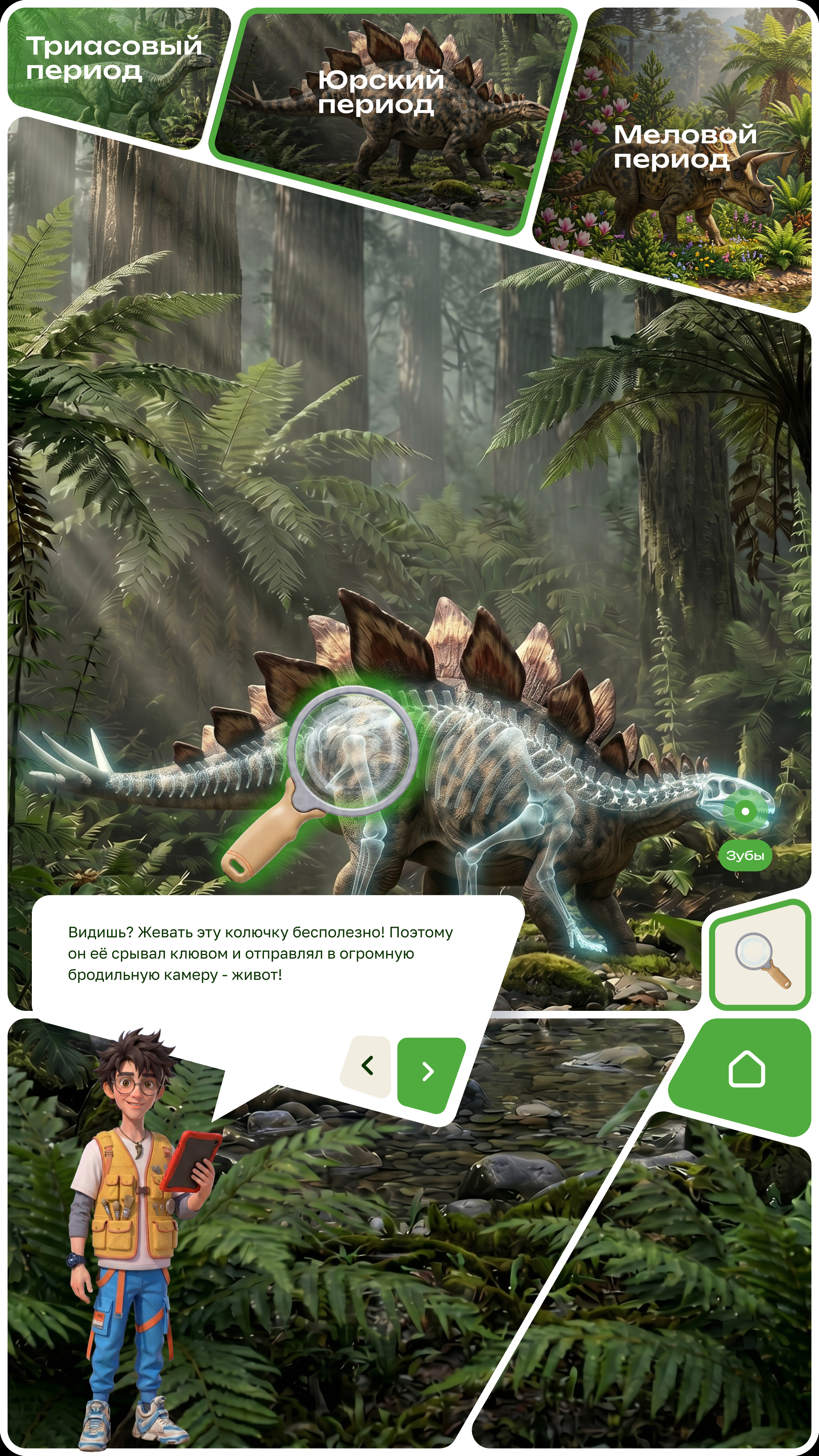
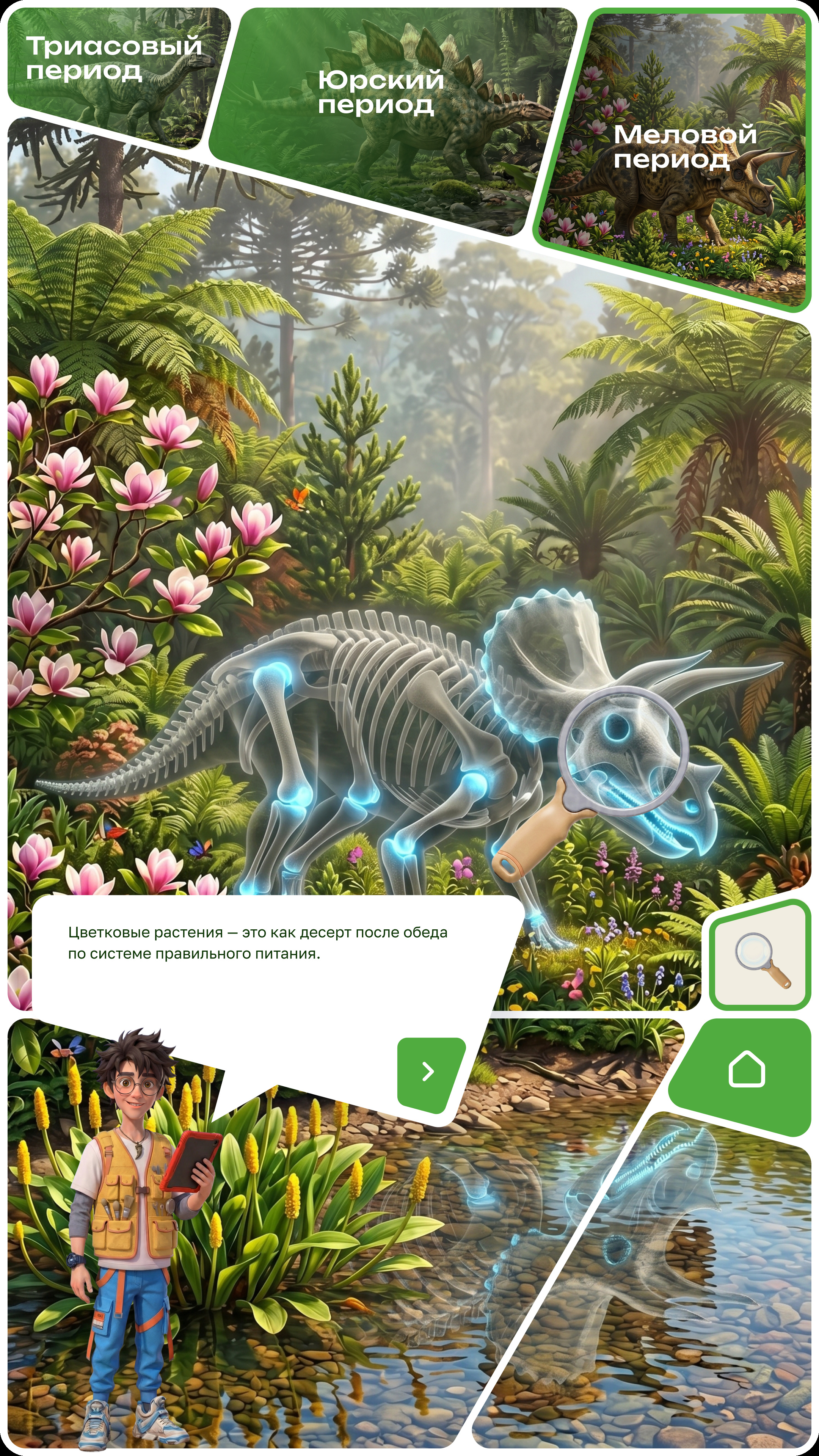
“How much does a tyrannosaur eat?”
Scales with a screen: the visitor steps onto the scales, the head of an animatronic predator peers out of the jungle, moves and roars, and the screen shows how many such visitors the predator would need to eat. The predator figure is the work of the general contractor; the software is ours.
Entrance area and content management
The screen at the entrance shows an overview video, the schedule, ticket prices and dinopark events. The materials on the screens are changed through a content management system, which we also made.
How it is built
In “Whose bone?” an infrared frame detects a touch on a bone, and the software starts the video on the screen beside it. While nobody touches the objects, an idle loop plays. “Excavations” works the same way.
The “Whose bone?” and “Excavations” videos are square, 1280×1280, to fit the round screen. They combine drawn scenes, photographs of finds, footage from the excavations and 3D models.
The drift of the continents is an animation of the globe based on maps of the Earth in different periods.
Result
The general contractor accepted the work on 20 May 2026. From 21 to 24 May the dinopark ran in test mode, and on 6 June it opened to visitors. In its first nine days it had 6480 visitors.
Similar projects
-
 Undory Palaeontological Museum
/2026 — Museums
Undory Palaeontological Museum
/2026 — Museums
-
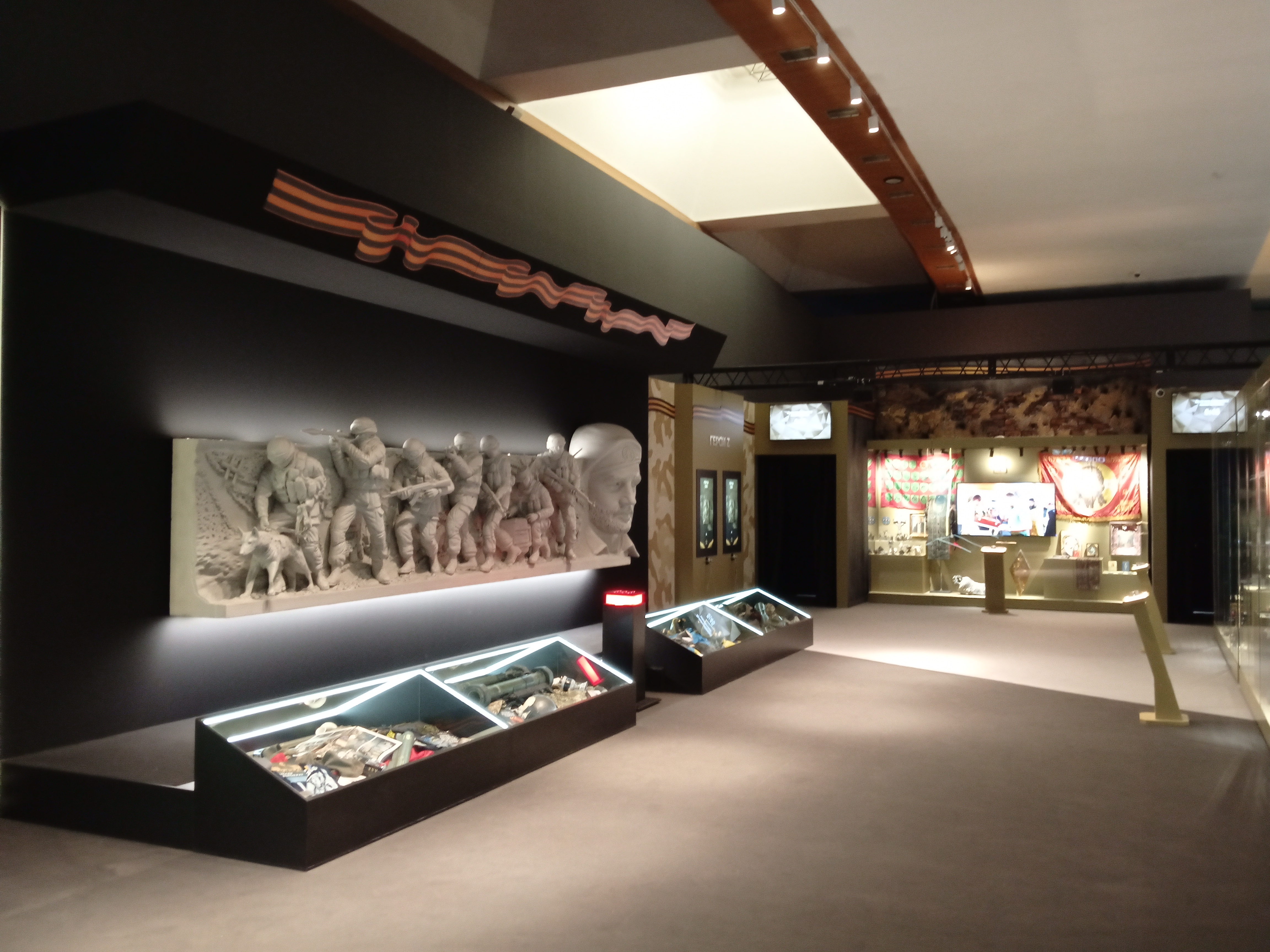 Updating the applications of the “Special military operation. Defenders of the Fatherland” exhibition at the Victory Museum
/2026 — Museums
Updating the applications of the “Special military operation. Defenders of the Fatherland” exhibition at the Victory Museum
/2026 — Museums
-
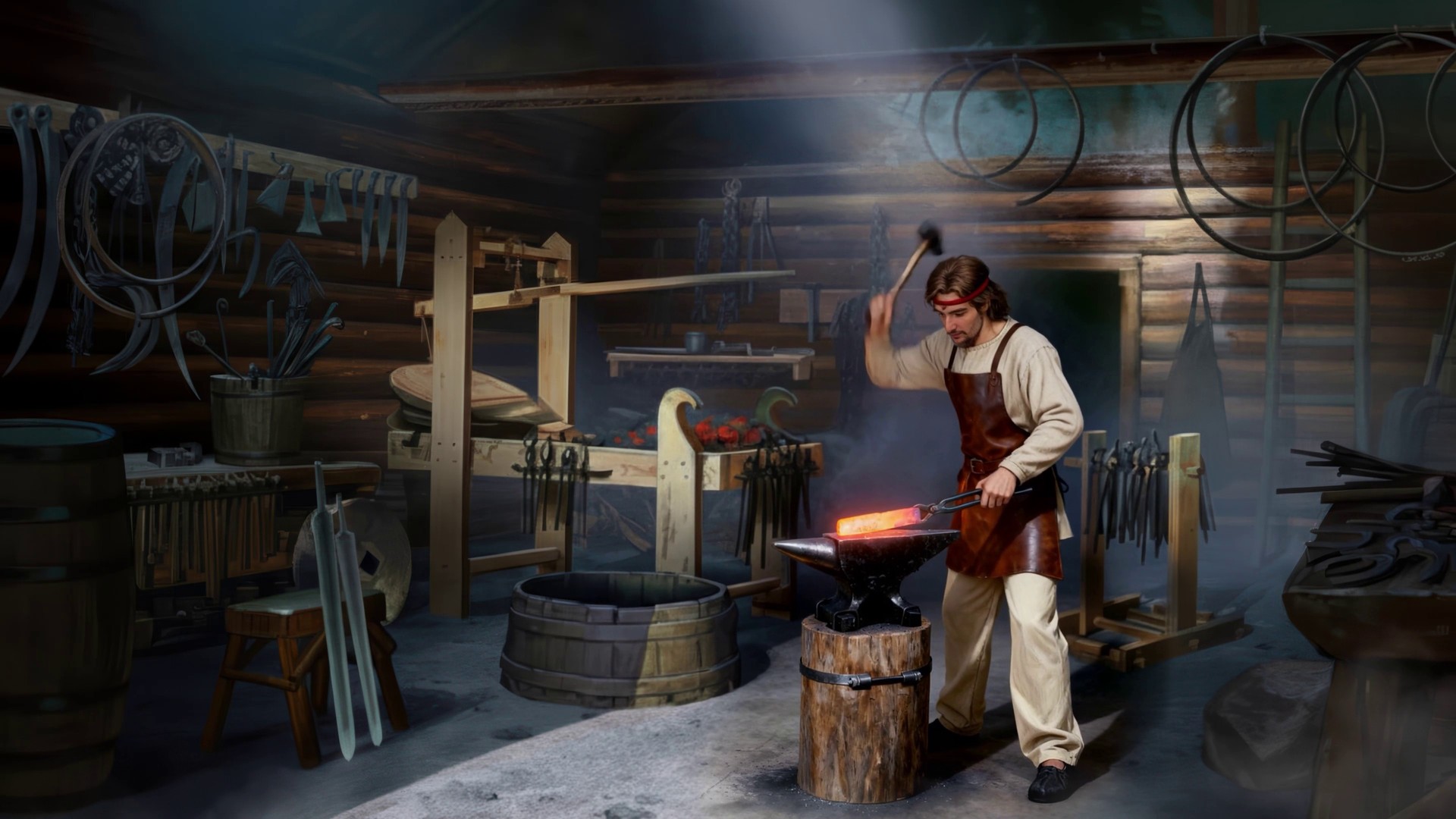 Ryazan History Museum. “Two capitals”, “The book in the Age of Enlightenment”, “Folk costume”
/2026 — Museums
Ryazan History Museum. “Two capitals”, “The book in the Age of Enlightenment”, “Folk costume”
/2026 — Museums
-
 Ryazan History Museum. “Ryazan Governorate”
/2026 — Museums
Ryazan History Museum. “Ryazan Governorate”
/2026 — Museums