Events / Rosreestr at the “Eurasia — Our Home” exhibition 2023
Rosreestr at the “Eurasia — Our Home” exhibition 2023
About the project
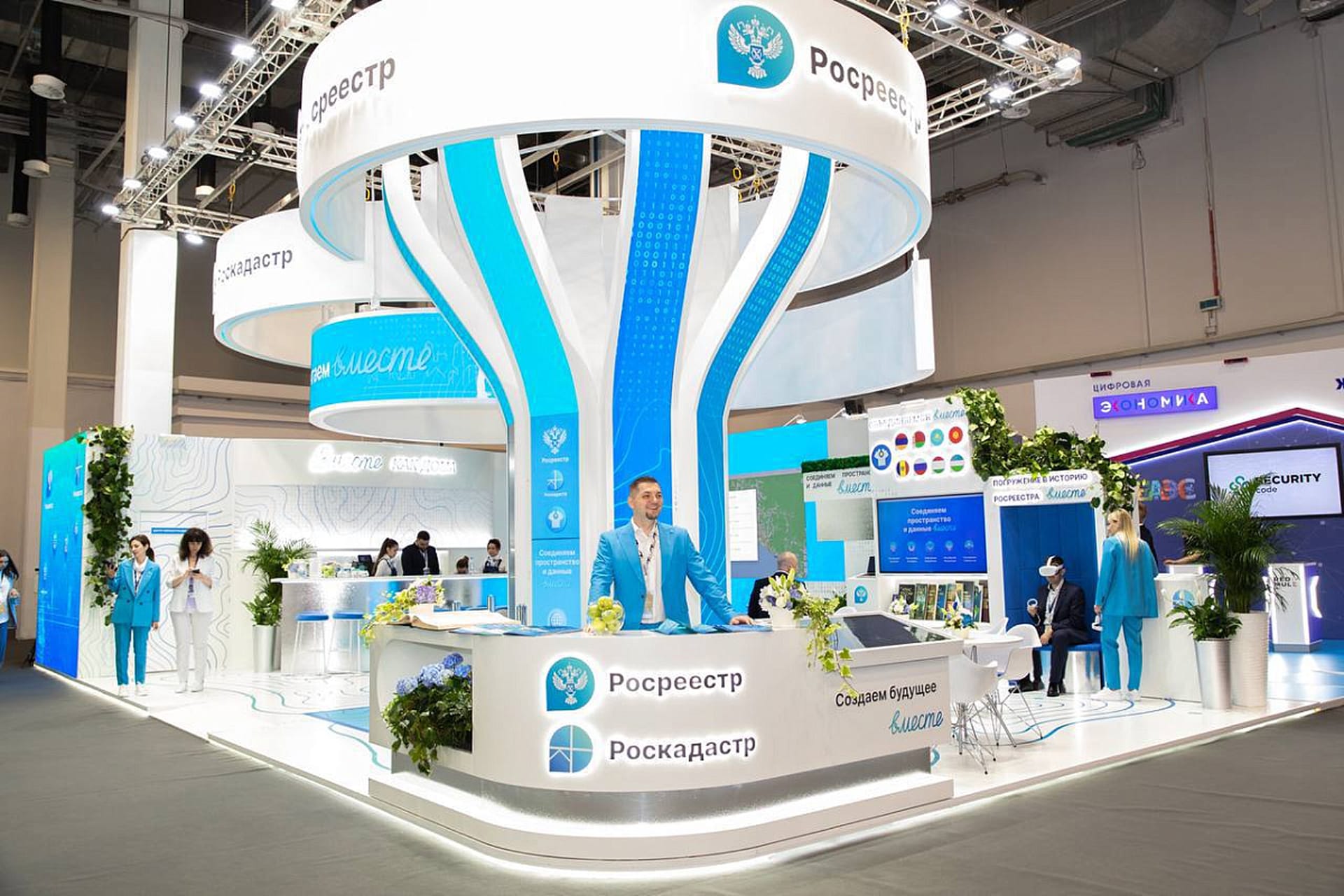
Three interactive installations for the Rosreestr and Roskadastr stand at the “Eurasia — Our Home” exhibition in Sochi: an LED screen with Kinect, screens on five countries with spinners, and VR on the history of land registration.
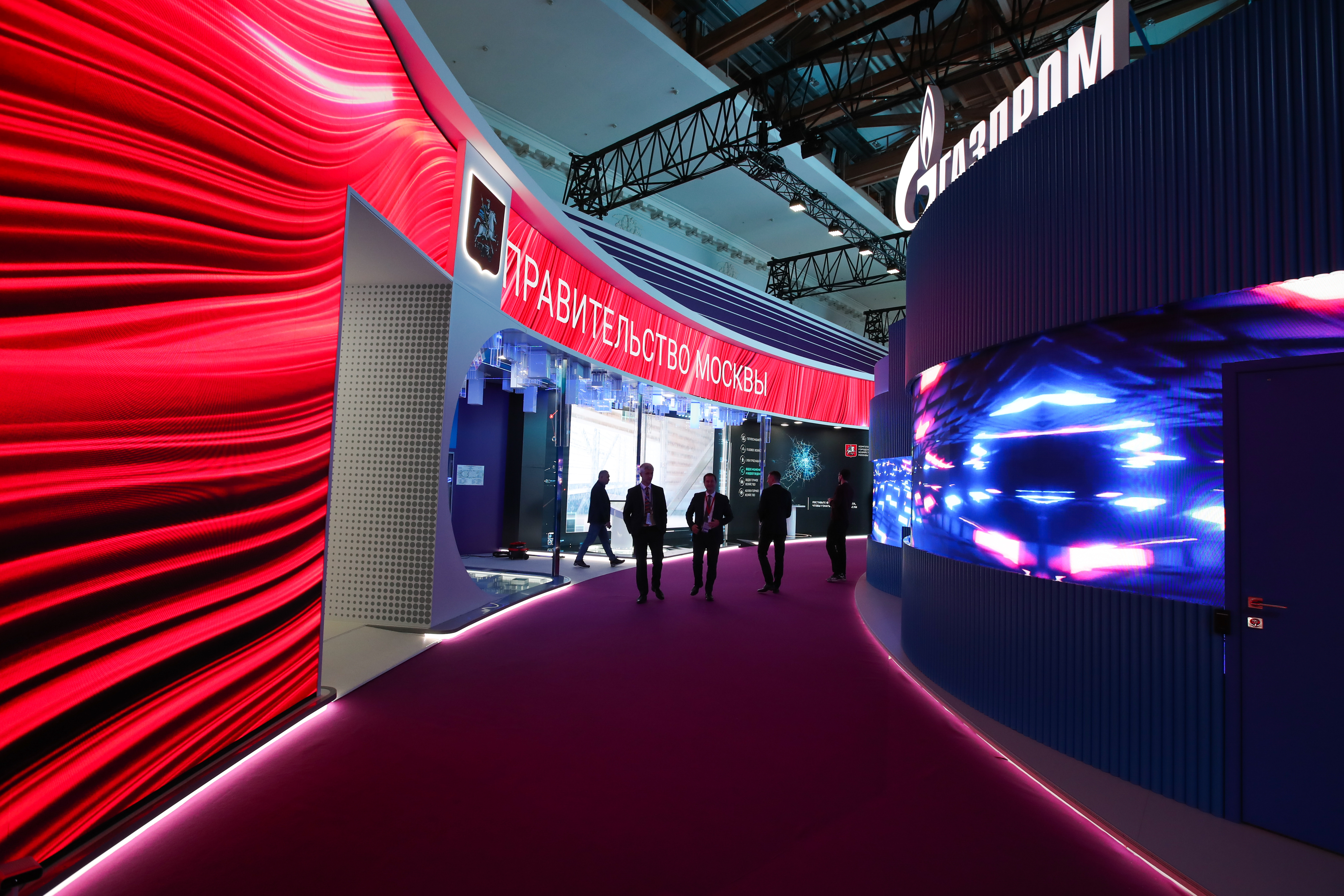
On 7–9 June 2023 the Sirius Park of Science and Art in Sochi hosted the international exhibition “Eurasia — Our Home”. It was timed to the meetings of the Eurasian Intergovernmental Council and the CIS Council of Heads of Government in the year of Russia’s chairmanship of the EAEU bodies; the organisers announced more than 200 participating companies. Rosreestr and Roskadastr presented a shared stand at the exhibition with the slogan “Connecting space and data together”.
We made three interactive applications for this stand: for the LED screen, where visitors see themselves as a silhouette of particles; for the screens in the “trunk” of the central tree-shaped structure, a story about five countries; and for a VR headset, the history of land registration in Russia.
Year
2023
Industry
Exhibitions
Scope of work
3 interactive applications — a screen with Kinect, screens with spinners, VR
Venue
“Eurasia — Our Home” exhibition, Sirius Park of Science and Art, Sochi
- 3
- interactive applications for the stand
- 15
- pages on five countries on the “tree” screens
- 9
- historical eras in the VR application
The task
The client needed interactive content for a large LED screen, two vertical screens in the central “tree” column and the VR zone “Immersion in the history of Rosreestr”. Work began on 19 May 2023 and had to be delivered by 1 June — a week before the exhibition opened.
What we did
Interactive LED screen
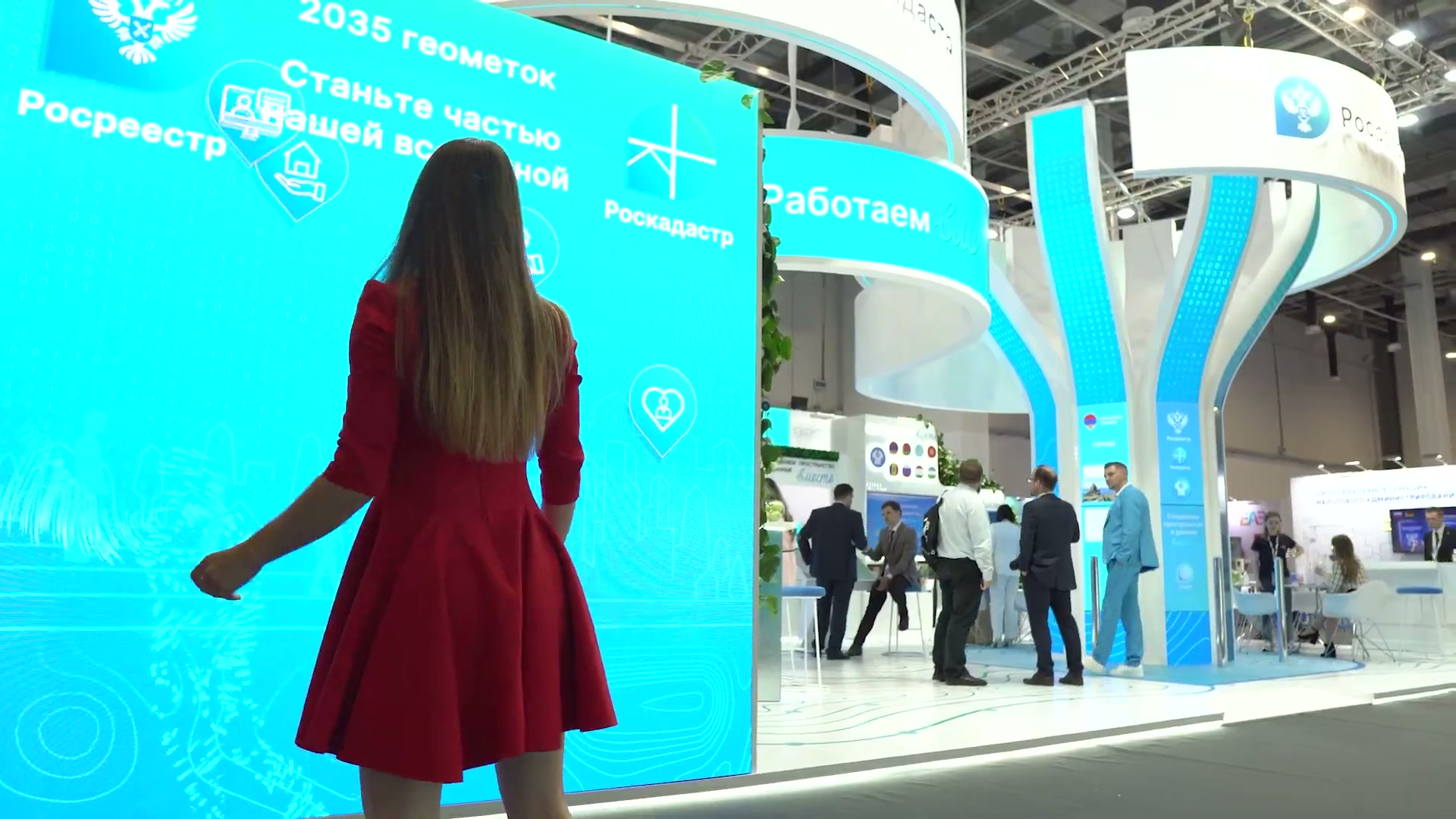
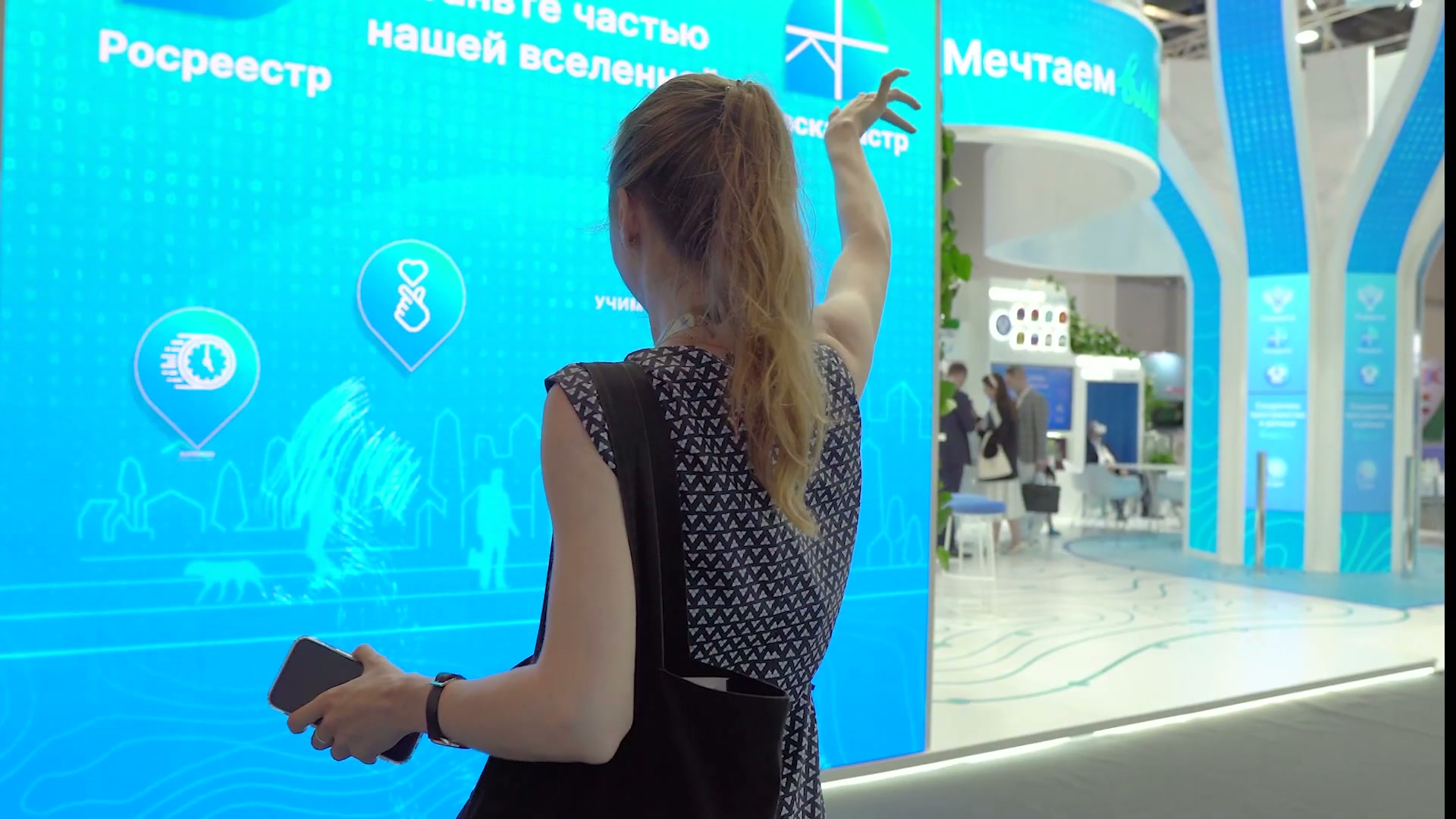
A Kinect sensor captures the person standing in front of the screen, and their silhouette appears on the screen in multicoloured particles, smoothly following the visitor’s movements. Around it are an outline cityscape, the Rosreestr and Roskadastr logos, the call “Become part of our universe” and information markers with icons that visitors can also interact with.
Screens on the “tree trunk”
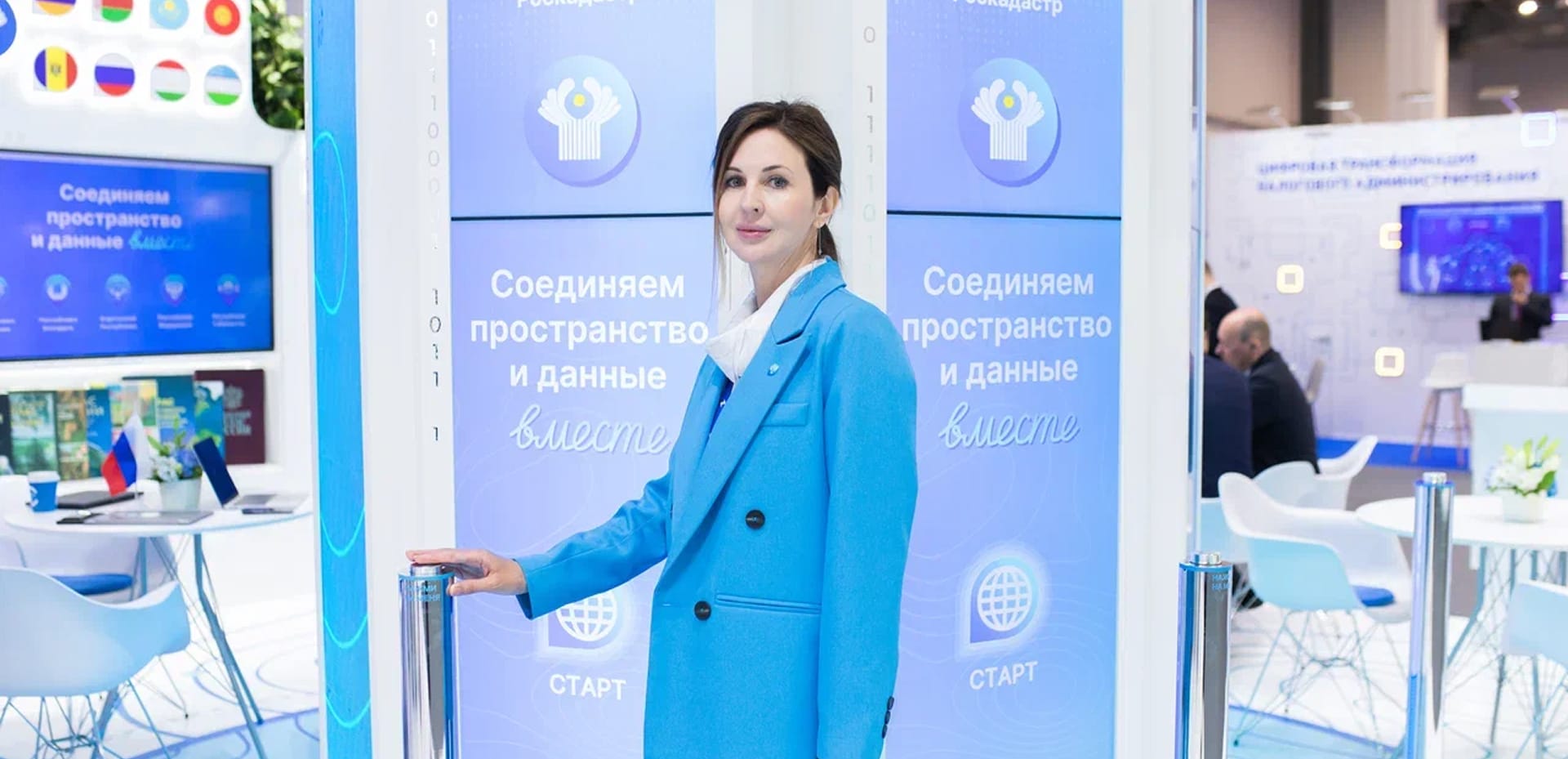
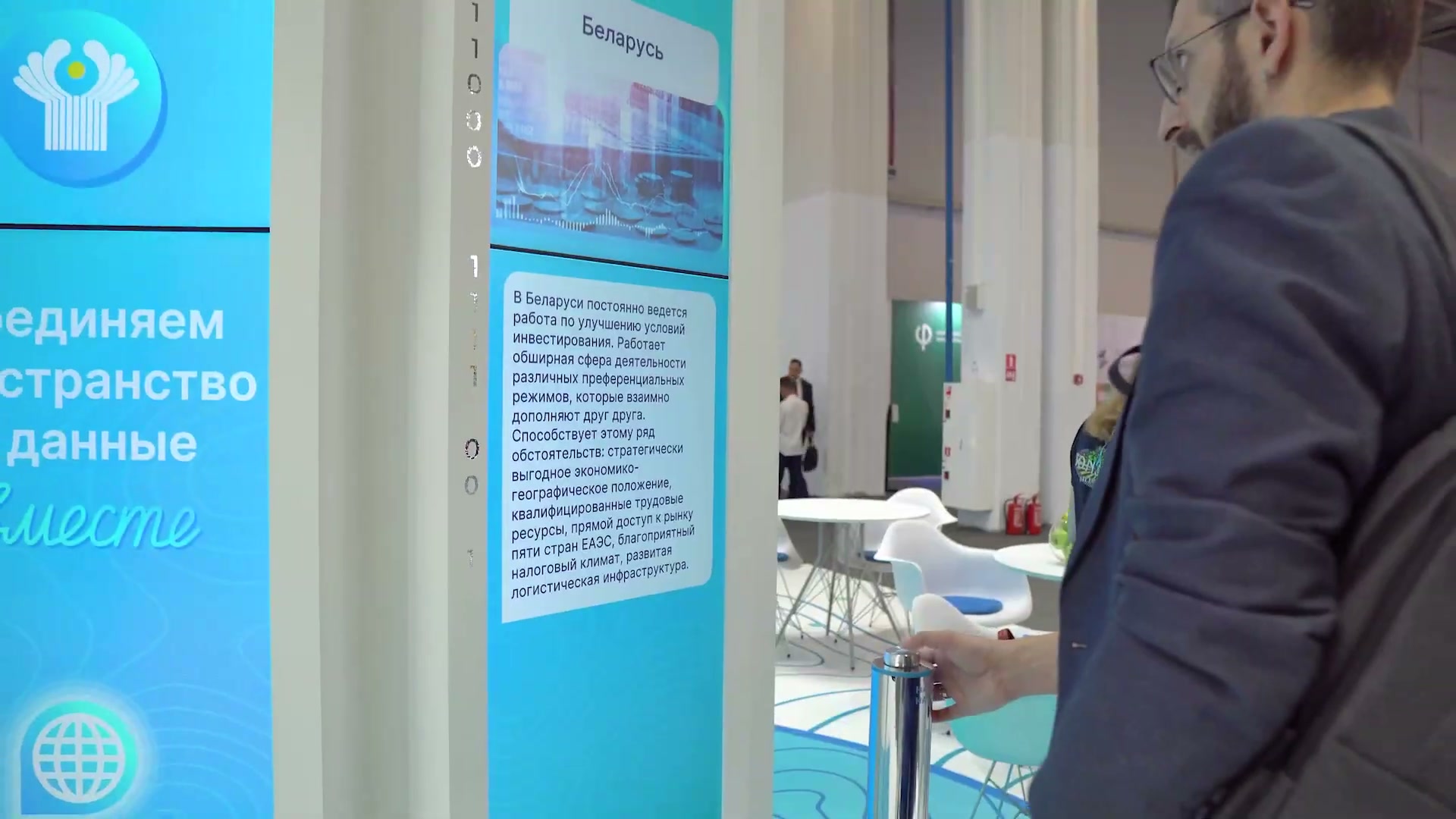
Two vertical screens are built into the trunk of the stand’s central structure, each with a metal spinner stand in front of it. In standby mode the screens invite people over with the slogan “Connecting space and data together” and a “Start” button. Using the spinner, a visitor chooses a country, then one of three topics — “Tourism”, “Cultural heritage”, “Investment” — and reads the card: for example, about investment conditions in Belarus or the historic centre of Shahrisabz in Uzbekistan. Five countries with three topics each make fifteen pages. Each country has its own graphics, which are also shown on the “tree” itself.
VR “On the gathering and registration of Russian lands”
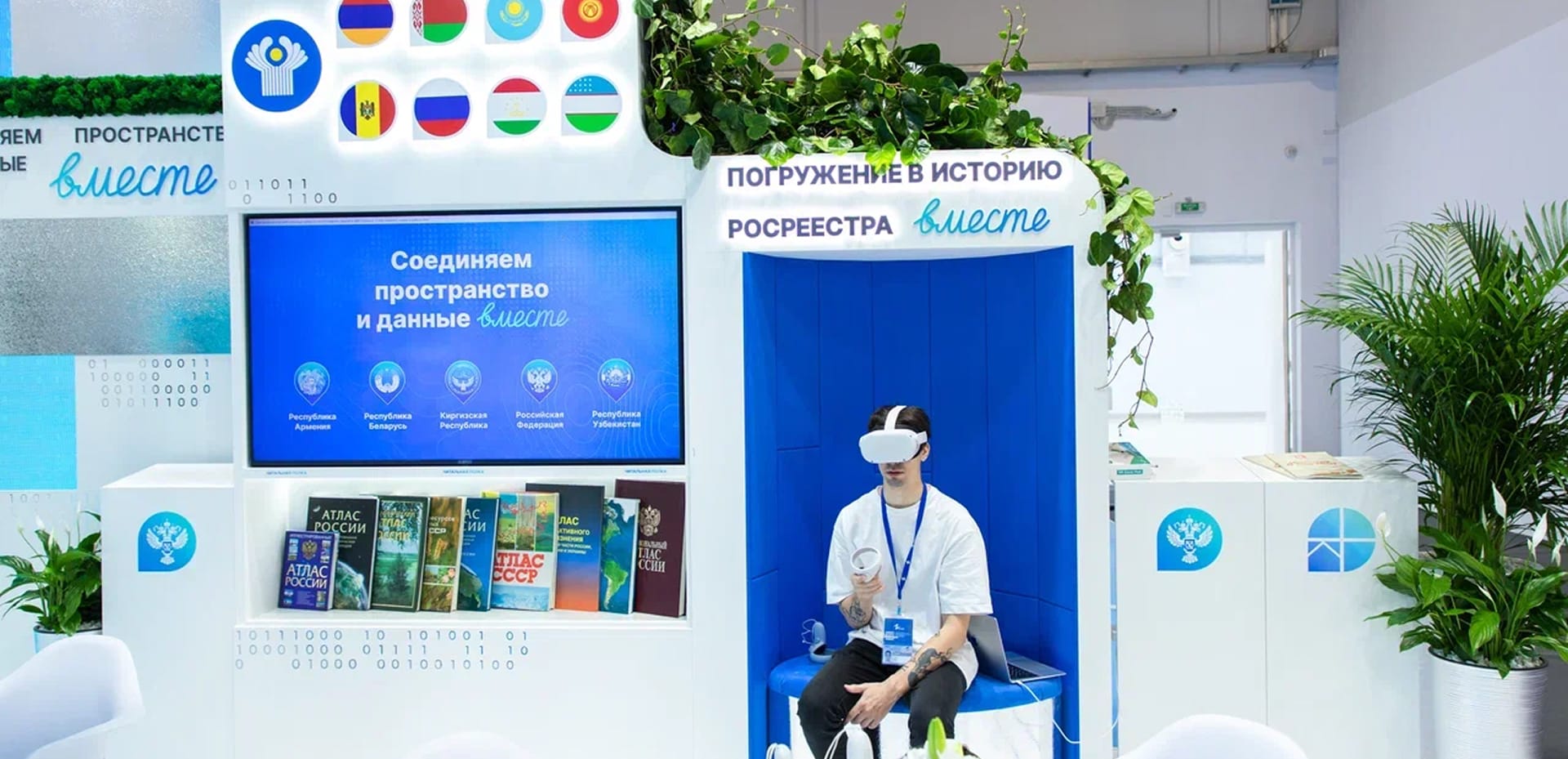
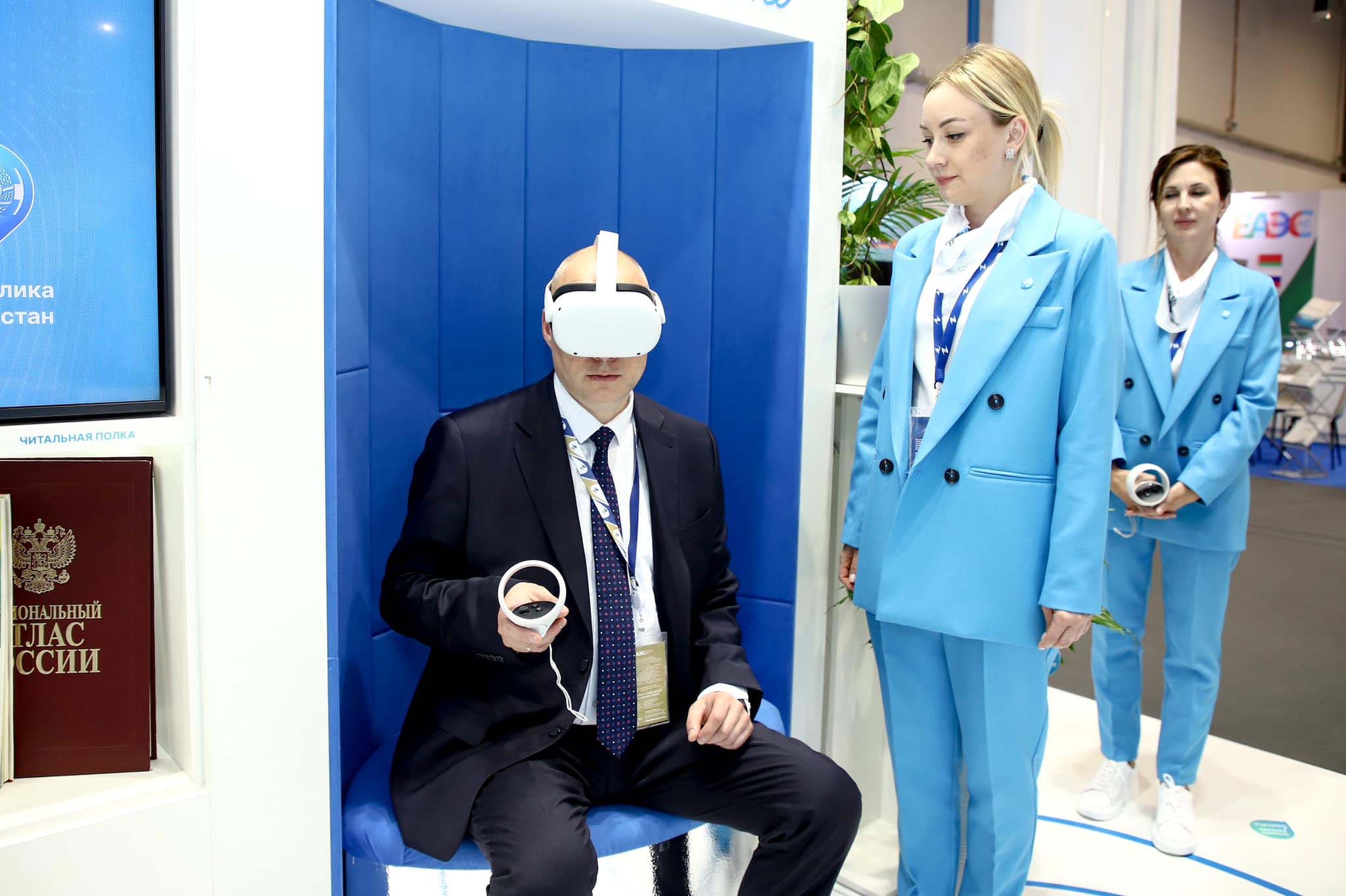
An application for a virtual reality headset in the “Immersion in the history of Rosreestr” zone: historical material across nine eras and a quiz. Visitors watch it seated in a capsule chair, controller in hand.
How it is built
All three applications are built in Unity.
The LED screen works with a Kinect sensor: from the sensor image, the application builds a particle silhouette in real time.
The “tree” application drives several surfaces at once — two vertical screens in the trunk and the graphics on the “tree” itself; it is controlled with spinners.
VR — a virtual reality headset with two controllers.
Result
All three applications were delivered on 1 June 2023. On 7–9 June they ran on the stand: in the photos and the video from the exhibition, visitors and delegations control the silhouette on the LED screen, browse the countries on the “tree” screens and watch the VR.