Museums · 2025
The “Special military operation. Defenders of the Fatherland” exhibition at the Victory Museum
Museums / The “Special military operation. Defenders of the Fatherland” exhibition at the Victory Museum
About the project
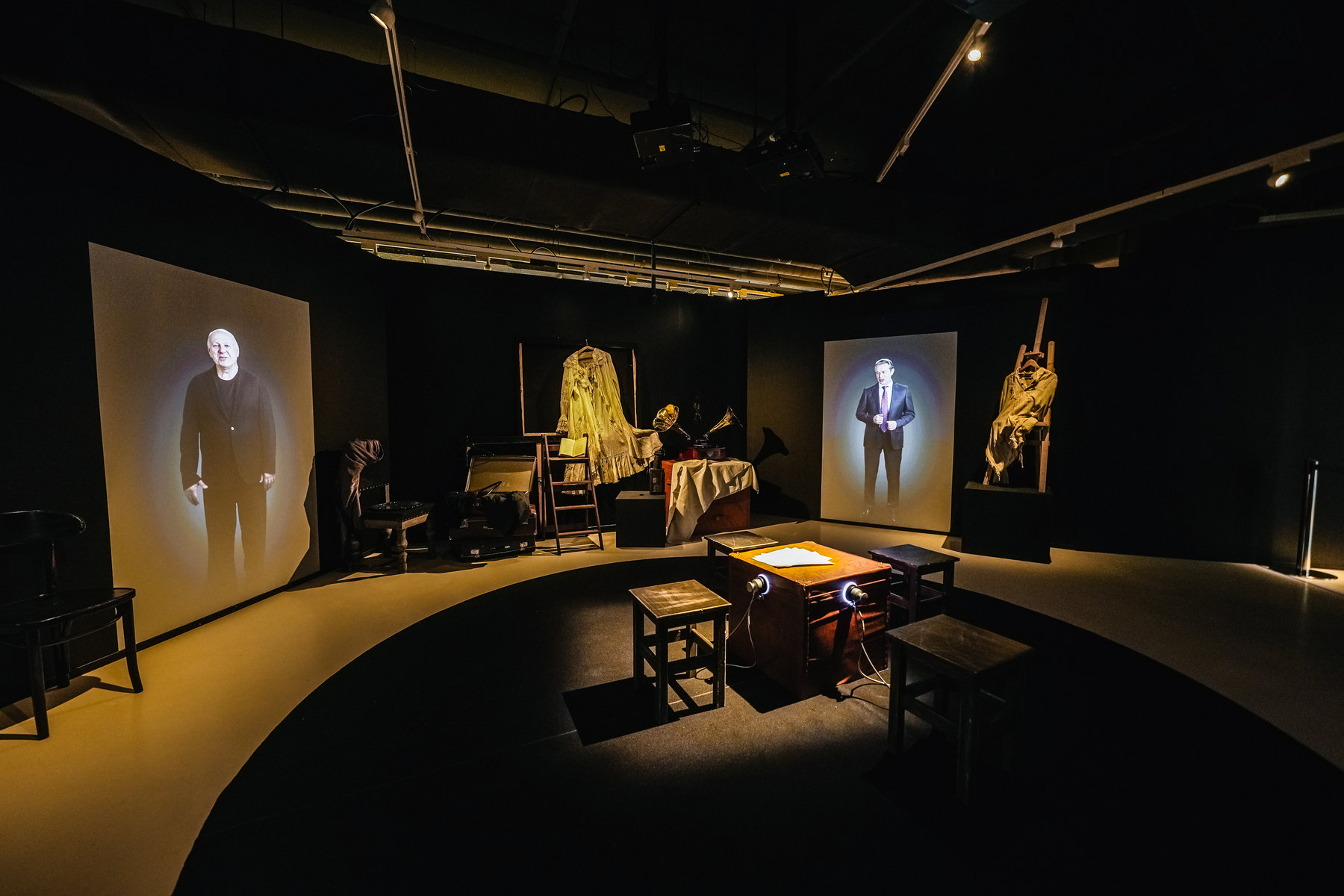
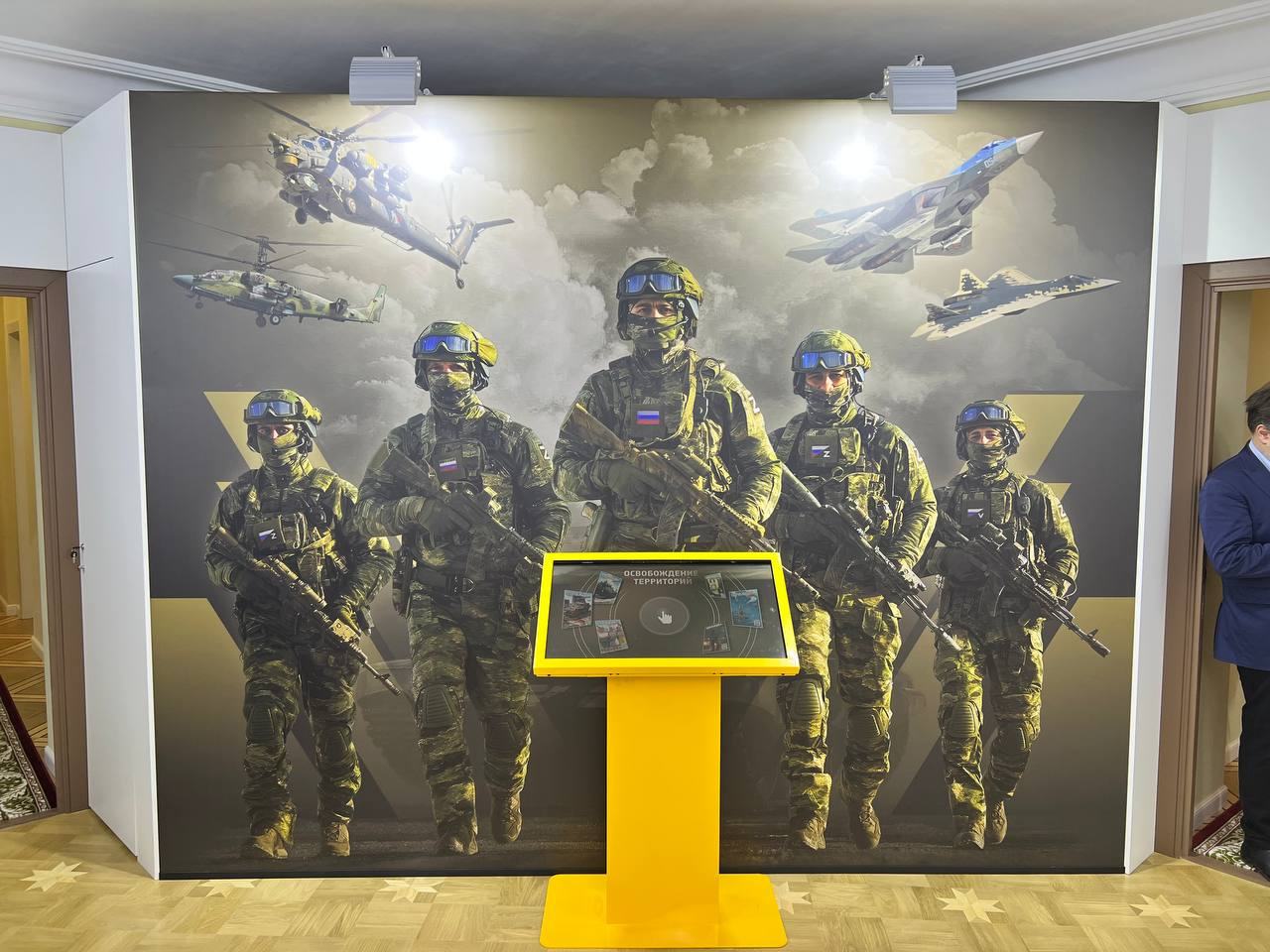
Eight applications for the “Special military operation. Defenders of the Fatherland” exhibition at the Victory Museum: touch screens, showcase screens, a map and the “Parallels” projections.
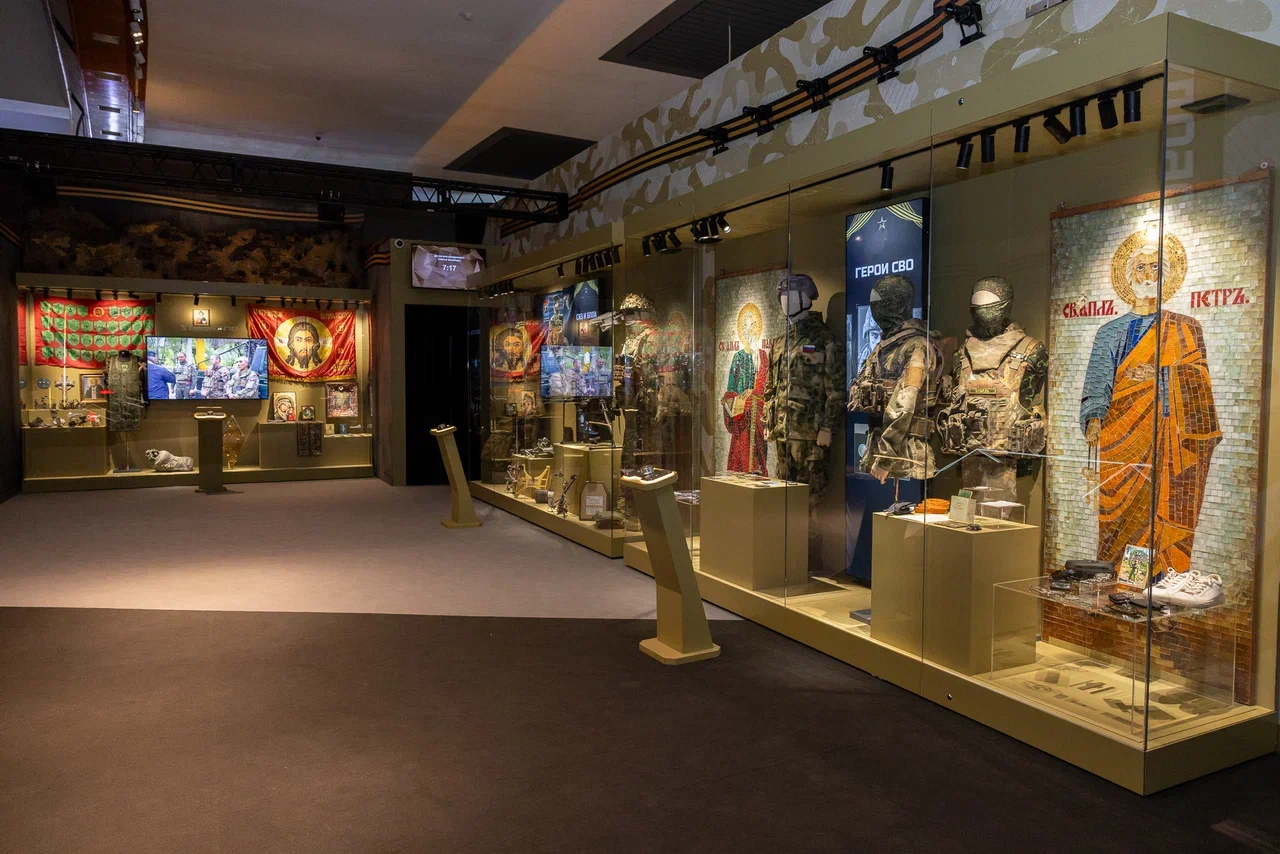
On 19 September 2025, the permanent exhibition “Special military operation. Defenders of the Fatherland”, devoted to the feats of participants in the special military operation, opened to visitors on the third floor of the main building of the Victory Museum on Poklonnaya Hill. It has six sections — “Operation Z”, “Voice of the front”, “Chronicle of feats”, “Saur-Mogila”, “Heroes Z” and “Faith” — and more than 250 museum objects. The second part of the exhibition is captured military equipment displayed in the open air at the G.O.R.A. museum.
For the exhibition in the main building we built the software side: eight applications — for touch screens, showcase screens and wall projections — and an administrator panel through which the museum adds materials itself. For the “Parallels” projections we wrote the script and edited two videos. The hall, showcases and exhibits are the work of the museum and other contractors.
Year
2025
Industry
Museums
Scope of work
8 interactive applications, an administrator panel, 2 videos for projections
Venue
Victory Museum, the “Special military operation. Defenders of the Fatherland” exhibition, Moscow
- 8
- interactive applications
- 2
- videos for the “Parallels” projections
- 19.09.2025
- exhibition opens to visitors
The task
Under the museum's technical specification, the exhibition is interactive: visitors choose for themselves what to watch and read; each interactive system has a standby mode and a visitor mode; museum staff add materials themselves, without developers. The texts, photographs, songs and videos for the applications were provided by the client. What was needed from us was the interface design and nine programs — within a week: the work ran from 26 August to 2 September 2025.
What we did
“Parallels” — the “Operation Z” section
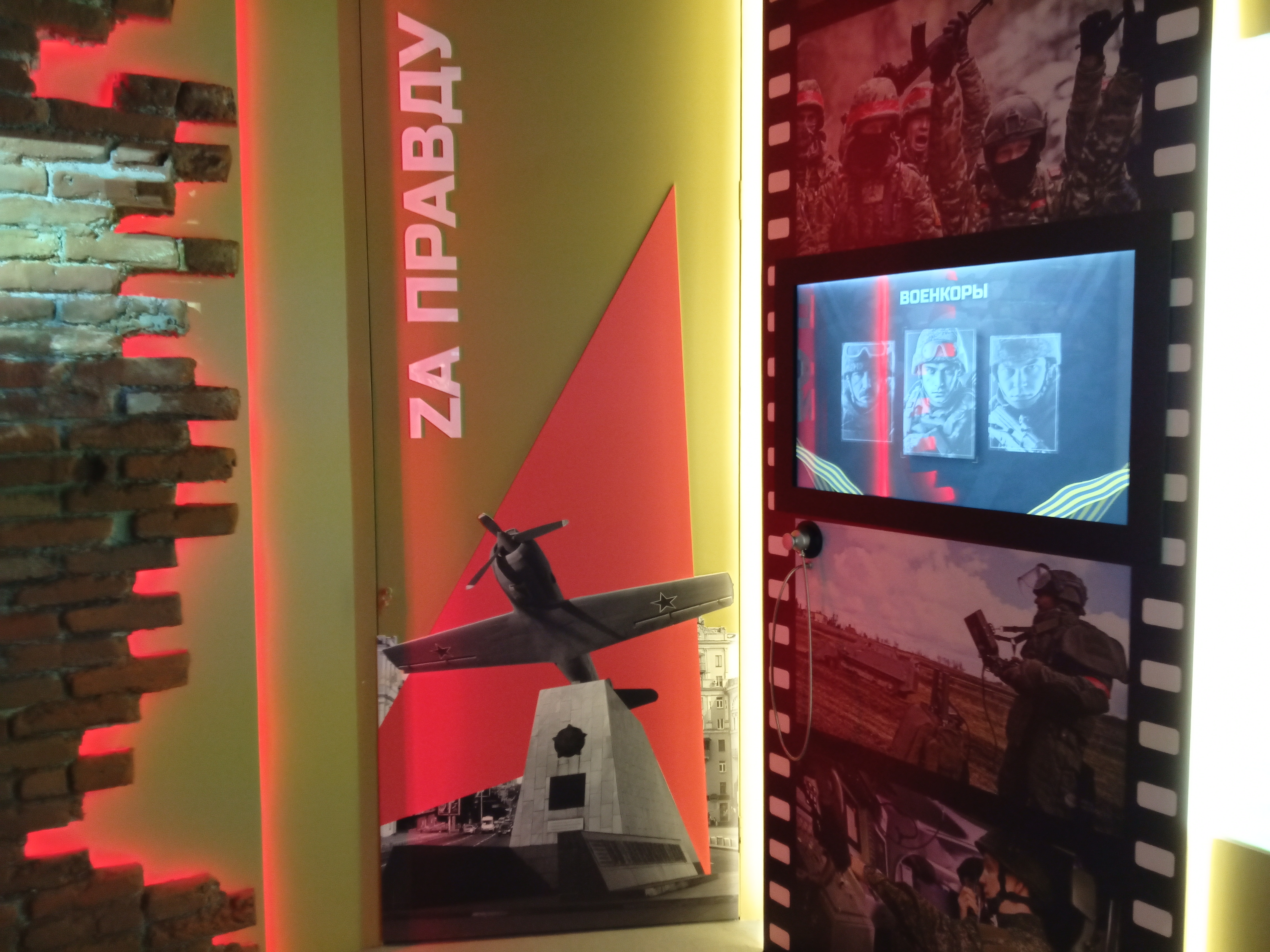
Two projections onto a brick wall and a touch panel from which the visitor launches materials and brings up background notes. For the projections we wrote the script and edited two three-minute videos: on the left, newsreel of the Great Patriotic War; on the right, footage from the special military operation. The shots run in pairs: infantry on the march, a destroyed city seen from above, tanks, a medic bandaging a wounded man, a parade on Red Square.
“Poems and songs” — the “Voice of the front” section
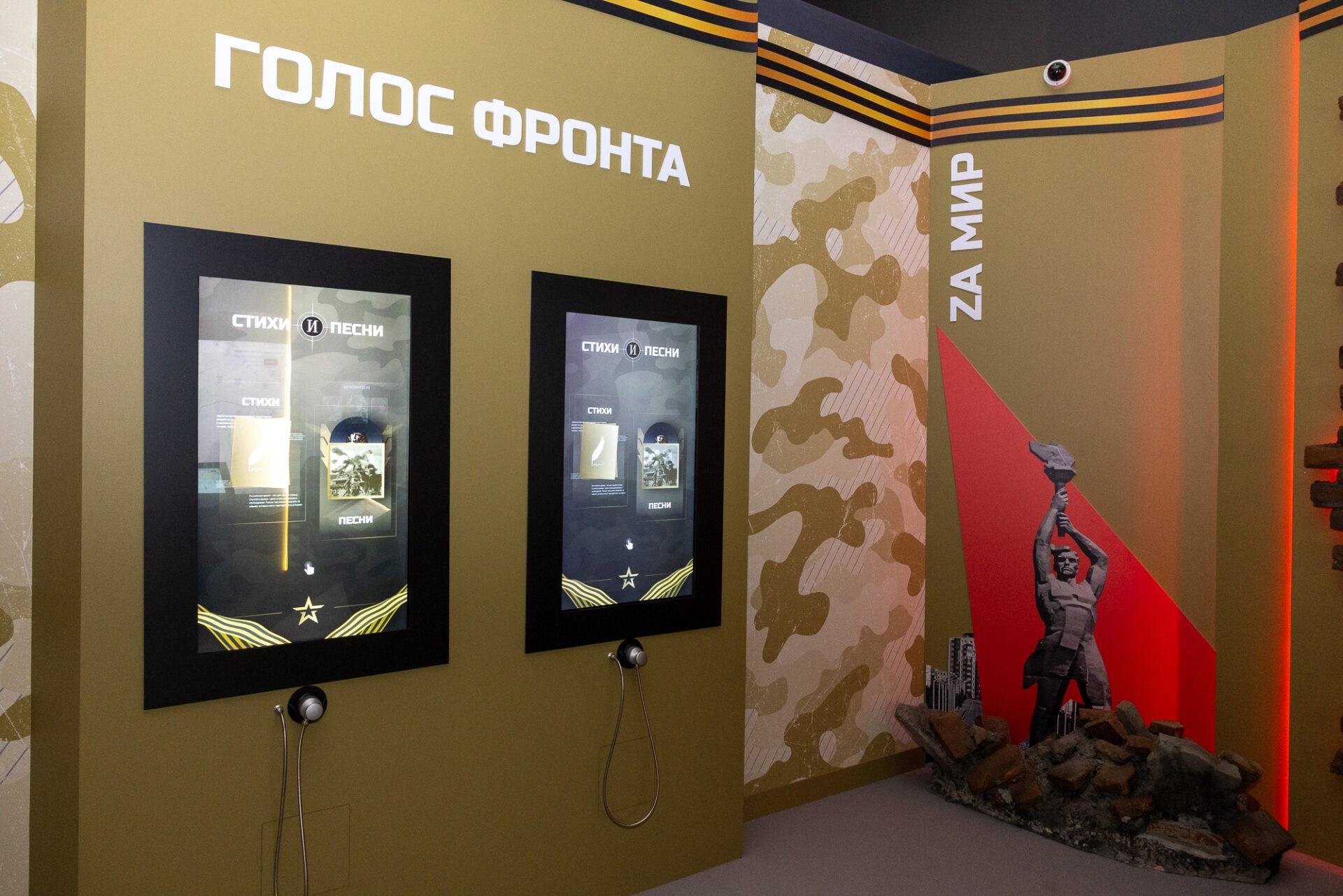
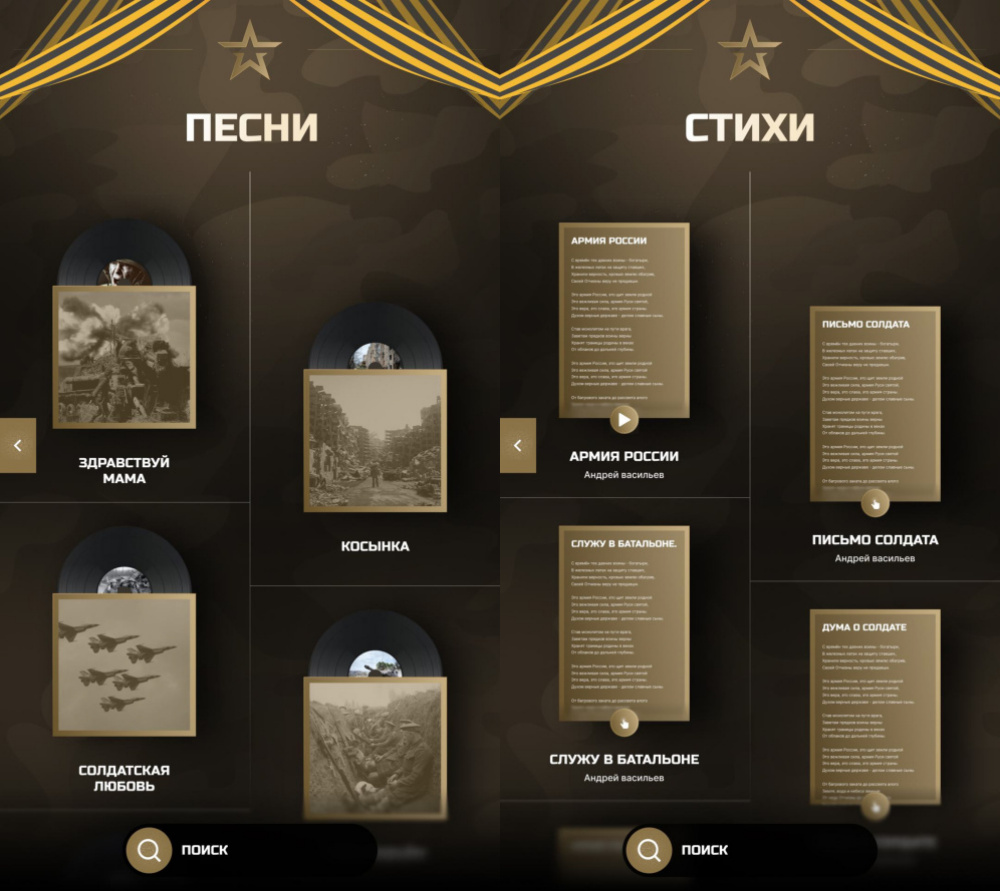
Two vertical touch screens on a pylon, each with an audio handset below it. The visitor chooses a poem and reads it on the screen, or picks a song and listens to it on the handset; poems and songs can be searched. We did the sound design for five songs — editing, effects, fitting to the installation — and loaded the first five songs and five poems into the application; from then on the museum adds them itself.
“Chronicle of feats”
Two screens showing video materials side by side.
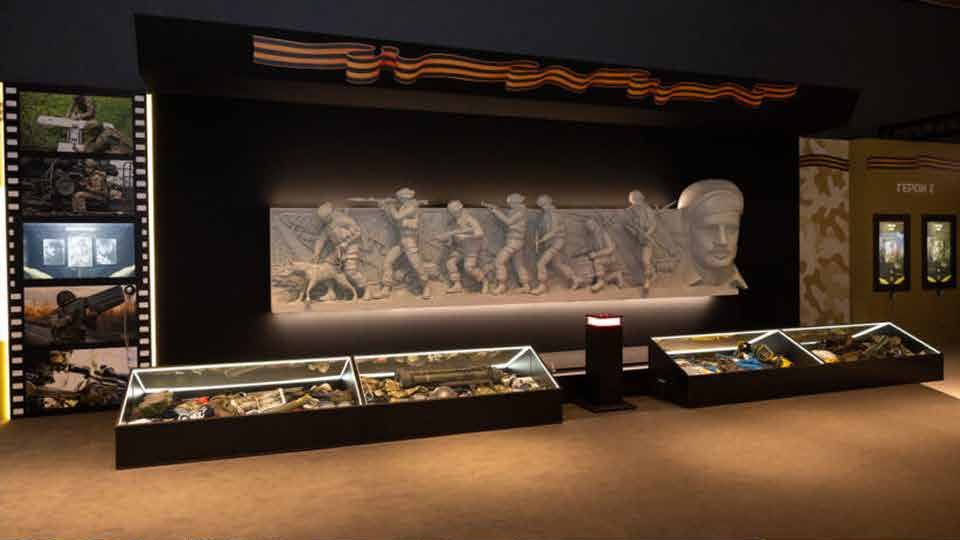
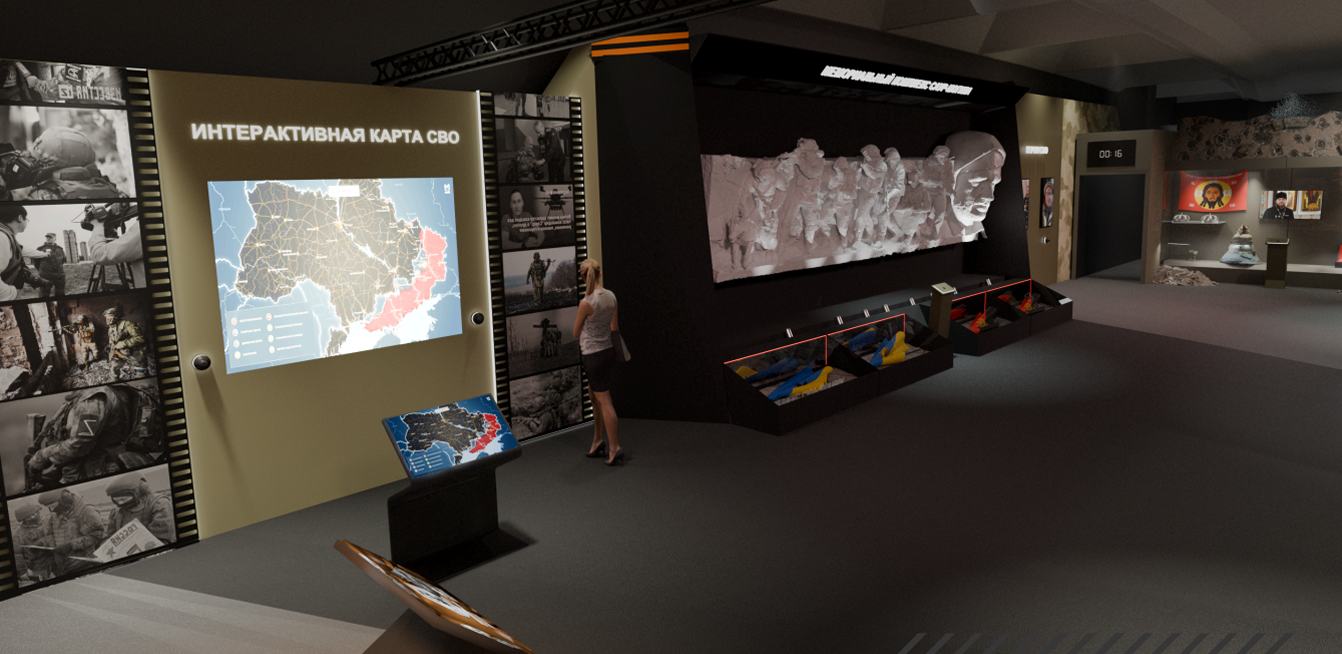
“Map”
A touch panel and a wall projection: from the panel the visitor brings up a map of the combat operations on the projection, while video materials on the topic play on the screens. The map of the special operation itself was created with the support of RIA Novosti.
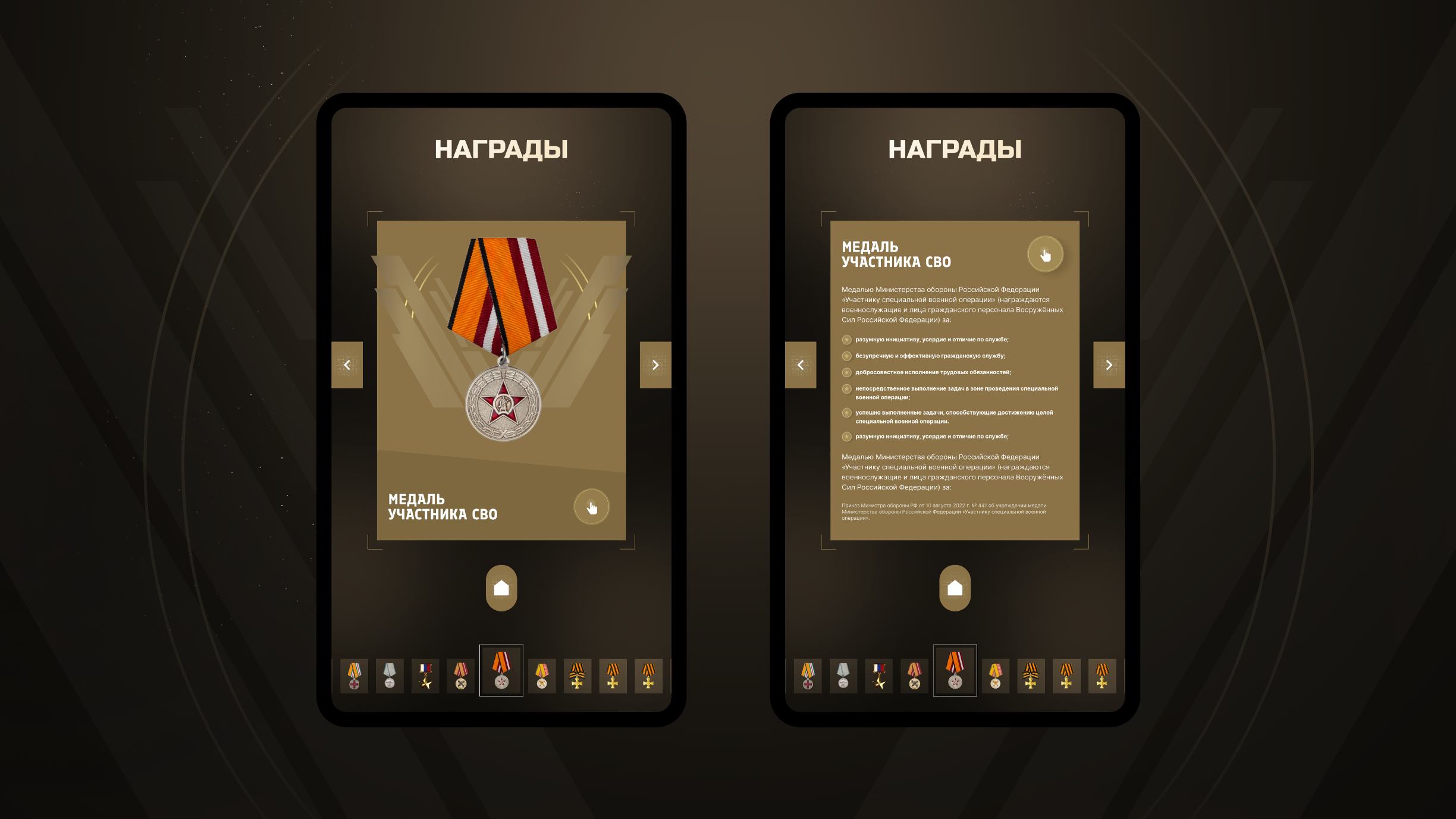
“Heroes of the special military operation”
A touch application with four sections: heroes of the special military operation; state awards — orders, medals and insignia; Guards units; and materials of the General Staff. For the section on Guards units the client supplied 113 notes on regiments, brigades and armies.
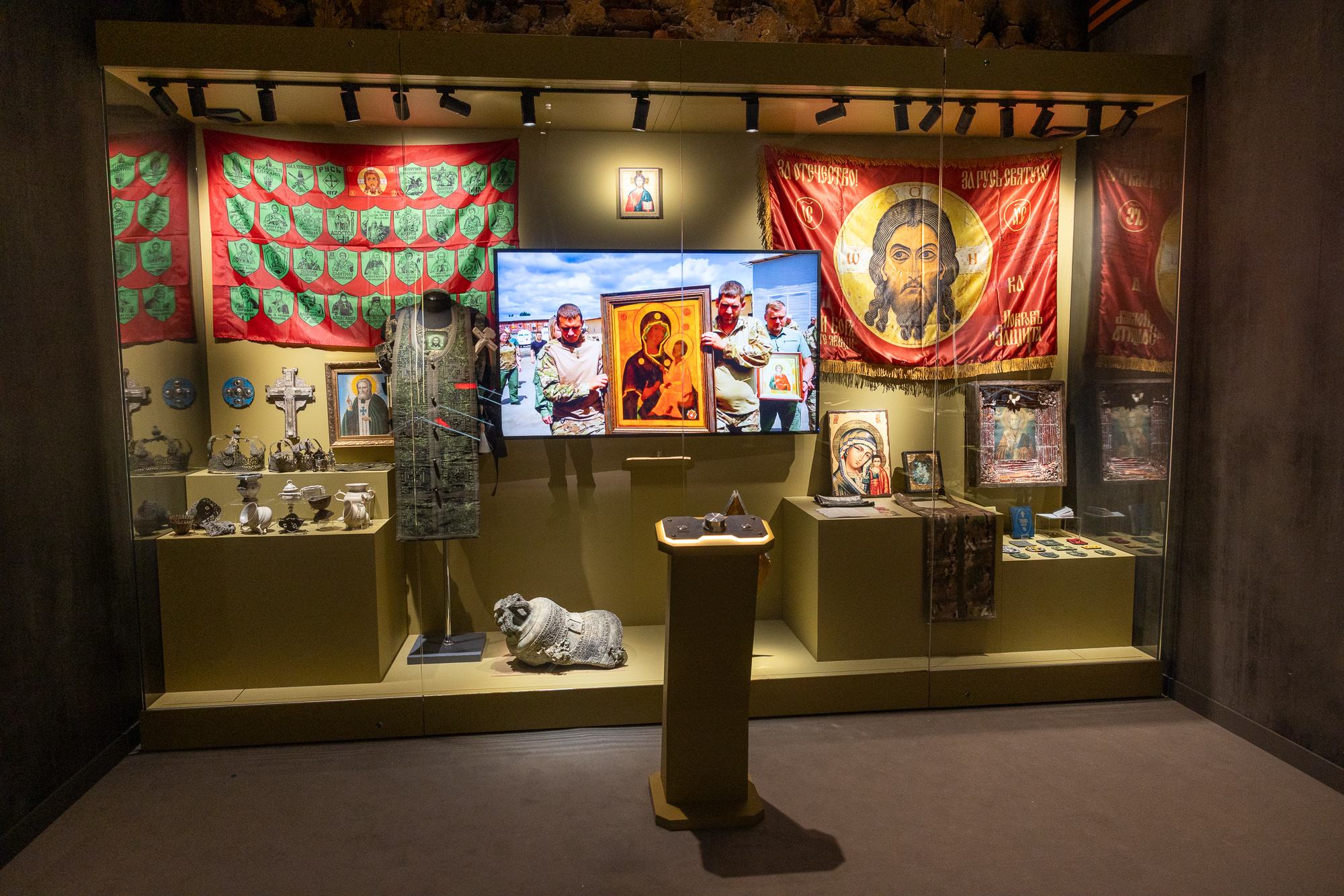
“Faith”
In the section's showcase, among icons, church plate and a bell melted in the fighting near Ugledar, stands a screen; in front of the showcase is a controller. The visitor chooses an object and reads about it on the screen.
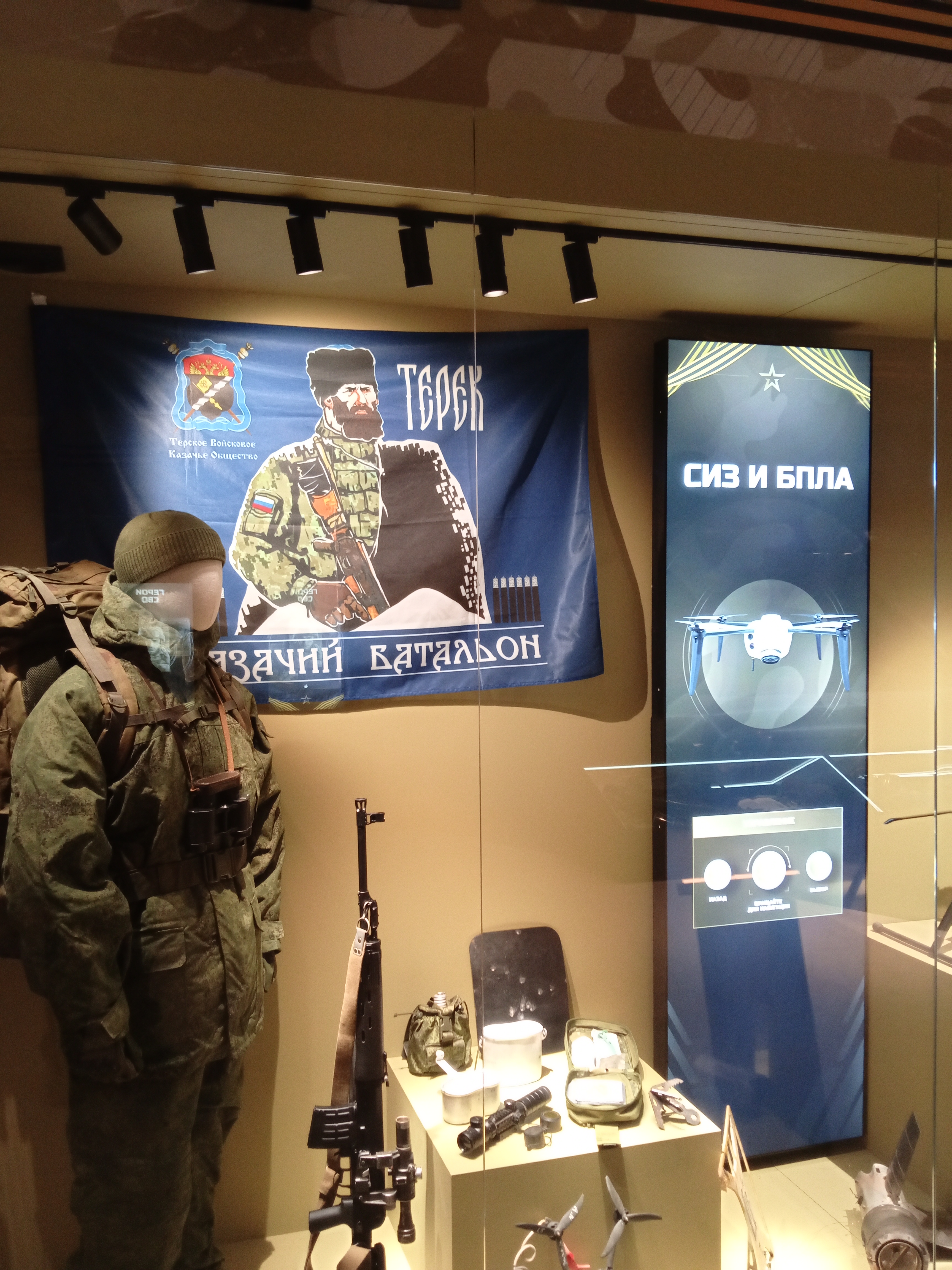
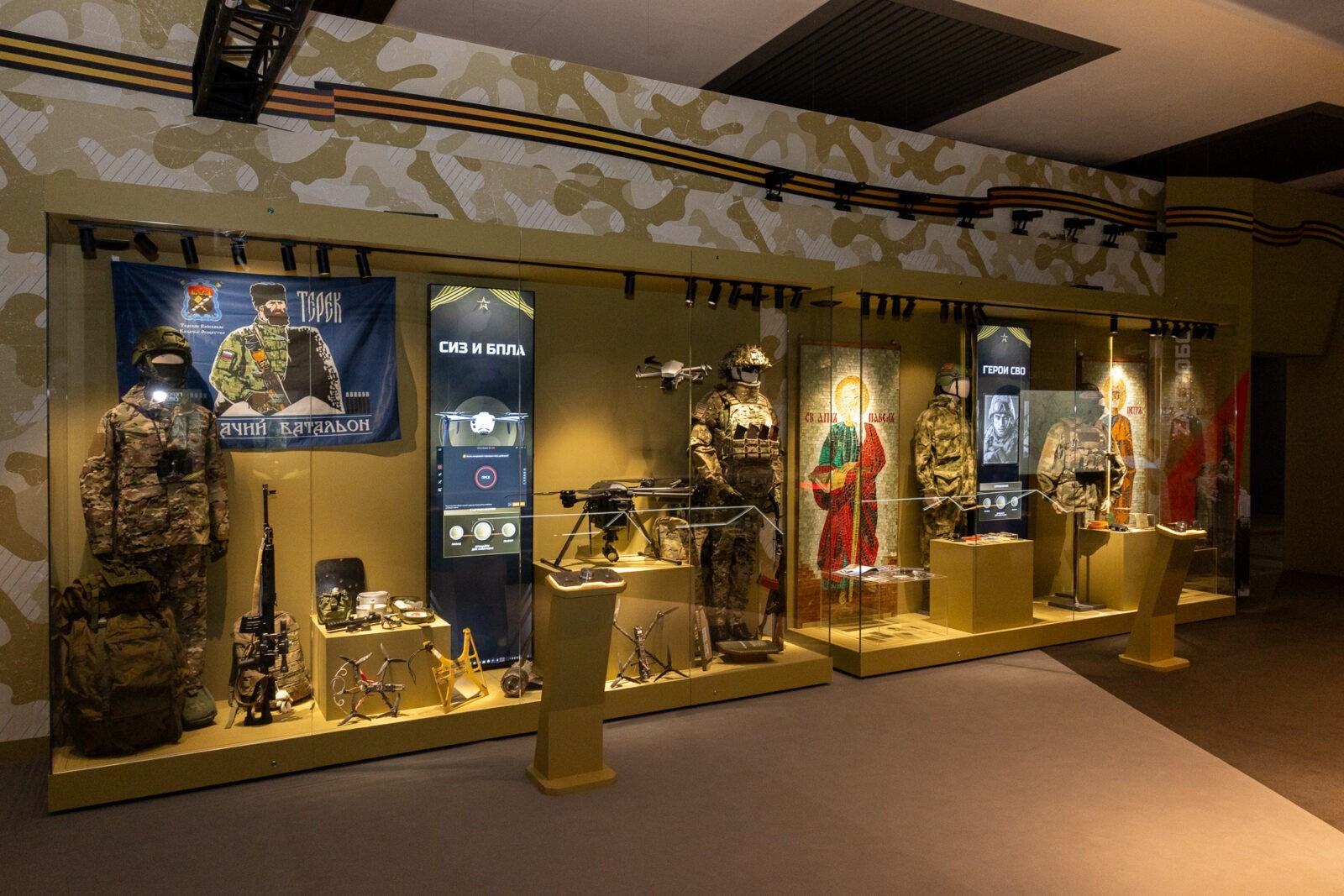
The “PPE and UAVs” and “Heroes of the special military operation” showcases
Each showcase has a vertical screen behind the glass and a controller in front of it. The visitor scrolls through the objects in the showcase — equipment, drones, uniforms and belongings of the heroes — and opens a note on each one.
Admin panel
Through it, museum staff add materials on their own to the “Poems and songs”, “Heroes of the special military operation” and “Faith” applications and to the showcases.
How it is built
The showcase screens are operated with a rotary controller on a pedestal in front of the glass: turn to navigate, press to select. The screen works as an electronic label for the objects behind the glass.
The “Parallels” videos are three minutes each at 1920×1080; for display they are combined into a single 3840×1080 frame — two projections side by side, edge to edge.
The interfaces use the colours and motifs of the hall: khaki and sand, camouflage, the St George ribbon, the star. In standby the screen invites visitors to touch it.
Result
The official opening of the exhibition took place on 18 September 2025, and it opened to visitors on 19 September. According to the museum, the main building holds more than 2,000 stories of heroes of the special military operation and the Great Patriotic War, more than 400 biographies of Heroes of Russia and more than 110 stories of units that were awarded Guards status. In the first month, up to 20 October, almost 42,000 people visited the exhibition.