Exhibitions · 2025
“Gallery of Change” at the “That Very Moscow” exhibition
Exhibitions / “Gallery of Change” at the “That Very Moscow” exhibition
About the project
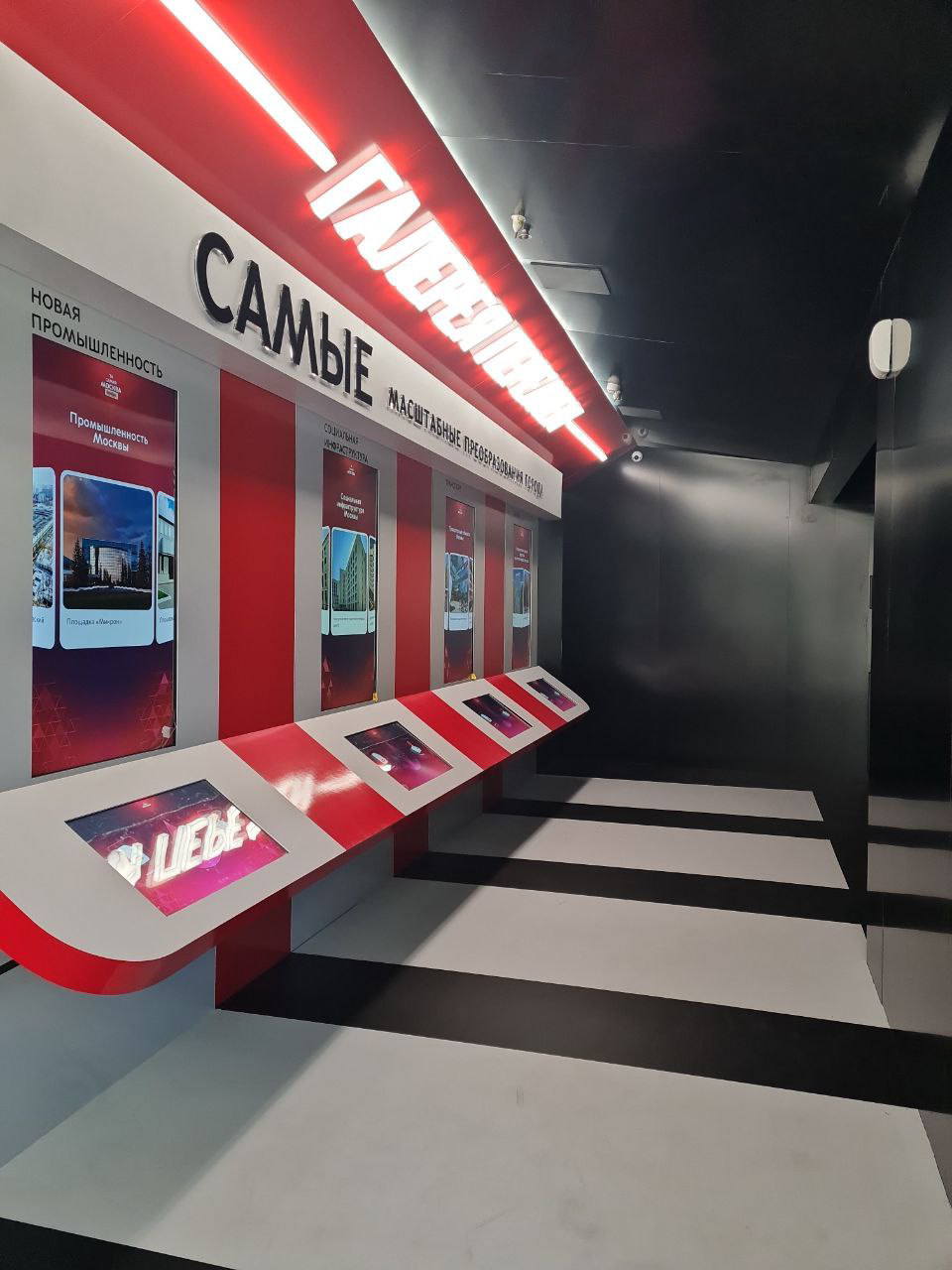
Four interactive games for the “Gallery of Change” at the “That Very Moscow” exhibition in the Manege — on housing, transport, social infrastructure and industry in Moscow.
From 7 to 31 August 2025 the Manege Central Exhibition Hall hosted the exhibition “That Very Moscow” — one of the flagship venues of the forum-festival “Territory of the Future. Moscow 2030”. Across 11 thousand m², more than ten themed zones told the story of the capital’s transport, urban development and industry.
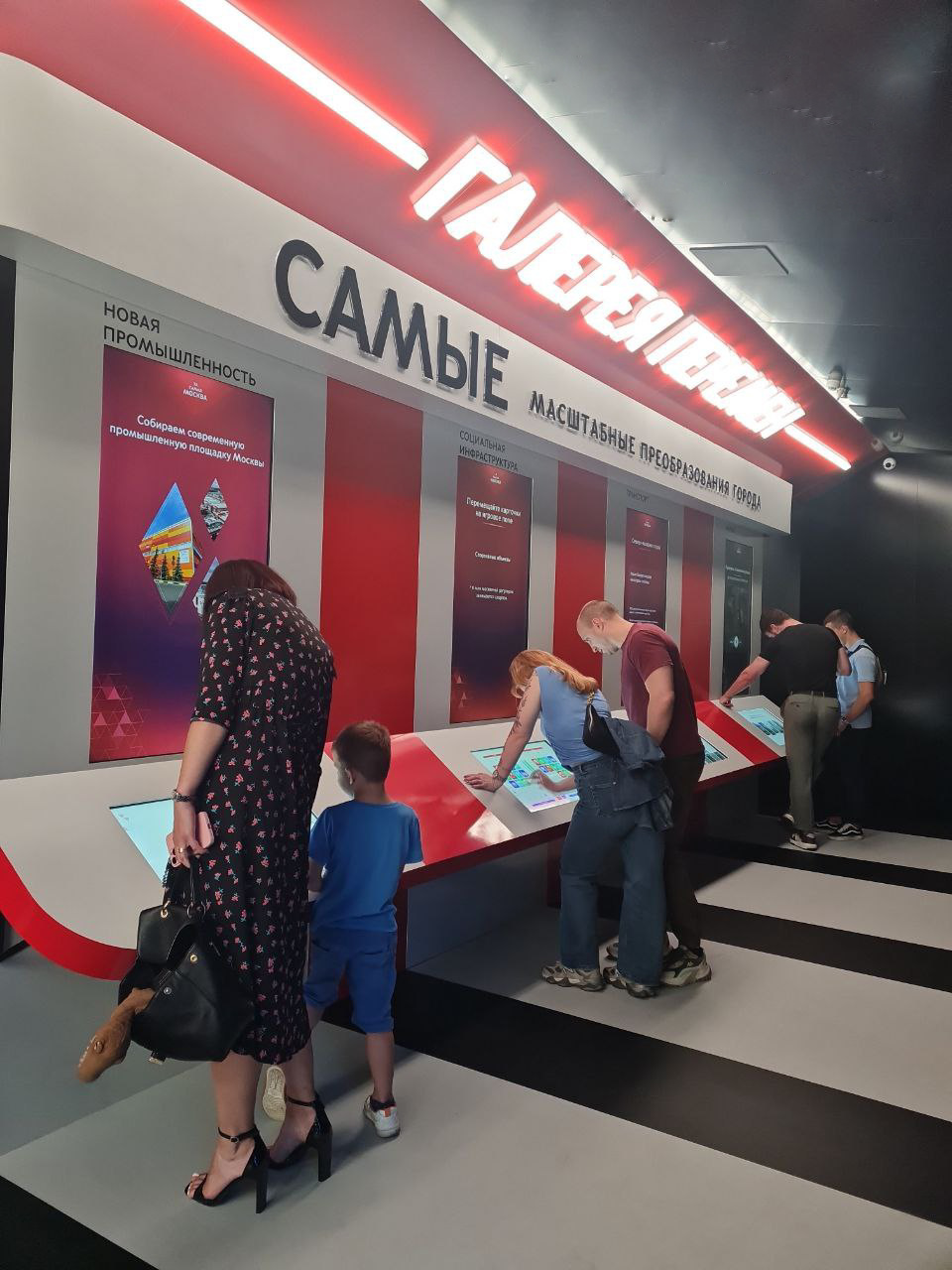
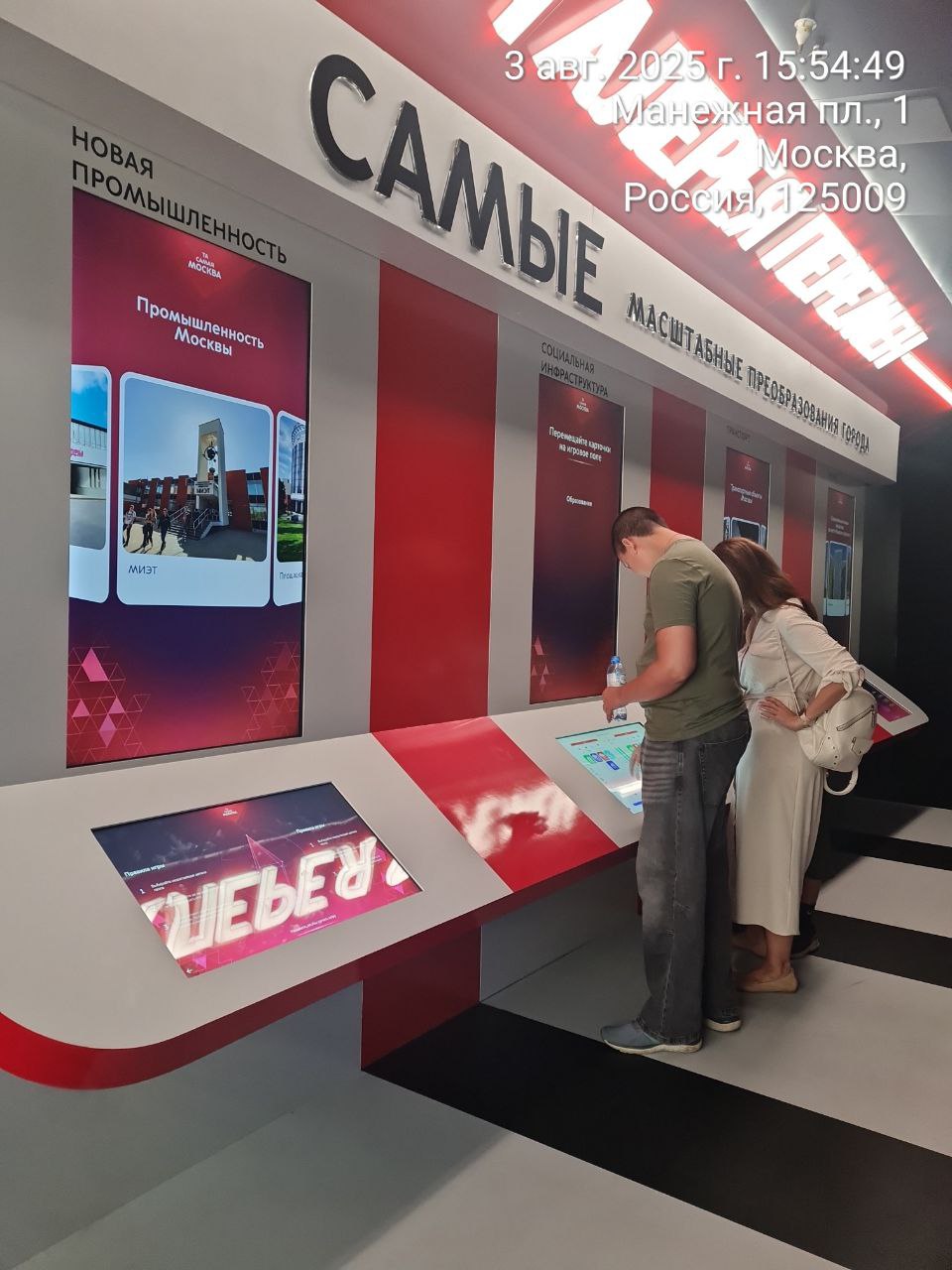
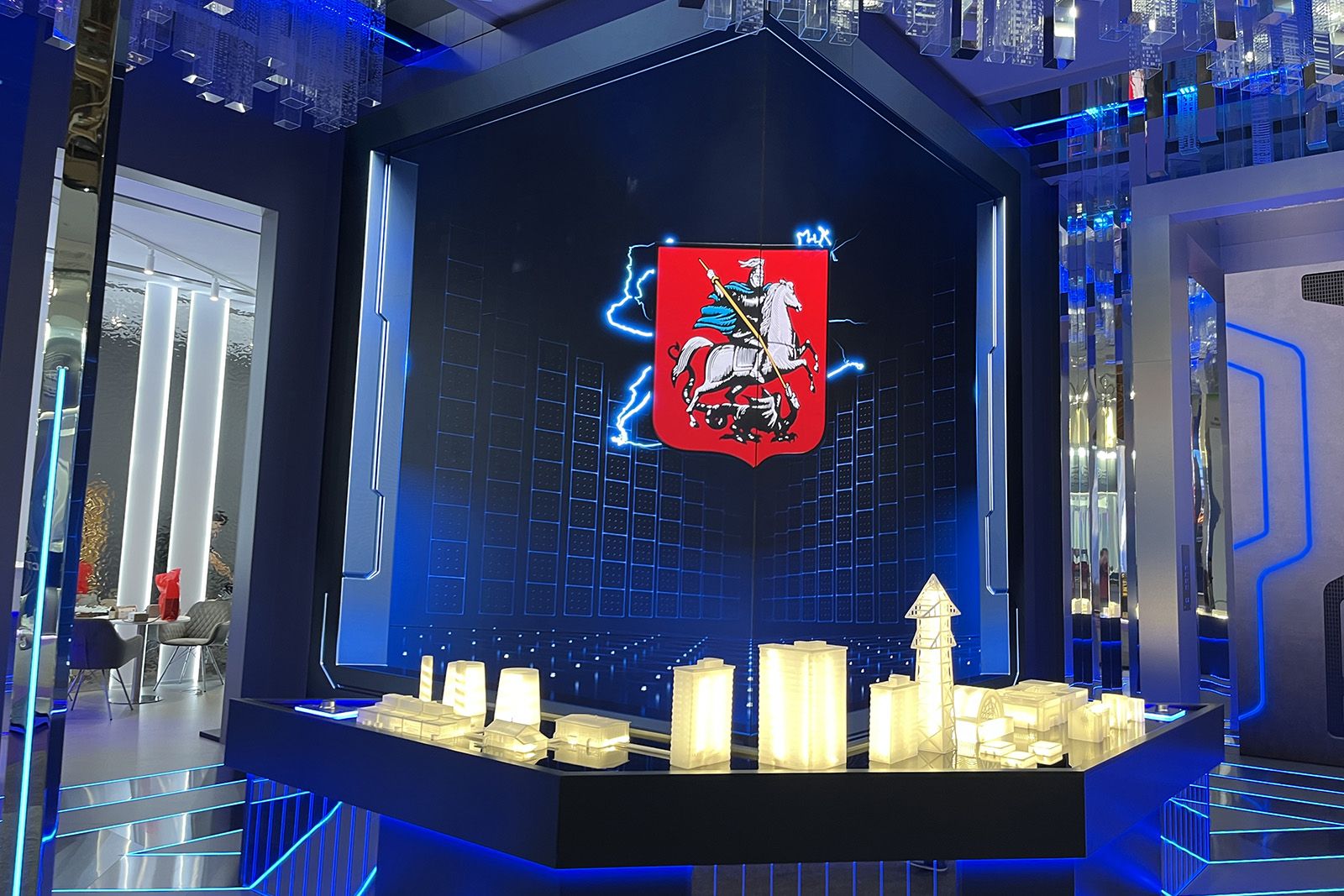
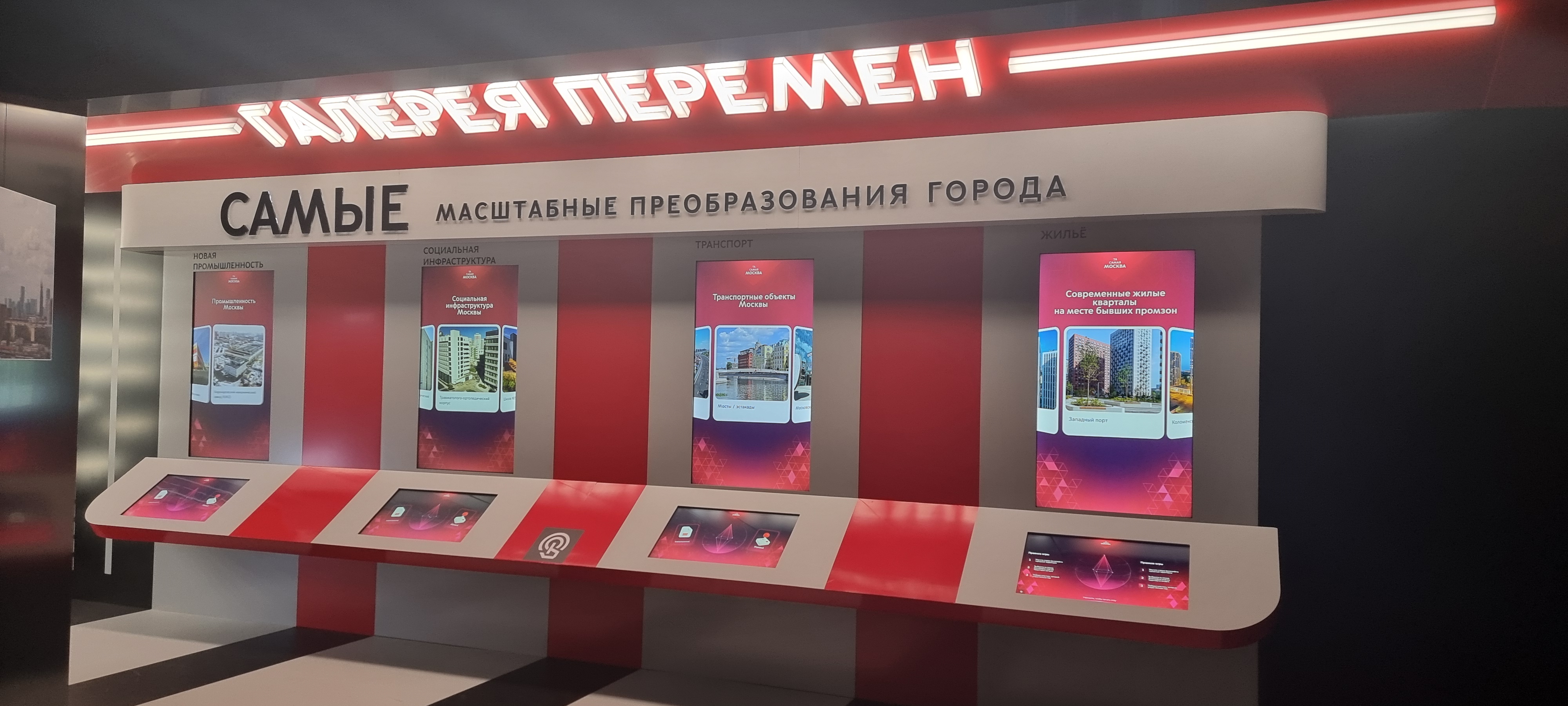
Stepping out of a “lift” that carried visitors from an old industrial zone into a new district, guests entered the “Gallery of Change”. Here, in a playful form, they were shown how the city is developing housing, transport, social infrastructure and industry.
We made four interactive applications for the gallery, one for each area, and set them up on site. The work covered the game mechanics, interfaces, media content and software.
Year
2025
Industry
Exhibitions
Scope of work
4 interactive applications: games and maps
Venue
Manege Central Exhibition Hall, Moscow — the “That Very Moscow” exhibition
- 4
- interactive applications: a game and a map in each
- 2
- screens on each stand: vertical and touch
- 07.08.2025
- opening of the “That Very Moscow” exhibition
The task
Each application had to work in two modes: an information mode, so that visitors could explore the sites on the map themselves, and a game mode, to draw them into the topic. The topics: the integrated territorial development programme (KRT) and new housing on the sites of industrial zones; the transport network; schools, clinics and sports facilities; the transformation of industrial zones. Each application runs on two screens: a vertical 2160×3840 screen and a 1920×1080 touch panel. Everything had to be delivered by 31 July 2025, before the exhibition opened.
What we did
Housing
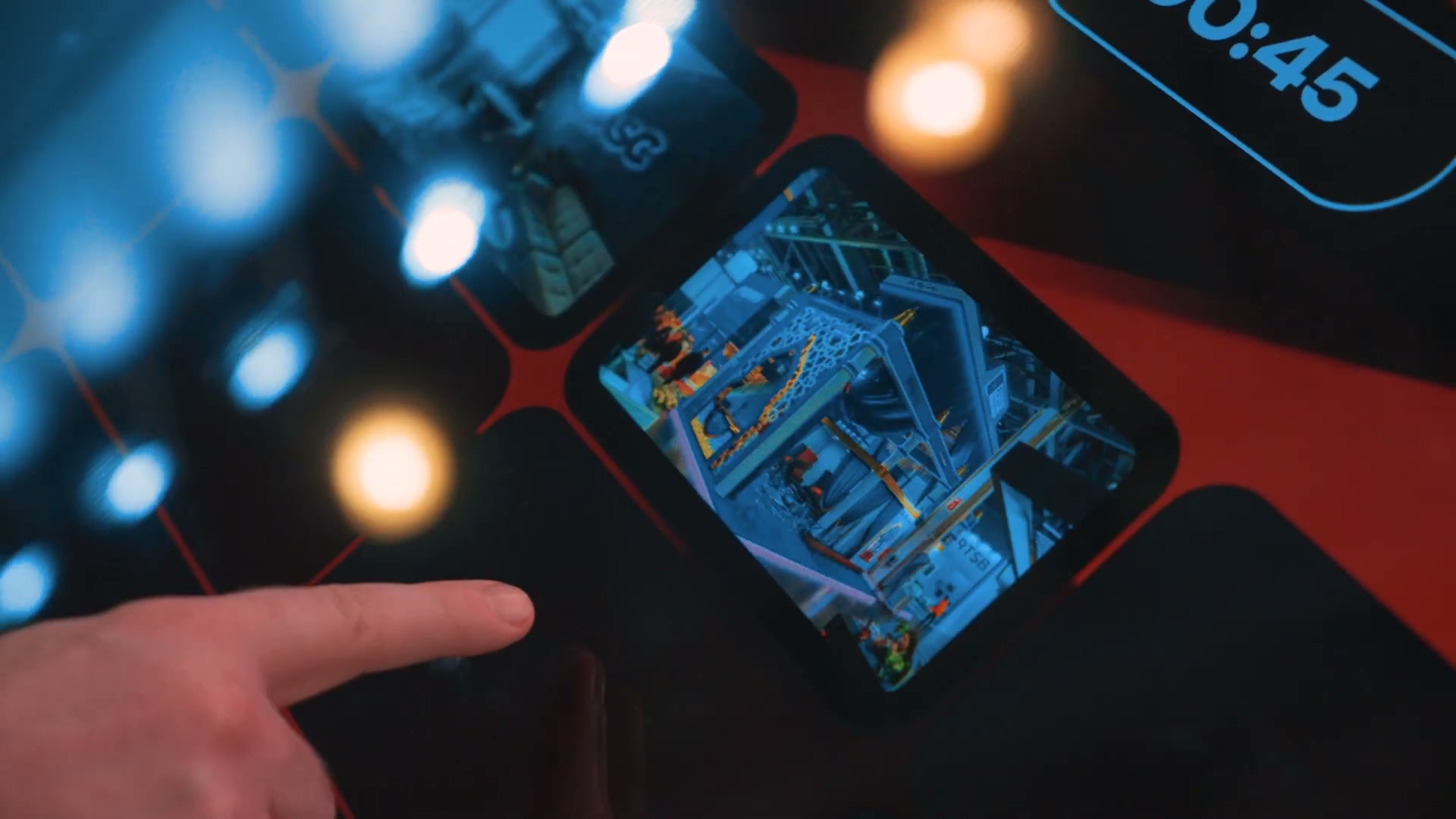
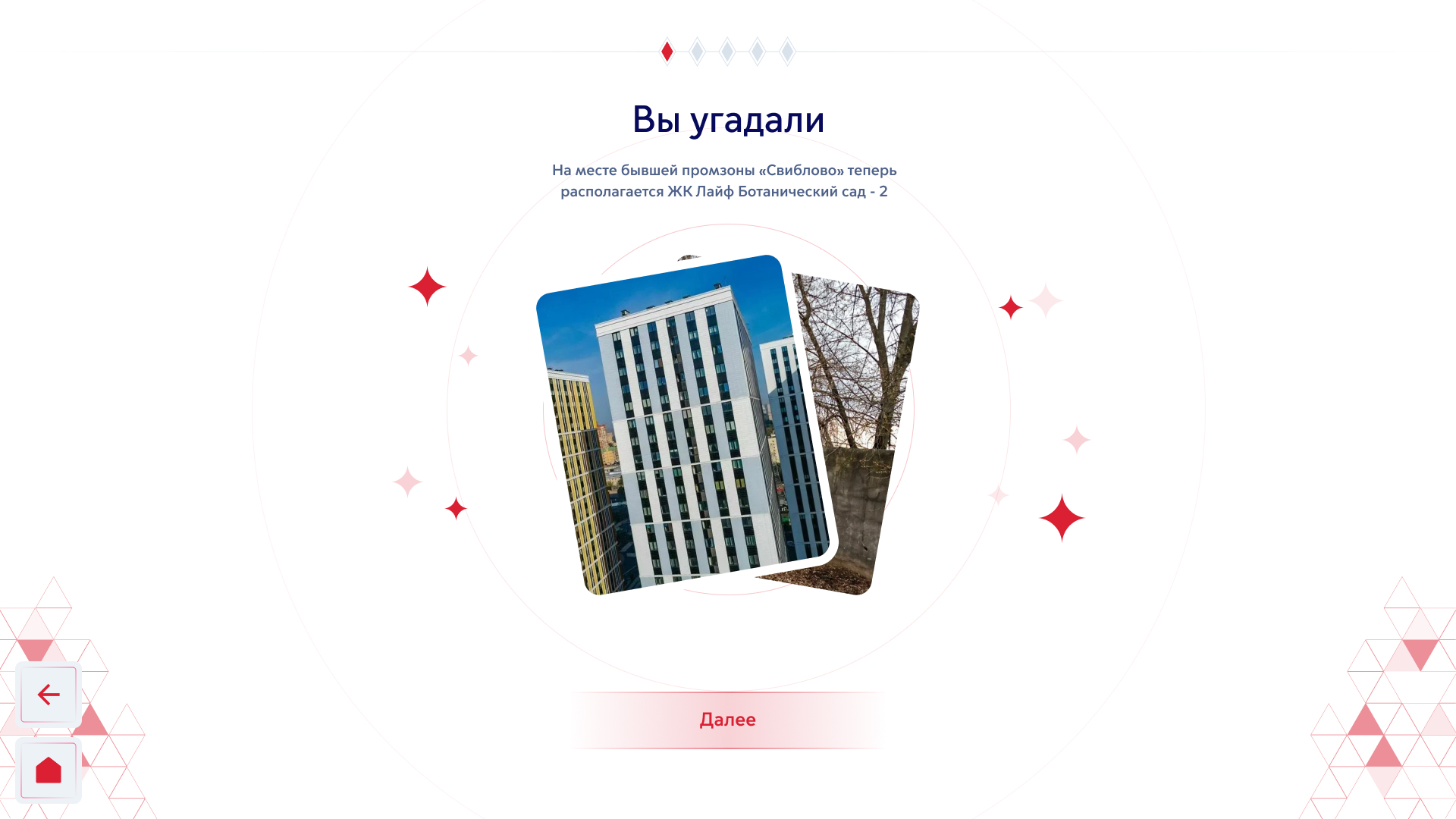
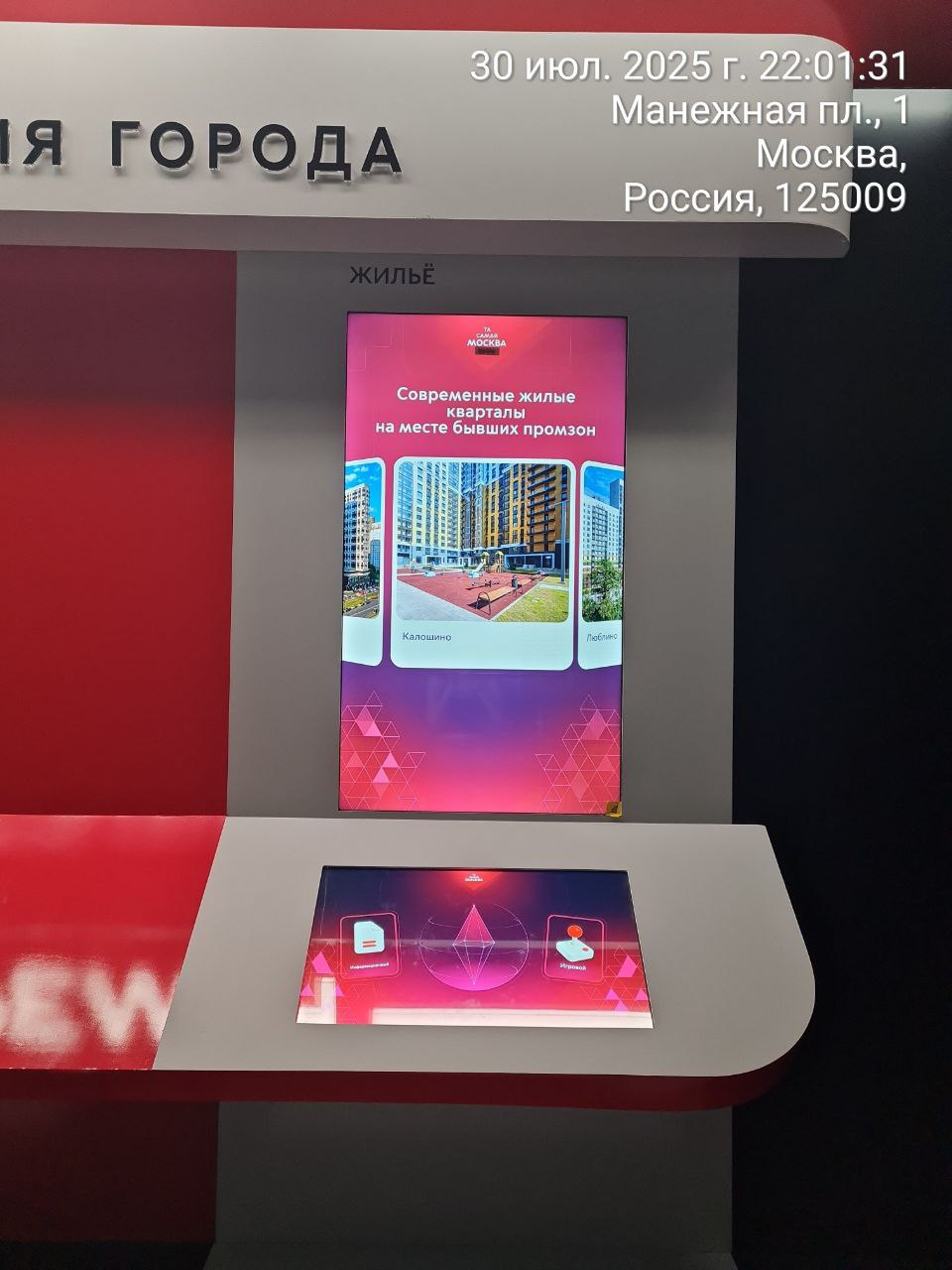
A game about industrial zones on whose sites residential neighbourhoods have grown. The touch panel shows an image of a former industrial zone and five photos of modern residential complexes; the task is to find the one built on its site. The correct “before” and “after” pair moves to the vertical screen together with figures about the area. Five rounds, ending with a score and a note on the KRT programme, which turned five in July 2025. In information mode — a KRT map with a note on each industrial zone.
Transport
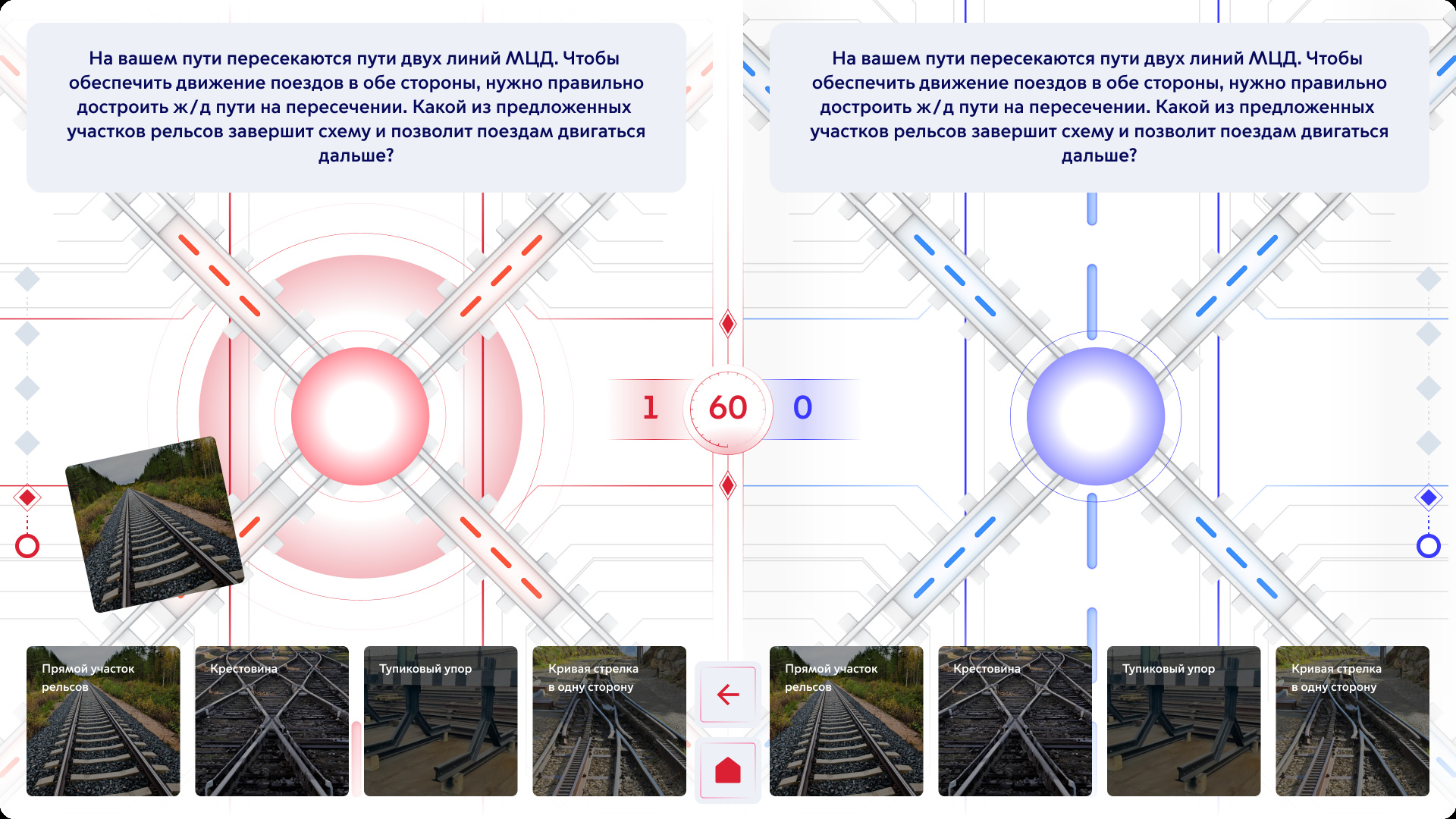
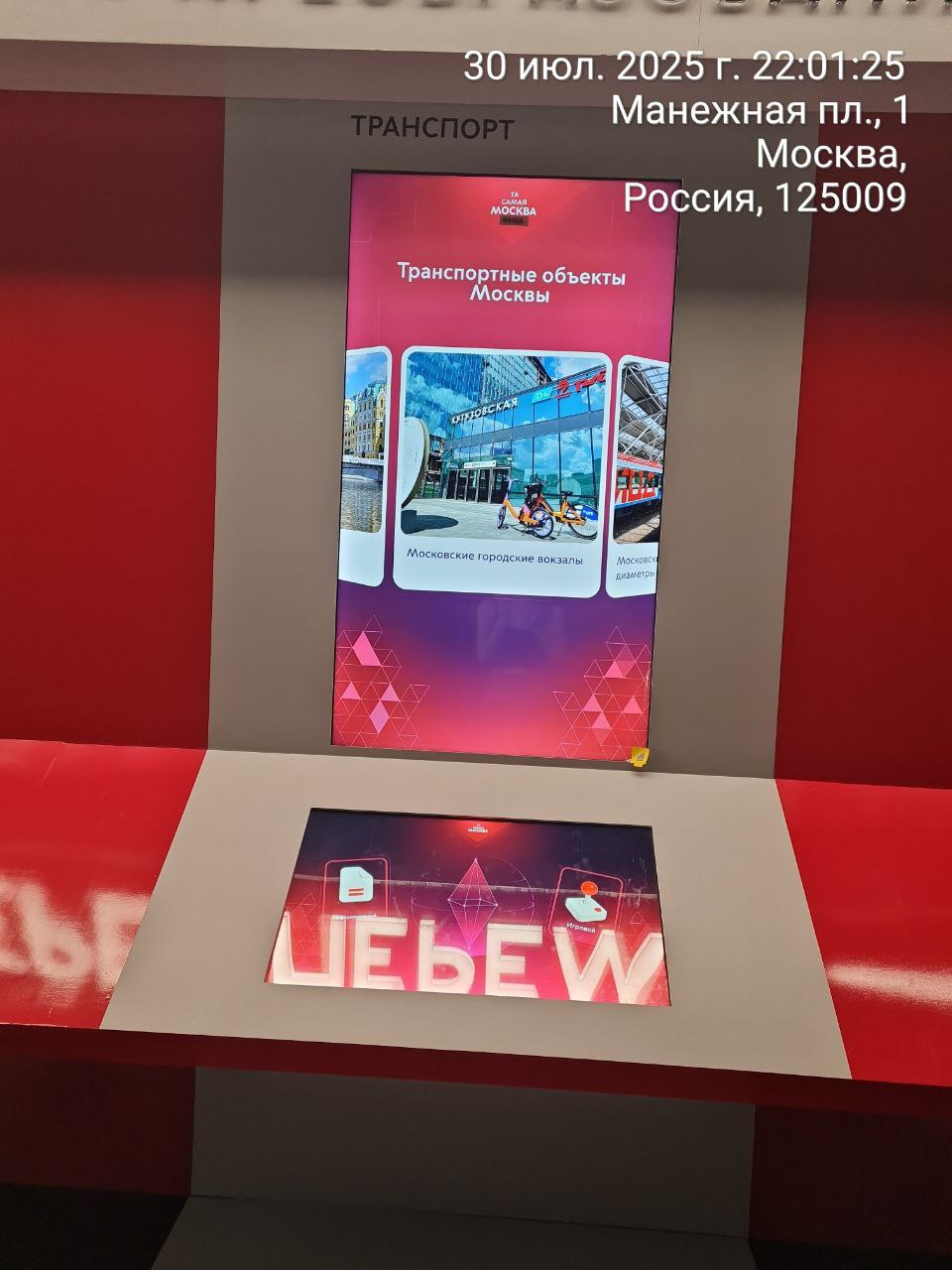
A game against the clock: in 60 seconds, guide a character along a route from point A to point B and complete five transport facilities along the way. For example, you have to choose a section of track to separate trains at the intersection of two Moscow Central Diameters lines. In information mode — a map with the metro, the Moscow Central Circle, the Moscow Central Diameters, city railway terminals, bridges and other facilities.
Social infrastructure
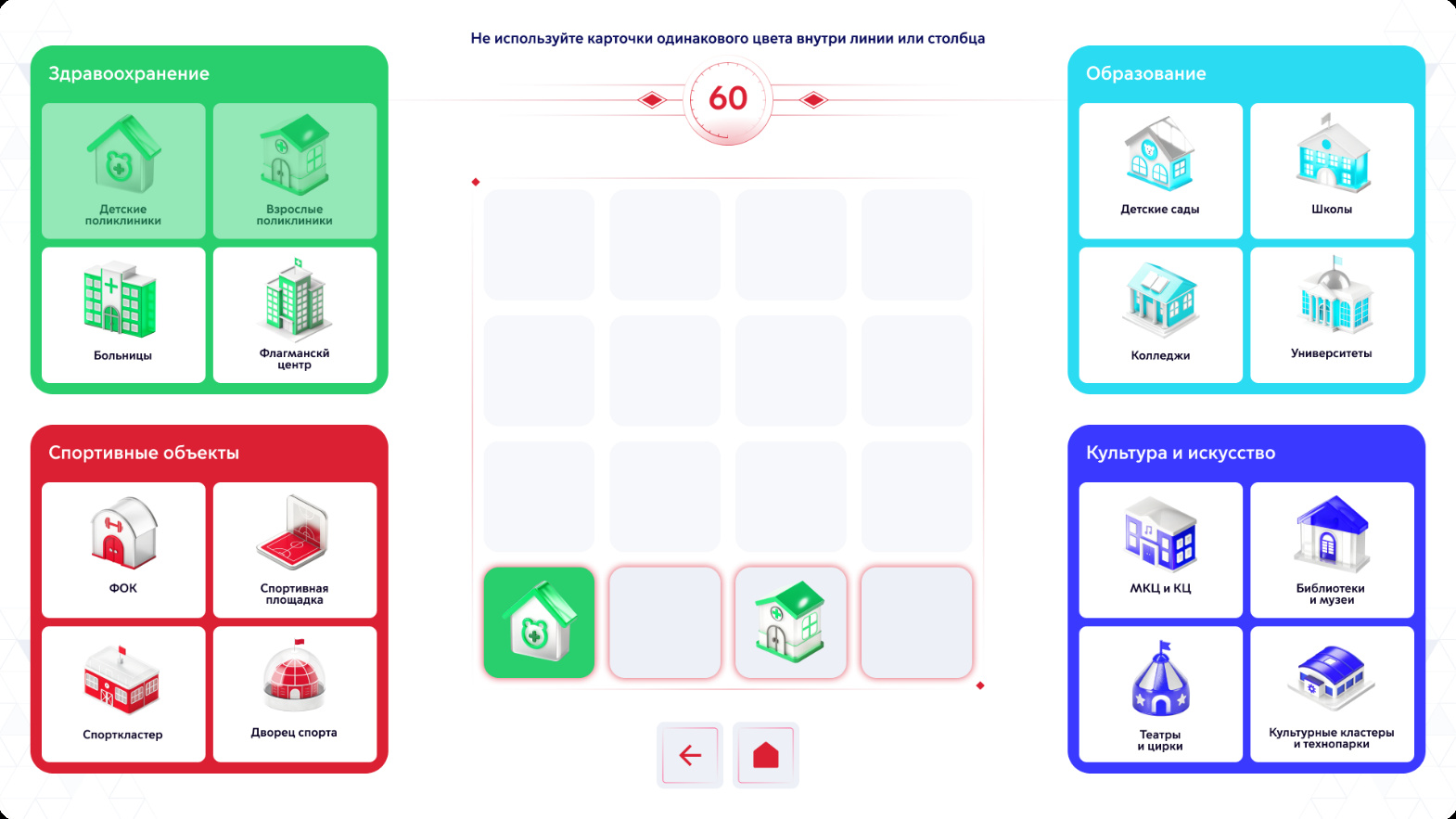
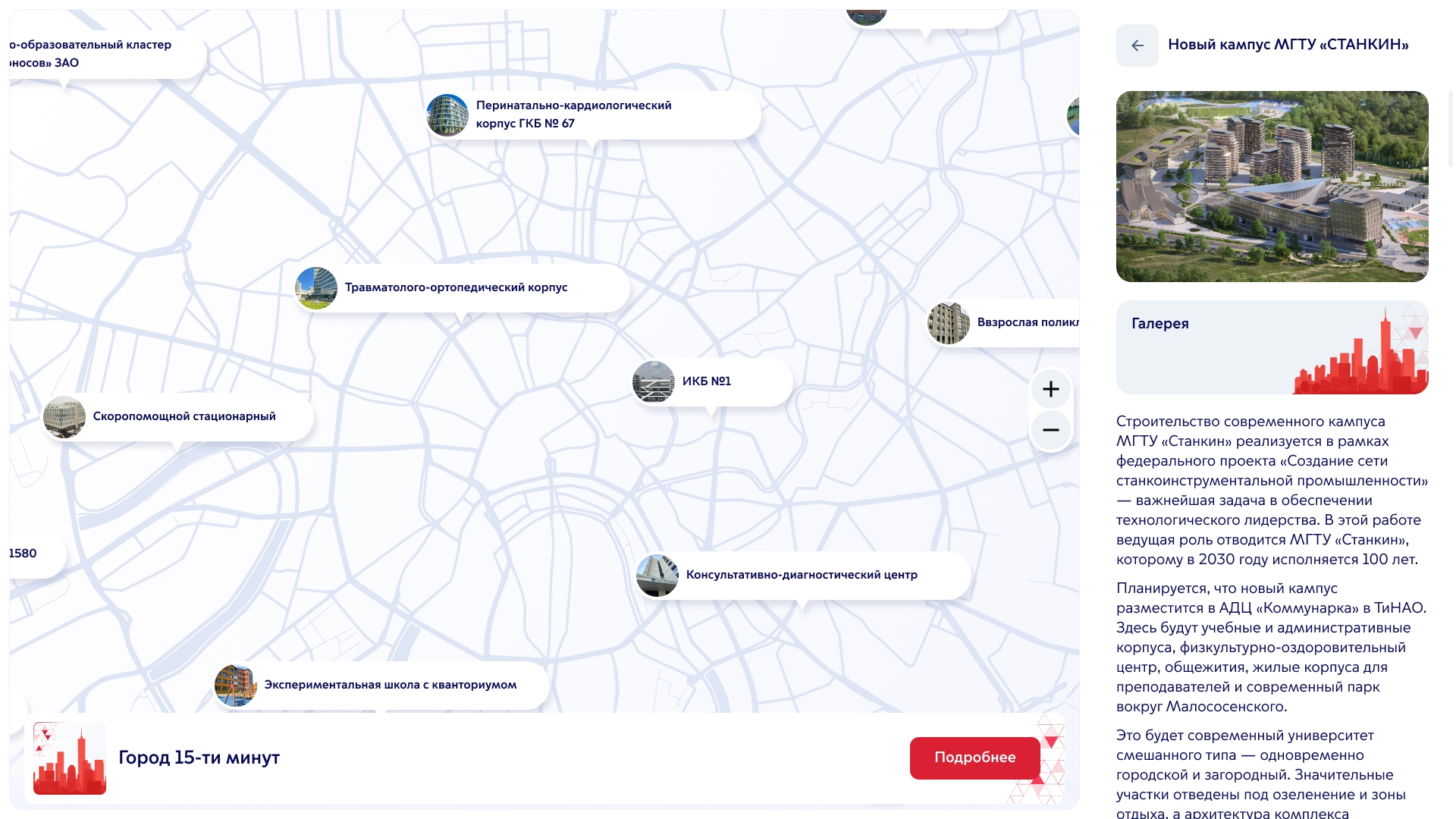
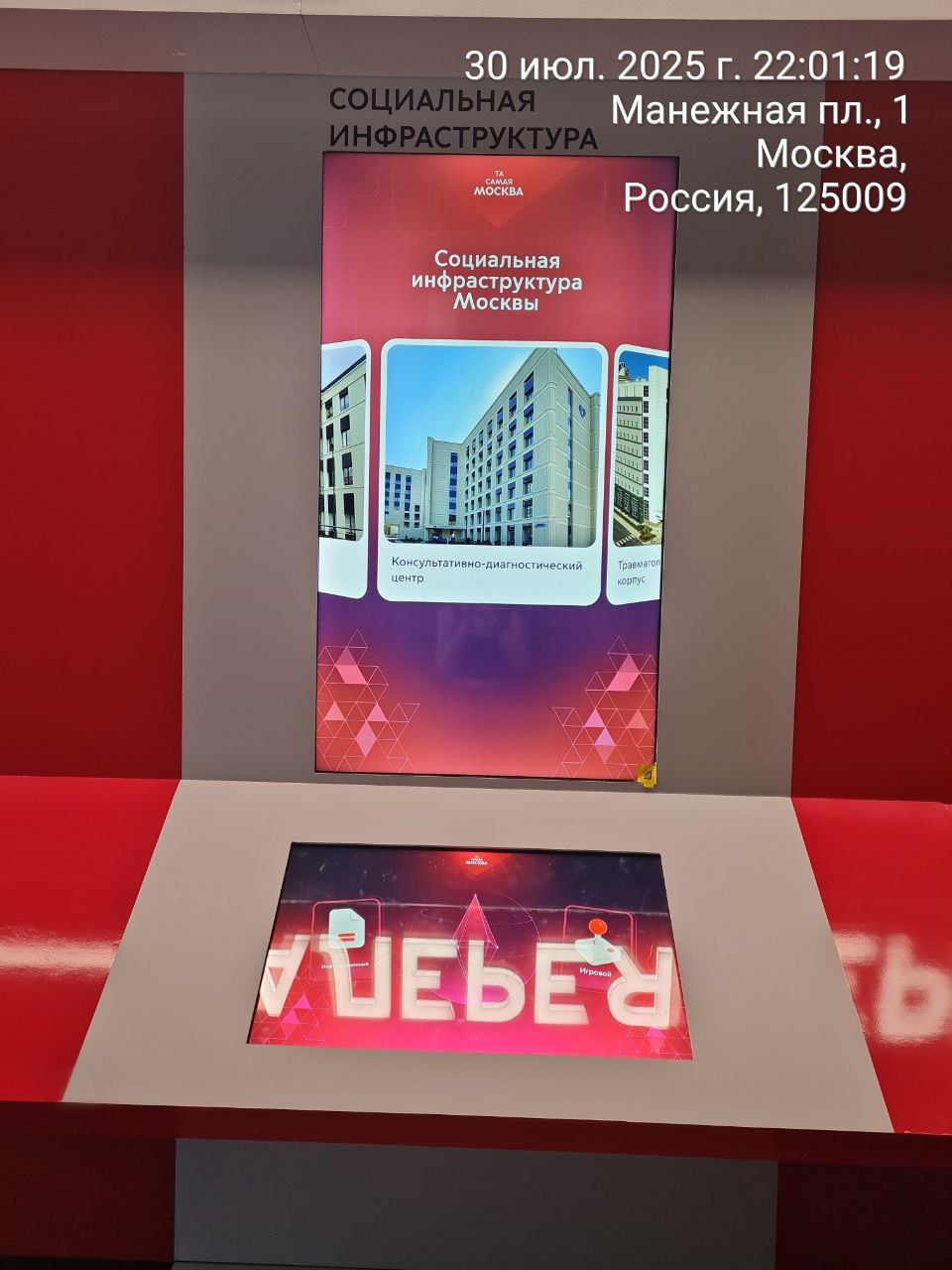
The “15-minute city” puzzle: fill a 4×4 grid with facilities from four groups — healthcare, education, sport, and culture and the arts — so that no row or column has two of the same. A wrong move makes the grid light up red. In information mode — a map of social facilities (hospitals, schools, university campuses) with cards.
Industry
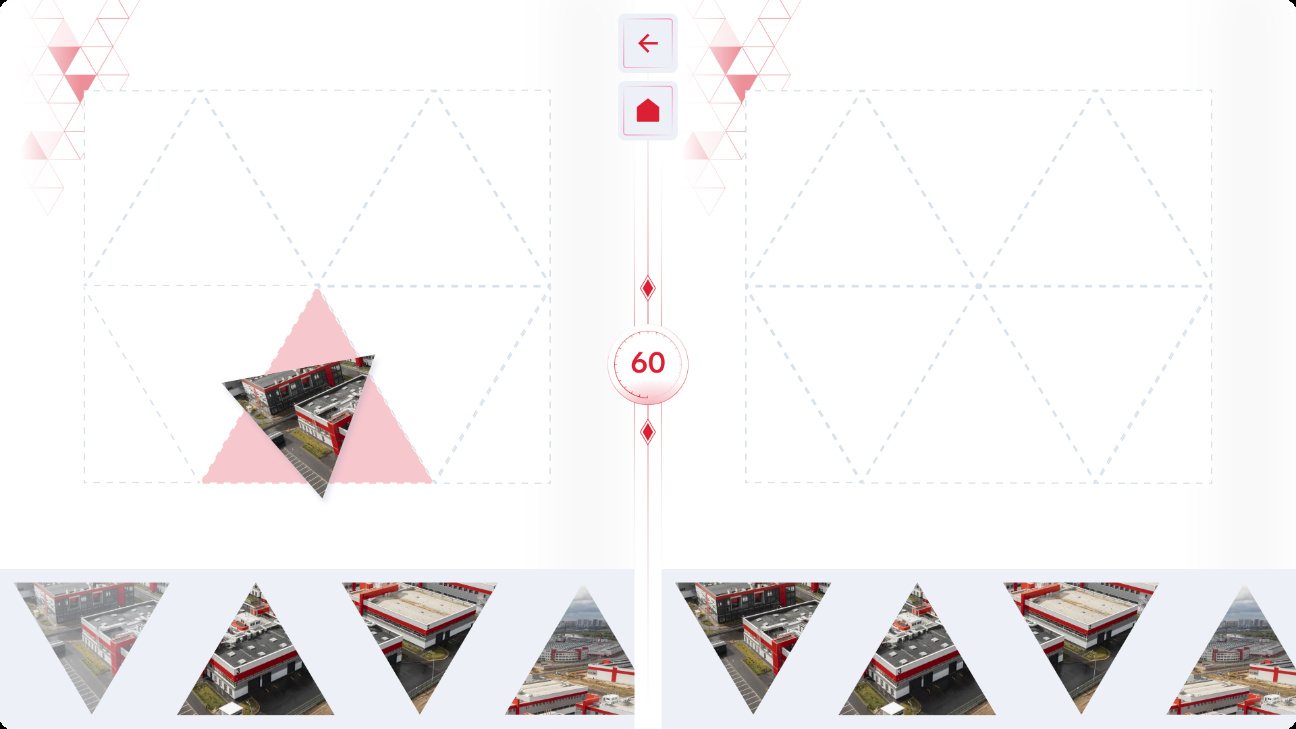
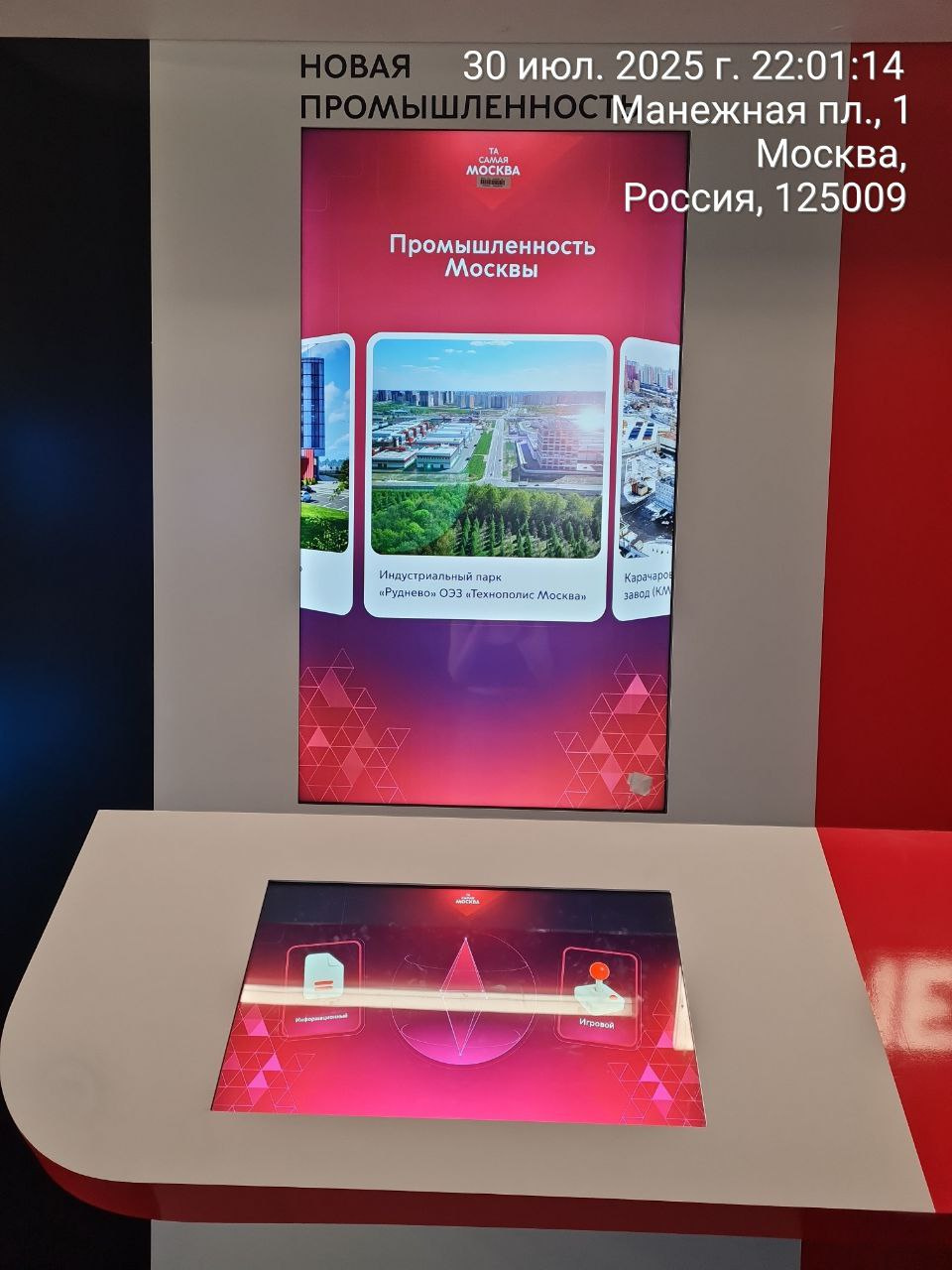
A speed puzzle: an image of an industrial site is missing a triangular piece, which has to be rotated and put in place. The completed site moves to the vertical screen with a note. In information mode — a map of the sites and figures on the city’s industry.
Common to all four
You can play alone or in pairs. At the end the vertical screen shows the time or score and the winner, and after 15 seconds the stand returns to standby mode — with a carousel of photos of the sites and an invitation to touch the panel.
How it is built
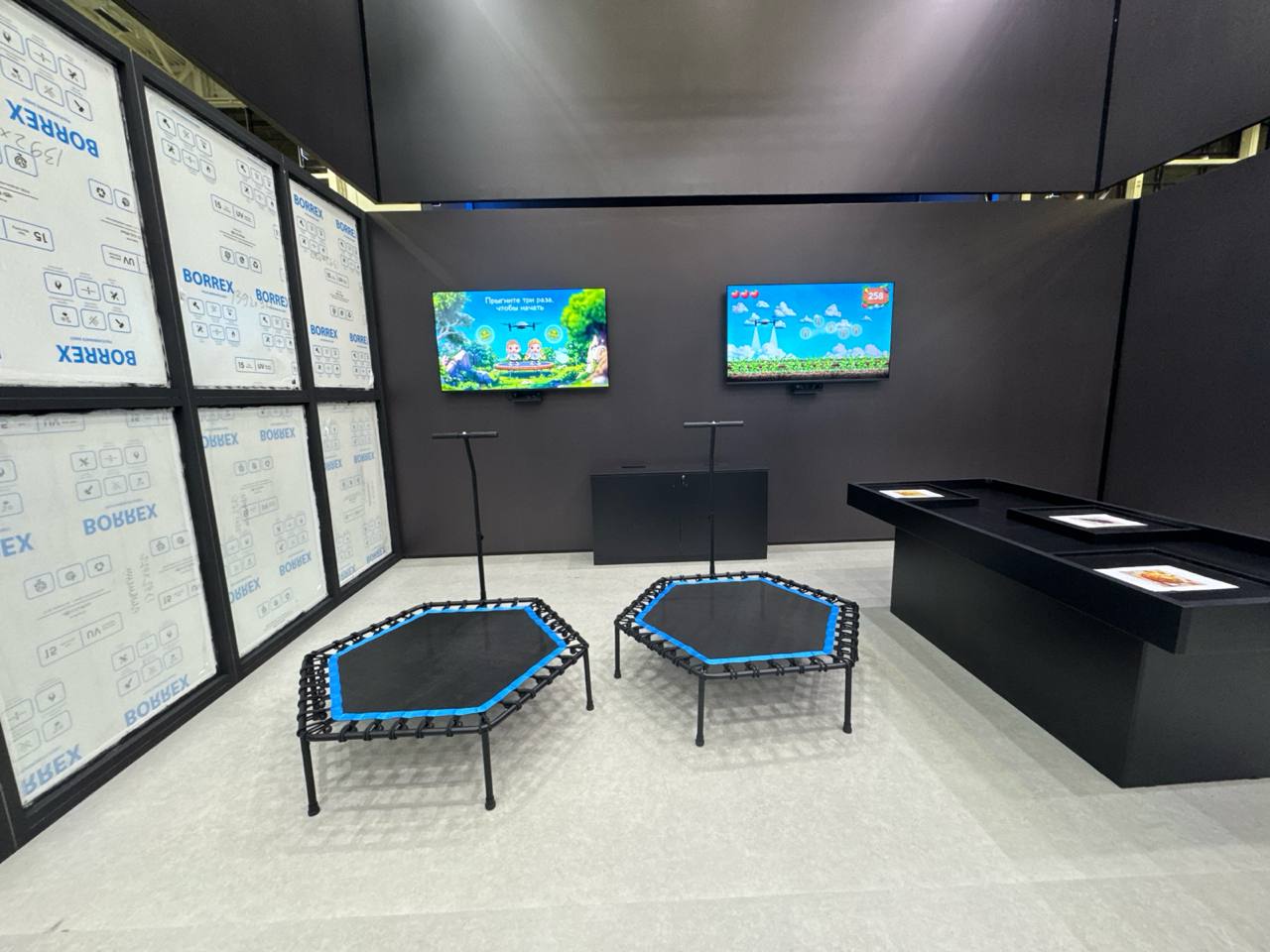
Each stand is a vertical 2160×3840 screen with a 1920×1080 touch panel beneath it. The client provided the equipment; we assembled and set up the applications on site — commissioning took place on 26 July 2025.
The applications are written in Unity and run at 60 frames per second.
In two-player mode both players play on one panel: in “Housing” they take turns, in the other games they play simultaneously, each on their own half. The combined result is shown on the vertical screen.
For the vertical screens we made twenty-second videos: photos of the sites brought to life by a neural network, with a card of figures. For example, the ZIL industrial zone has 8.5 million m² of development and adjacent areas and about 80 thousand future residents.
Result
All four applications were delivered on 31 July 2025; on 30 July they were already running on the stands in the Manege. The “That Very Moscow” exhibition was open to visitors from 7 to 31 August 2025.